Lima Kru Helikopter Mi-17V5 Selamat dari Insiden Karhutla Kalimantan Tengah Segera Dievakuasi ke Jakarta dan Semarang untuk Perawatan Lanjutan

The five surviving crew members of the Indonesian Army Aviation (Penerbad) Mi-17V5 helicopter, which suffered a severe crash while engaged in high-stakes forest and land fire (karhutla) mitigation operations in Central Kalimantan, are scheduled for medical evacuation to advanced referral hospitals in Jakarta and Semarang. This decision aims to provide them with specialized multidisciplinary medical care following the harrowing aviation accident.
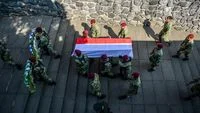
Currently, the injured personnel are receiving initial intensive treatment at the Indonesian Army Hospital (RS TNI AD) Level III Dr. R. Soeharsono in Banjarmasin, South Kalimantan. The crash not only resulted in injuries to these five survivors but also tragically claimed the lives of three other brave military personnel, highlighting the immense dangers faced by frontline responders battling environmental disasters across the archipelago.
Comprehensive Medical Updates from Banjarmasin
During a direct visit to the medical facility, Minister of Forestry Raja Juli Antoni inspected the recovery wards to check on the physical and psychological well-being of the survivors. While speaking with the medical staff and the patients, the minister expressed profound gratitude for their dedication, bravery, and selfless service in combating the relentless forest fires that frequently threaten Indonesia’s ecological stability, public health, and economic productivity.
The Head of RS Tk. III Dr. R. Soeharsono, Lieutenant Colonel Ckm (K) Dr. Leidina Rachmadian, provided a detailed clinical update regarding the condition of the five surviving crew members. She noted that upon their emergency arrival at the hospital, all five patients presented with severe physical exhaustion, fatigue, and systemic shock, necessitating immediate stabilization protocols.
"At the time we received them, the condition of the five crew members was still remarkably weak, and they clearly required intensive medical intervention and close monitoring," Dr. Leidina stated during a press briefing. "Upon their arrival here, our medical team immediately executed a comprehensive diagnostic assessment, which included extensive hematological blood work and radiological examinations such as X-rays."
Encouragingly, Dr. Leidina confirmed that the diagnostic imaging and clinical evaluations yielded positive initial findings. "Praise be to God, the results showed no evidence of bone fractures or catastrophic internal orthopedic trauma," she added. "Today, marking the second day of their hospitalization, we have observed significant clinical improvement in their vital signs and overall responsiveness, though they still require specialized ongoing treatment and observation."
The five surviving personnel have been identified as Captain of Aviation Corps Febri, Captain of Aviation Corps Sugand, Second Lieutenant of Aviation Corps Fercis, First Private Gilang, and Chief Sergeant Kadiya. Plans are actively being coordinated by military medical commands to transfer them safely to major medical centers in Jakarta and Semarang to ensure they receive optimal post-trauma rehabilitation.
Chronology of the Tragic Incident
The Mi-17V5 tactical transport and utility helicopter, operated by the Indonesian Army Aviation Center (Penerbad), met with a catastrophic accident on Wednesday, November 4. The aircraft was deployed on a critical aerial firefighting mission, utilizing water-bombing techniques to suppress stubborn peatland and forest fires raging across remote sectors of Central Kalimantan.
Aerial firefighting during the dry season remains one of the most hazardous peacetime military missions. Crews must navigate treacherous atmospheric conditions, including thick, visibility-obscuring haze, erratic wind patterns created by intense thermal updrafts from burning biomass, and unpredictable localized weather phenomena. Furthermore, operating heavy rotorcraft over dense, inaccessible forest canopies severely limits emergency landing options in the event of sudden mechanical failures or engine anomalies.
Tragically, the accident claimed the lives of three dedicated soldiers who were fulfilling their sworn duties to protect the nation’s natural resources and safeguard local communities from hazardous haze pollution. The fallen heroes were posthumously promoted in recognition of their ultimate sacrifice: Lieutenant Colonel CPN (Posthumous) Dudi Firmansyah, Captain CPN (Posthumous) Nurhafiz Akbar, and Sergeant First Class (Posthumous) Heri Prasetyo.
The loss of these experienced aviators represents a profound blow to the Indonesian military and the national emergency response apparatus, which relies heavily on specialized aviation assets to reach remote fire hot spots that remain inaccessible to ground firefighting task forces.
Broader Context and Environmental Impact of Karhutla in Indonesia
Forest and land fires, locally referred to as karhutla, represent a recurring annual crisis in Indonesia, heavily influenced by cyclical climatic phenomena such as the El Niño-Southern Oscillation (ENSO), which prolongs dry seasons and exacerbates drought conditions. Provinces across Sumatra and Kalimantan, characterized by vast expanses of carbon-rich tropical peatlands, are particularly vulnerable.
When these drained and degraded peatlands ignite, the resulting subterranean and surface fires release massive quantities of greenhouse gases into the atmosphere, posing severe threats to global climate stability while generating dense, toxic haze. This transboundary air pollution frequently impacts neighboring countries, severely degrades local air quality index (AQI) metrics, triggers widespread respiratory infections among vulnerable populations, and forces the temporary closure of regional schools and airports.
To mitigate these widespread disasters, the Indonesian government—led by the Ministry of Forestry, the National Board for Disaster Management (BNPB), the Meteorology, Climatology, and Geophysical Agency (BMKG), alongside military and police elements—deploys a multi-agency task force annually. This comprehensive strategy integrates ground-based firefighting units, canal blocking and peat re-wetting initiatives, weather modification technology (cloud seeding), and extensive aerial water-bombing fleets.
The Strategic Importance of Aerial Firefighting Assets
Helicopters such as the Russian-built Mil Mi-17V5 serve as the backbone of Indonesia’s aerial firefighting and disaster relief operations. Known for its robust heavy-lift capacity, wide cabin space, and high performance in hot and high-altitude environments, the Mi-17V5 can transport large volumes of water via external sling buckets (Bambi Buckets) directly onto active fire fronts, as well as deploy rapid-response firefighting personnel into remote disaster zones.
However, the intensive utilization of aging or heavily stressed military hardware during protracted fire seasons inevitably increases operational risks. Aviation safety experts frequently emphasize the immense mechanical strain placed on rotorcraft operating continuously in ash-heavy, high-temperature, and corrosive environments. The recent crash in Central Kalimantan underscores the urgent need for continuous airworthiness inspections, adequate maintenance funding, and modernization of the national disaster-response aviation fleet.
Official Reactions and National Solidarity
In the wake of the tragedy, expressions of grief and solidarity poured in from across the government, military leadership, and civil society. Defense officials, environmental agencies, and regional governments have reiterated their commitment to supporting the families of the fallen soldiers while ensuring that the surviving crew members receive world-class medical rehabilitation.
Minister Raja Juli Antoni’s personal visit to the wounded personnel in Banjarmasin highlights the government’s recognition of the personal risks absorbed by frontline personnel. By facilitating their transfer to specialized medical facilities in Jakarta and Semarang, authorities aim to address both their immediate physical injuries and potential psychological trauma stemming from the fatal crash.
Future Implications and Preventative Measures
The unfortunate incident involving the Mi-17V5 is expected to prompt a thorough, transparent aviation safety investigation by the Indonesian Army’s Center for Flight Safety and Airworthiness (Puspenerbad). Investigators will analyze flight data recorders, maintenance logs, meteorological reports, and eyewitness accounts to determine the definitive root cause of the crash—whether driven by mechanical failure, sudden micro-weather changes, or operational constraints.
Beyond the immediate investigation, this event reinforces the imperative for enhanced safety protocols in disaster mitigation missions. Policymakers and military planners are likely to review risk-assessment frameworks for aerial firefighting, ensuring that aircraft deployed to remote and hazardous zones meet the highest standards of structural readiness and avionics support.
Ultimately, the bravery demonstrated by both the fallen and surviving crew members serves as a poignant reminder of the heavy human toll exacted by environmental crises. As Indonesia continues to battle the persistent threat of forest and land fires driven by climate change and human activity, the nation honors the unwavering dedication of its military aviators who stand on the front lines of ecological defense.