Primary School Students Nationwide Face Challenges in Numeracy and Fractions as Academic Competency Tests Commence for the 2026 Academic Year

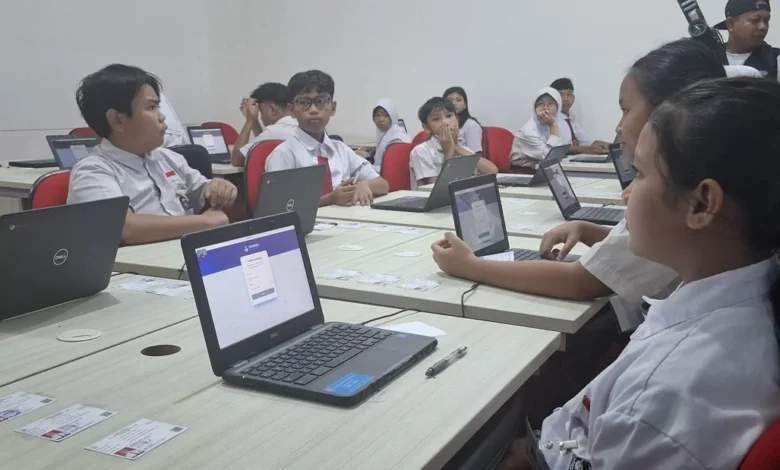
The implementation of the Academic Competency Test, known locally as Tes Kemampuan Akademik (TKA), for elementary school students across Indonesia officially began on Monday, April 16, 2026. This standardized assessment, designed to evaluate the cognitive progress and foundational skills of students at the primary level, saw thousands of sixth-grade students return to their classrooms to face a series of rigorous examinations. On the first day of the testing window, the focus was placed squarely on numeracy and mathematical reasoning, a subject area that has historically been a cornerstone of the national curriculum and a significant indicator of future academic success in science, technology, engineering, and mathematics (STEM) fields.
At SDN Rawabuntu 03 in South Tangerang, Banten, the atmosphere was a mix of quiet concentration and post-exam relief. Students emerging from the computer laboratories shared their initial impressions of the assessment, providing a glimpse into the current state of mathematical literacy among Indonesian youth. Bunga Saskia, a student at the school, noted that the numeracy portion of the TKA presented a varied spectrum of difficulty. According to Bunga, while some segments of the exam were straightforward, others required a much deeper level of analytical thinking. Her experience mirrors that of many students across the province who found the transition from theoretical classroom learning to the practical application of mathematical concepts in a timed, computerized environment to be a significant undertaking.
The Challenge of Numerical Literacy and the Hurdle of Fractions
As students dissected their performance on the first day, a recurring theme emerged regarding the specific mathematical topics that proved most difficult. For many, the concept of fractions remained the most formidable obstacle. Saffa, another participant at SDN Rawabuntu 03, explicitly identified fractional arithmetic and its applications as the most taxing component of the numeracy test. This sentiment was echoed by her peers, including Kenzie Yudistira and Raihan Fadhil, who observed that a substantial portion of the exam was dedicated to these concepts.
The difficulty associated with fractions is not a localized phenomenon but a well-documented pedagogical challenge in primary education. Educators often note that fractions require students to move beyond whole-number logic, necessitating a more sophisticated understanding of proportional reasoning and parts-of-a-whole. The prevalence of these questions in the 2026 TKA suggests a deliberate effort by the Ministry of Primary and Secondary Education (Kemendikdasmen) to emphasize higher-order thinking skills over rote memorization. By focusing on fractions, the assessment aims to gauge how well students can manipulate non-integer values, a skill that is essential for more advanced mathematics, such as algebra and physics, in secondary school.
Despite the perceived difficulty of the subject matter, there was a general sense of satisfaction regarding the alignment between the exam content and the preparatory materials provided beforehand. Saffa mentioned that the questions generally followed the blueprints and grids (kisi-kisi) that had been distributed to schools. She noted that the format of the questions on the computer screen closely resembled the practice problems found in the TKA preparation books. This alignment is a critical component of the Ministry’s strategy to ensure that standardized testing remains a fair and transparent measure of student ability rather than a source of "trap" questions designed to confuse.
Preparation Strategies and the Role of Digital Question Banks
The lead-up to the TKA involves months of rigorous preparation for students, teachers, and parents alike. In the modern educational landscape of 2026, this preparation has become increasingly digitized. Students reported relying heavily on official question banks and digital resources provided by Kemendikdasmen. Saffa shared her personal study routine, which involved a combination of meticulous note-taking, reading, and focused review sessions. She emphasized the importance of concentration, noting that haphazard studying is ineffective for long-term retention of complex mathematical theories.
"Actually, it is about setting a schedule at home and managing the environment," Saffa explained. "When we study, especially for reading-heavy subjects or complex math, we must focus. If we aren’t focused, the material won’t be absorbed by the brain. So, it’s about studying consistently and constantly reminding yourself of the material." Her approach—summarizing lessons and memorizing key formulas while maintaining a disciplined schedule—highlights the increasing pressure on young students to develop professional-level study habits early in their academic careers.
For Kenzie Yudistira, the psychological aspect of the exam was as significant as the academic preparation. He admitted to feeling a high level of anxiety before the start of the test, fearing that he might be unable to answer the questions. However, once the exam began and he saw that the questions were manageable and aligned with his studies, his nerves subsided. This psychological "test anxiety" is a common factor in standardized testing, and schools have been increasingly incorporating mental health support and "exam readiness" sessions to help students cope with the stress of high-stakes assessments.
Institutional Context and the Evolution of the TKA
The 2026 TKA is part of a broader evolution in the Indonesian education system. Following the transition away from the old National Examination (Ujian Nasional) format several years ago, the government has sought to create an assessment system that more accurately reflects a student’s actual competency rather than their ability to memorize facts. The TKA is designed to measure foundational competencies in literacy and numeracy, which are considered the "building blocks" of all other learning.
The Ministry of Primary and Secondary Education has invested heavily in the infrastructure required to host these exams. The use of Computer-Based Testing (CBT) has become the standard, even in primary schools. This shift aims to reduce the logistical burden of printing and transporting millions of paper booklets, while also minimizing the risk of cheating and allowing for faster, more accurate data analysis. The data gathered from the TKA is not only used to evaluate individual students but also to identify regional disparities in education quality. For instance, the performance of students in South Tangerang can be compared with those in more remote provinces to determine where additional government resources and teacher training are most needed.
Regional education offices, such as the Banten Education and Culture Office, have been working in tandem with local schools to ensure that the hardware and internet connectivity required for the CBT are functioning optimally. In the case of SDN Rawabuntu 03, the successful administration of the first day’s exam suggests that the technological hurdles that once plagued digital testing in Indonesia are being systematically addressed.
Broader Implications for the Indonesian Curriculum
The emphasis on numeracy in the TKA reflects a global trend in education reform. As the global economy becomes increasingly data-driven, the ability to interpret and manipulate numbers is seen as a vital survival skill. The Indonesian government’s focus on this area is an attempt to improve the country’s standing in international benchmarks such as the Programme for International Student Assessment (PISA), where Indonesia has historically struggled in mathematics and science rankings.
By introducing more challenging topics like fractions and multi-step word problems at the primary level, the curriculum is pushing students to develop a "growth mindset." The goal is to move away from a culture where math is feared and toward one where it is viewed as a tool for problem-solving. However, this shift also places a greater burden on teachers, who must now find creative ways to explain abstract concepts to ten- and eleven-year-old children.
Experts suggest that the results of the 2026 TKA will likely lead to a review of the primary school mathematics curriculum. If a significant majority of students continue to find fractions and decimals to be their primary point of failure, the Ministry may need to adjust teaching methodologies or provide more specialized training for primary school educators. Furthermore, the feedback from students like Bunga and Saffa provides invaluable qualitative data that complements the quantitative scores, offering insights into the student "user experience" of the national curriculum.
Timeline of the TKA Testing Window and Future Subjects
The TKA for the 2026 academic year is scheduled to take place over several days, with different subjects prioritized on different dates. Following the numeracy assessment on Monday, students are expected to move on to Literacy and Language evaluations. These tests will measure reading comprehension, vocabulary, and the ability to synthesize information from various texts—skills that are just as critical as numeracy in the modern world.
The chronology of the exam week is designed to prevent student burnout. By starting with numeracy, which is often considered the most mentally taxing subject, the schedule allows students to tackle the biggest challenge while their energy levels are at their peak. As the week progresses, the focus will shift to more qualitative assessments, including a survey of school character and environment, which aims to measure the non-academic aspects of the students’ educational experience, such as their social-emotional development and the safety of their school surroundings.
As the first day of testing concluded, the focus for many students shifted toward the next hurdle. While the challenge of fractions may have been daunting, the initial feedback suggests that the preparation systems put in place by schools and the Ministry are bearing fruit. The transition from the anxiety of the "pre-test" phase to the active "execution" phase marks a significant milestone for the 2026 cohort.
In the coming weeks, as the data from schools across the archipelago is collected and processed, a clearer picture of the nation’s academic health will emerge. For the students of SDN Rawabuntu 03, the first day was a lesson in resilience and the importance of disciplined preparation. As the sun set on the first day of the TKA, the consensus among the youth was clear: the road to academic success is paved with challenges, but with the right tools and a focused mind, those challenges—even the dreaded fractions—can be overcome.