Indonesia Sets Sights on Energy Independence with Ambitious E50 Biofuel Roadmap to Curb Gasoline Imports


The Indonesian government is accelerating its strategic pivot toward absolute energy self-sufficiency, taking cues from its globally recognized successes in palm-oil-derived biodiesel. Minister of Energy and Mineral Resources (ESDM) Bahlil Lahadalia has formally revealed the government’s comprehensive blueprint to develop and implement E50, a high-blend biofuel consisting of 50 percent ethanol and 50 percent fossil-based gasoline. This ambitious policy trajectory is designed to fortify the archipelagic nation’s macroeconomic stability, shield its domestic market from volatile geopolitical disruptions, and structurally reduce its heavy reliance on imported petroleum products.
The rollout of the E50 initiative represents a critical pillar of President Prabowo Subianto’s broader economic resilience agenda. By capitalizing on domestically cultivated agricultural commodities—specifically sugarcane, cassava, and corn—the state aims to simultaneously revitalize its agricultural sector, generate hundreds of thousands of green-collar jobs in rural regions, and retain crucial foreign exchange reserves that would otherwise be funneled into international energy markets.
Chronology and Directives from the National Energy Council
The genesis of the E50 mandate traces back to a high-level policy directive delivered by President Prabowo Subianto during the inaugural plenary session of the National Energy Council (DEN) held at the Merdeka Palace in Jakarta. During the landmark meeting, the President instructed the Ministry of ESDM to immediately formulate a progressive, structured roadmap to replicate the triumphs achieved in the country’s diesel sector within the gasoline domain.
Minister Bahlil noted that the strategic framework is built upon the operational blueprint of the nation’s biodiesel initiatives, which have steadily scaled from earlier mixture iterations to the current B50 implementation. The government views the systematic transition toward high-blend biofuels not merely as an environmental checkbox, but as an indispensable matter of national security.
"Today, we cannot afford to anchor our hopes and energy security primarily upon other nations," Bahlil stated while addressing stakeholders at an industry event in South Jakarta. "Building upon our proven successes in establishing biodiesel—where we have now successfully reached the B50 milestone, effectively blending fossil fuels with renewable agricultural outputs—we must now replicate this paradigm for our gasoline consumption."
The sequencing of the biofuel implementation is being meticulously calibrated by the Ministry of ESDM alongside the Directorate General of Oil and Gas. Rather than forcing an unachievable timeline that could destabilize the domestic automotive and agricultural supply chains, policymakers are designing an adaptive, phased roadmap that respects the maturation pace of local feedstock industries.
The Feedstock Imperative: Guarding Against Import Substitution
A foundational pillar of the Ministry of ESDM’s strategy is the strict enforcement of domestic feedstock sourcing. Minister Bahlil issued an explicit warning regarding the trap of pseudo-self-sufficiency, emphasizing that the E50 program will only proceed on the absolute precondition that the necessary ethanol is produced entirely within Indonesia’s borders.
The government remains acutely aware that importing raw ethanol from international markets to blend locally would defeat the primary macroeconomic objective of the policy. Such a misstep would simply substitute imported refined gasoline with imported raw ethanol, offering minimal relief to the national trade balance and failing to stimulate local agricultural value chains.
"For instance, we are looking at introducing E10 by 2027. Following that, by 2028, we intend to roll out E20, and progressively advance into the future," Bahlil explained. "However, everything must adjust dynamically to the capacity of our domestic industrial ecosystem. We refuse to mandate E10, E20, or E50 if the underlying ethanol is imported from abroad—that achieves nothing. Our singular aim is to harness and maximize our own domestic production capacity."
To satisfy the immense feedstock demands required for a nationwide E50 deployment, agricultural ministries and state-owned plantation enterprises are expected to intensify land utilization, enhance crop yields per hectare, and construct modern processing and distillation facilities across key agricultural hubs in Java, Sumatra, and parts of Eastern Indonesia.
Comparative Scale: Replicating the Biodiesel Triumph in the Gasoline Market
To understand the magnitude of the E50 initiative, industry analysts look directly at Indonesia’s precedent-setting transition in the diesel market. Indonesia currently records a national solar (automotive diesel) consumption volume of approximately 39 million kiloliters annually. Concurrently, national gasoline consumption hovers consistently between 39 million and 40 million kiloliters per year, presenting an almost identical market volume challenge.
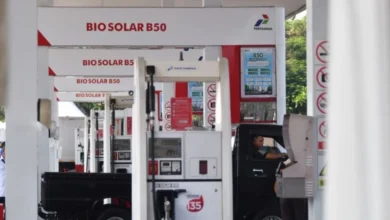
The nationwide implementation of B50 has fundamentally altered Indonesia’s energy trade deficit by entirely eradicating the importation of CN 48 grade diesel. Because gasoline consumption mirrors the volumetric scale of diesel, the prospective rollout of E50 holds the mathematical potential to replicate this historic milestone on the spark-ignition side of the energy ledger.
While the Ministry of ESDM has not yet locked in a definitive, hard calendar date for the ultimate nationwide completion of the E50 saturation phase, the conceptual framework is already driving strategic capital expenditure decisions across state-owned energy enterprises and private agricultural conglomerates alike.
Broader Economic Implications and Regional Impact
The transition toward high-blend bio-gasoline carries profound socioeconomic and structural implications for Southeast Asia’s largest economy. From a fiscal standpoint, curbing petroleum imports alleviates chronic pressures on the Indonesian Rupiah, strengthening the nation’s current account balance against external shocks such as Middle Eastern supply bottlenecks or sudden spikes in global crude oil benchmarks.
Furthermore, the upstream economic ripple effects are projected to be transformative. Sugarcane farmers, cassava growers, and corn producers across the archipelago stand to gain a guaranteed, government-backed off-taker for their harvests. This dynamic provides a reliable pricing floor for agricultural commodities, insulating rural communities from global commodity price crashes.
Employment generation is another critical dividend of the policy. Building, operating, and maintaining regional distillation plants, logistics networks, and agricultural supply chains will require a massive infusion of human capital. This creates thousands of skilled and semi-skilled jobs outside of traditional urban centers, aligning with national goals for equitable regional development.
Challenges on the Horizon
Despite the optimistic policy outlook, energy economists and industry observers point to several logistical and financial hurdles that must be systematically navigated.
First, scaling agricultural production to meet tens of millions of liters of industrial-grade ethanol requires massive capital outlays in modern biorefineries. Land acquisition policies, environmental impact assessments, and infrastructure connectivity must be streamlined to prevent supply bottlenecks.
Second, the compatibility of high-blend bio-ethanol with existing automotive fleets—particularly older vehicles not explicitly engineered for fuel containing more than 10 percent ethanol (E10)—demands careful public communication, possible infrastructure adjustments at fuel stations, and phased regulatory rollouts.
Finally, the economic equation relies heavily on maintaining a competitive price parity between domestically produced bio-ethanol and fluctuating global fossil fuel prices. If domestic production costs outpace international crude benchmarks heavily, state subsidies or market interventions may be required to maintain consumer adoption.
Conclusion
The Indonesian government’s aggressive pursuit of the E50 biofuel roadmap marks a defining chapter in the nation’s quest for energy sovereignty. By bridging the agricultural sector with the heavy industrial energy landscape, Jakarta is attempting a bold structural transformation that could redefine its macroeconomic posture for decades to come.
As the Ministry of ESDM finalizes the phased timeline leading up to the target implementation years, the success of the initiative will ultimately hinge on disciplined execution, robust public-private coordination, and an unwavering commitment to domestic resource mobilization. If executed according to plan, E50 will not only emancipate Indonesia from its historical dependence on foreign petroleum, but also establish a sustainable, homegrown energy model for emerging economies worldwide.