Deputy Minister Bima Arya Sugiarto Highlights Regional Leaders Disconnect on Public Transport and Urban Mobility


JAKARTA, Indonesia — The ongoing debate surrounding sustainable urban planning and public administration in Indonesia took center stage this week as high-ranking government officials scrutinized the experiential gap between policymakers and the everyday citizens they serve. Speaking at the prominent Urban Climate Forum 2026, held at the Pullman Hotel in Central Jakarta on Wednesday, September 16, Deputy Minister of Home Affairs Bima Arya Sugiarto delivered a sharp critique of regional leadership across the archipelago.
According to the Deputy Minister, a significant number of local government heads lack a fundamental awareness of real-world conditions on the ground. This critical disconnect, he argued, stems primarily from a sheltered lifestyle in which these executives have never experienced the realities of commuting via public mass transportation.
The remarks have since triggered a broader national conversation regarding the state of urban mobility, public infrastructure development, and the necessity for leaders to cultivate genuine empathy for the public’s daily struggles. As Indonesian cities expand rapidly and grapple with escalating traffic congestion and environmental degradation, the ability of local executives to understand commuter hardships is increasingly viewed as a prerequisite for effective governance.
The Realities of Mass Transit and the Commuter Experience
During his address at the forum, Bima did not mince words when describing the stark contrast between the daily lives of regional administrators and millions of urban commuters. He expressed profound skepticism regarding the public transit habits of Indonesia’s regional leaders, questioning whether figures such as governors, regents, and mayors have ever braved the capital’s crowded transit networks.
"Very many regional leaders, I am not convinced they have ever ridden an angkot [public minivan], ever ridden a bus, ever ridden a train. I am not convinced," Bima stated before an audience of urban planners, policymakers, and environmental experts.
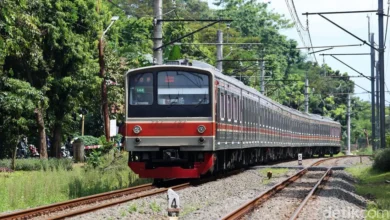
To illustrate the severity of the issue, the Deputy Minister drew upon the visceral experience of peak-hour commuting, specifically referencing the Jabodetabek Commuter Line (KRL), which serves Jakarta and its surrounding satellite cities. He emphasized that true administrative empathy cannot be simulated in executive offices or luxury vehicles; it must be felt through direct exposure to the infrastructural pressures faced by ordinary citizens.
"So how can that sense [of empathy] exist—that the people are in need? Have you ever felt the experience of being squeezed like sardines in a can, like cendol, on the KRL during your commute? If you have, you would feel how thirsty residents are for urban mobility that is truly urgent, truly urgent," Bima elaborated.
This vivid imagery underscored a central thesis of his address: that policymakers cannot design effective, human-centric urban transport systems unless they personally understand the physical and psychological toll of inadequate infrastructure. Without this foundational awareness, municipal budgets and spatial planning initiatives risk remaining misaligned with public demand, favoring private vehicle infrastructure over inclusive mass transit solutions.
Beyond Sectoral Silos: Tackling Climate Change and Urban Planning
While public transport served as a primary entry point for the discussion, Bima’s address at the Urban Climate Forum 2026 broadened rapidly to encompass the complex intersection of municipal governance, climate change mitigation, and regional spatial planning.
In Indonesia, as in many emerging economies across Southeast Asia, rapid urbanization has intensified environmental vulnerabilities. Cities face rising temperatures, worsening air pollution, and severe traffic congestion that contributes heavily to national carbon emissions. Addressing these interconnected crises, according to the Ministry of Home Affairs, requires a fundamental overhaul of how local governments approach administrative policy.
Bima sternly warned regional leaders against remaining trapped in rigid, sectoral approaches to climate governance. Historically, local agencies have operated within strict institutional silos—where transportation departments, environmental agencies, and spatial planning offices function independently with minimal cross-collaboration. The Deputy Minister argued that this fragmented methodology is entirely inadequate for contemporary environmental challenges.
Instead, Bima championed a tripartite transformation in local governance framework:
- From Sectoral to Integrated: Breaking down bureaucratic barriers between municipal departments to ensure that environmental, economic, and infrastructural policies are developed in tandem.
- From Administrative Borders to Regional Orientation: Recognizing that ecological and infrastructural issues—such as air pollution, flooding, and commuter flows—do not respect municipal boundaries. Effective interventions require coordinated planning across regional jurisdictions (inter-municipal and provincial cooperation).
- From Reactive to Anticipatory: Shifting away from crisis-driven responses toward forward-looking, proactive planning that integrates climate resilience and sustainable mobility into long-term master plans from their inception.
"Climate change is very important to approach with three governance changes: from sectoral to integrated, transcending administrative boundaries toward a more region-oriented framework, and not being reactive but anticipatory starting from planning," Bima emphasized.
Context and Background: Urban Mobility and Climate Goals in Indonesia
The timing of Bima Arya’s statements aligns with a critical period for Indonesia’s metropolitan centers. As the country works toward its national emission reduction targets under its enhanced Nationally Determined Contributions (NDC) and its broader objective of achieving net-zero emissions, the transport sector remains one of the largest contributors to urban greenhouse gas emissions.
In major urban agglomerations such as Greater Jakarta (Jabodetabek), Bandung, Surabaya, and Medan, decades of automobile-centric development have resulted in notorious traffic gridlock, economic losses measured in billions of rupiah annually, and severe public health burdens driven by vehicular air pollution.
Over the past decade, national and provincial governments have made notable strides in expanding mass transit infrastructure. Projects such as the Jakarta MRT (Mass Rapid Transit), the LRT (Light Rail Transit), the revitalization of the KRL network, and the expansion of the TransJakarta Bus Rapid Transit (BRT) system have significantly increased public transit capacity. However, these improvements often face severe bottlenecks when regional governments surrounding major economic hubs fail to integrate their local transportation networks with overarching national or provincial trunk lines.
Furthermore, public transport integration at the regional level often falls victim to political cycles. Regional heads frequently prioritize high-visibility, short-term infrastructure projects—such as road widening or flyover construction—which cater primarily to private vehicle owners and offer immediate visual markers of development, rather than investing in less glamorous, long-term public transport networks that require deep regional cooperation and sustained fiscal commitment.
Economic and Sociopolitical Implications
The critique delivered by the Deputy Minister of Home Affairs touches upon a core vulnerability in decentralized governance. Under Indonesia’s regional autonomy framework, enacted following the decentralization laws of the late 1990s and early 2000s, local leaders hold substantial authority over regional budgets (APBD) and spatial development policies.
While decentralization has successfully empowered local communities and fostered localized leadership, it has also created challenges regarding regional coordination and the implementation of national strategic policies, particularly those related to climate change and sustainable transport.
Analysts note that when regional heads lack personal familiarity with public services, municipal policies frequently reflect an upper-middle-class bias. Urban spaces risk being designed around the convenience of private car and motorcycle ownership, marginalizing pedestrians, cyclists, and the millions of low- and middle-income workers who rely entirely on public transport.
The economic implications of this disconnect are profound. Inefficient urban mobility directly undermines productivity, increases logistical costs, and exacerbates social inequality. Conversely, investments in integrated, equitable public transit systems stimulate economic growth by connecting peripheral labor markets to urban centers, reducing household transportation expenditures, and lowering carbon footprints.
Reactions and Broader Reception
The statements made by Bima Arya at the Urban Climate Forum have sparked extensive commentary across academic, civil society, and bureaucratic circles. Urban planning advocates and public transport advocacy groups have widely praised the Deputy Minister’s candid assessment, arguing that lived experience should indeed be a mandatory perspective for those drafting urban policies.
Representatives from civil society organizations focused on sustainable transport noted that leadership buy-in is the single most critical determinant of whether a municipality successfully transitions toward green mobility. When mayors and regents regularly utilize public transit, municipal budgets naturally shift toward improving sidewalk infrastructure, enhancing station safety, and subsidizing feeder bus routes.
Conversely, some local government associations have responded by defending the complex administrative realities faced by regional executives, pointing out the immense security, protocol, and time-management challenges that often preclude high-ranking officials from utilizing standard public transit systems on a daily basis. Nonetheless, many acknowledge that symbolic actions—such as occasional mandatory public transit days for civil servants and local leaders—have proven effective in other global metropolitan areas for building administrative empathy and raising awareness of commuter needs.
As Indonesia continues to navigate its rapid urban transition and strives to meet ambitious environmental commitments, the challenge laid down by the Ministry of Home Affairs remains clear: bridging the gap between the executive office and the crowded commuter train is no longer merely a matter of political symbolism, but an urgent administrative necessity for sustainable urban development.