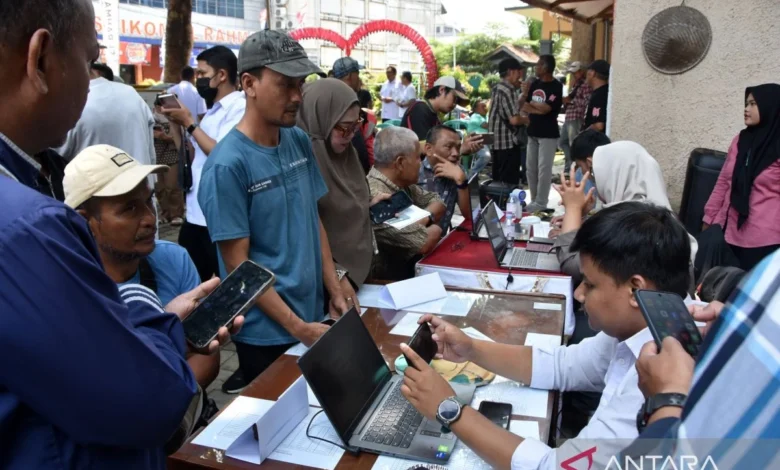
Jakarta (ANTARA) – The Family Hope Program (Program Keluarga Harapan – PKH) continues to serve as one of the cornerstone social assistance initiatives deployed by the Indonesian government to support vulnerable households. Designed to alleviate poverty, improve human capital, and boost health and educational standards among underprivileged families, PKH targets beneficiaries carefully selected based on strict socio-economic criteria. As the government transitions its data infrastructure to improve accuracy, the administration of social assistance programs in 2026 relies heavily on the Integrated Single Social and Economic Data (Data Tunggal Sosial dan Ekonomi Nasional – DTSEN). This centralized database represents a major milestone in Indonesia’s social protection system, aiming to eliminate data discrepancies and ensure that state subsidies reach the most deserving citizens. With the implementation of the DTSEN framework, the Ministry of Social Affairs (Kementerian Sosial – Kemensos) has streamlined the verification process, allowing citizens to independently check their beneficiary status using only their mobile devices and the Population Identification Number (Nomor Induk Kependudukan – NIK) listed on their official Resident Identity Cards (KTP). This digital transformation removes traditional administrative hurdles, meaning that residents no longer need to travel to local village offices, sub-district headquarters, or municipal social agencies simply to find out if they are listed as active participants in the social safety net.
Background Context of Indonesia’s Social Assistance Evolution
Indonesia’s social assistance landscape has undergone significant modernization over the past decade. Historically, the distribution of welfare programs faced persistent challenges related to targeting accuracy, data fragmentation, and temporal lag in updating beneficiary lists. To address these systemic hurdles, the Indonesian government initiated a comprehensive overhaul of its data architecture, culminating in the adoption of the DTSEN for the 2026 fiscal year. The integration of social and economic data aims to capture a holistic view of household vulnerability, shifting away from fragmented sectoral registries toward a unified, dynamic database. Within this updated framework, the concept of "deciles" plays a critical role. The DTSEN categorizes households into distinct welfare groups, known as deciles, which reflect their socio-economic standing based on a wide array of measurable indicators such as income, expenditure, housing conditions, and access to basic infrastructure. According to Ministry of Social Affairs guidelines, households falling within the lowest deciles—specifically decile 1 through decile 4, representing the bottom 40 percent of the population—are prioritized and positioned as prime candidates for targeted interventions such as PKH and staple food assistance (Bantuan Sembako). This systematic stratification ensures that state resources are allocated transparently and objectively, minimizing inclusion and exclusion errors that have historically plagued welfare distribution.
Step-by-Step Guide to Checking PKH Status via the Official Ministry Website
The Ministry of Social Affairs has optimized its digital infrastructure to provide seamless access for citizens wishing to verify their social assistance status. The primary digital portal for this purpose is the official Cek Bansos website managed by Kemensos. By utilizing this platform, individuals can perform status checks from the comfort of their homes, requiring only an active internet connection and a smartphone or computer.
To conduct a search through the official web portal, users must follow a straightforward series of steps. First, open a web browser on a mobile phone or computer and navigate to the official Cek Bansos page provided by the Ministry of Social Affairs. Once the homepage loads, the system prompts the user to input precise regional data corresponding to their official KTP, including the province, regency or city, sub-district, and village or urban neighborhood. Following the selection of administrative regions, the user must enter their full legal name as it appears on their identity card. Crucially, the user is required to input their unique 16-digit NIK accurately. After filling out all mandatory fields, the user types the verification captcha code displayed on the screen into the designated box to ensure system security and prevent automated bot queries. Finally, clicking the "Cari Data" (Search Data) button prompts the system to cross-reference the provided information with the DTSEN database. If the individual is registered as a beneficiary, the portal will display detailed information regarding their status, the specific type of assistance allocated, the designated distribution period, and their household’s corresponding welfare decile. If the system returns a message indicating that the data is not found, users are advised to double-check their NIK and regional inputs to rule out typographical errors.
Alternative Verification via the Official Cek Bansos Mobile Application
Recognizing that mobile applications often provide a more accessible user experience for millions of Indonesians, the Ministry of Social Affairs has also developed a dedicated mobile application named "Cek Bansos," available for download through official app stores. This application mirrors the core functionalities of the web portal while offering enhanced portability and user-specific features.
To use the application for status verification, citizens must first download and install the official app on their Android or iOS devices. First-time users are typically required to create an account by providing basic personal information, including a valid email address, phone number, and a secure password, followed by a verification step involving photo identification with their KTP to authenticate the account. Once registered and logged in, users can navigate directly to the social assistance check menu. Within this interface, the user inputs their 16-digit NIK and other requested demographic parameters. The application processes the query against the DTSEN backend in real-time, displaying whether the individual or their household is registered as a recipient of PKH or other social welfare programs. Furthermore, the mobile application incorporates features that allow citizens to monitor the dynamic nature of their household’s welfare status, view updates regarding subsidy disbursements, and participate in community-based verification mechanisms.
Understanding the Dynamic Nature of Welfare Deciles and Data Updates
A fundamental aspect of the 2026 social assistance framework is the dynamic nature of household welfare categorization. The decile system integrated into the DTSEN is not a static classification; rather, it evolves in response to changes in a family’s socio-economic conditions. A household that previously qualified for assistance due to severe economic hardship might experience improvements in employment, income, or living standards over time, thereby shifting into a higher decile and graduating from the target beneficiary pool. Conversely, families facing sudden economic shocks, job losses, or health crises may see their welfare standing decline, moving them into the lower deciles that qualify for state intervention.
Because socio-economic conditions fluctuate constantly, the Ministry of Social Affairs emphasizes that data must remain current. If a citizen discovers that their recorded status does not reflect their actual living conditions—such as a registered family remaining in severe poverty despite not receiving aid, or conversely, an ineligible household continuing to receive funds—mechanisms are in place for corrective action. Citizens can update or propose data revisions through local village or sub-district offices, municipal social agencies (Dinas Sosial), or directly via the grievance and proposal features embedded within the official Cek Bansos mobile application. These submissions undergo routine administrative verification and periodic recalculation to ensure that public funds are distributed equitably and accurately.
Analyzing Why an NIK Might Not Appear in the System
One of the most common concerns raised by citizens is encountering a scenario where their NIK does not appear in the system as an active social assistance recipient, despite believing they meet the eligibility criteria. Ministry officials and social policy analysts emphasize that an unlisted NIK does not automatically imply a systemic error or administrative failure. There are numerous valid reasons why an individual’s data might not generate a positive result during a search.
Primarily, the non-appearance of data is often tied to the outcomes of rigorous data collection, validation, and vulnerability assessments conducted by field enumerators. Social assistance quotas are finite and constrained by national budgetary allocations, meaning that prioritization is strictly enforced based on the depth of poverty captured by the DTSEN deciles. Households occupying higher deciles (such as deciles 5 through 10) fall outside the target threshold for PKH and Sembako subsidies. Additionally, discrepancies frequently arise due to administrative inconsistencies, such as outdated demographic data at the Directorate General of Population and Civil Registration (Dukcapil), mismatches between the name on the KTP and the family card (Kartu Keluarga), or unresolved address changes. Furthermore, ongoing system transitions, periodic data cleansing operations, and verification phases can temporarily affect the visibility of specific records. To mitigate these issues, residents are encouraged to regularly coordinate with local civil registration offices to ensure their population data is synchronized with national databases.
Official Directives and Cybersecurity Warnings Amid Digitalization
As the government expands digital access to social assistance information, authorities have issued stern warnings regarding cybersecurity and data privacy. The Ministry of Social Affairs repeatedly reminds the public to exercise high levels of caution and to rely exclusively on official government channels—specifically the official website and verified mobile applications managed by Kemensos—when checking social assistance statuses.
With the proliferation of digital services, fraudulent websites, phishing scams, and unauthorized third-party applications often attempt to exploit citizens by mimicking official platforms. Officials stress that beneficiaries and applicants must never share their sensitive personal data, including complete NIK details, banking credentials, or One-Time Passwords (OTPs), with unknown individuals, unofficial social media accounts, or unverified community intermediaries. By adhering strictly to official digital portals, citizens can protect themselves against identity theft and financial fraud while ensuring they receive accurate, up-to-date guidance regarding their social security entitlements. The overarching goal of the 2026 verification framework remains centered on transparency, accessibility, and precision, empowering millions of Indonesian families to navigate the welfare ecosystem safely and independently using modern technological tools.
Related posts: