Understanding the Legal Landscape of LGBT Rights and Criminal Regulations in Indonesia under the New National Penal Code

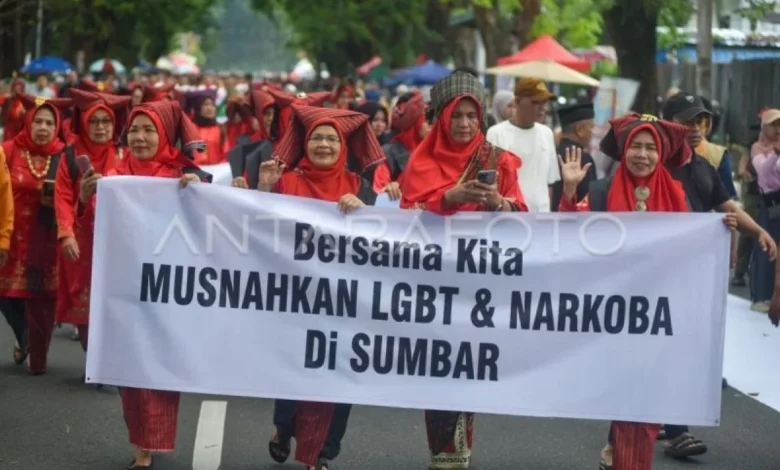
The legal standing of lesbian, gay, bisexual, and transgender (LGBT) individuals in Indonesia has recently re-emerged as a focal point of intense public discourse, fueled by shifting social dynamics and the impending implementation of a new national legal framework. Under the current and forthcoming Indonesian legislative structures, a person’s sexual orientation or gender identity does not, in and of itself, constitute a criminal offense. However, specific behaviors and sexual activities remain subject to potential criminal sanctions if they meet the criteria for offenses defined within the Indonesian Penal Code (Kitab Undang-Undang Hukum Pidana or KUHP) or other specialized statutes. This distinction between "status" and "act" is the cornerstone of the Indonesian legal approach to the issue, reflecting a complex balance between constitutional rights, traditional values, and the principle of legality.
The Principle of Legality and Sexual Orientation
The fundamental basis of Indonesia’s criminal law is the principle of legality, as enshrined in Article 1, paragraph (1) of Law Number 1 of 2023 concerning the Criminal Code. This principle dictates that no act can be punished unless it is explicitly prohibited by legislation that existed prior to the commission of the act. In the context of the LGBT community, this means that because there is no specific article in the national penal code that criminalizes the state of being lesbian, gay, bisexual, or transgender, the mere identity or orientation of an individual is legally protected from prosecution.
Law Number 1 of 2023, which was officially enacted on January 2, 2023, and is set to become fully effective on January 2, 2026, maintains this stance. Throughout the extensive drafting process of this "New KUHP," which sought to decolonize the legal system inherited from the Dutch era, legislators faced significant pressure from various interest groups to include specific prohibitions on "deviant" sexual orientations. However, the final version of the law maintains a focus on specific conduct rather than personal identity. Consequently, as long as an individual’s orientation remains a matter of private identity and does not involve acts prohibited by other specific statutes, it falls outside the jurisdiction of criminal law.
Criminalizing Acts Rather Than Identity
While the status of being LGBT is not a crime, the New KUHP does regulate certain "moral offenses" (tindak pidana kesusilaan) that apply universally to all citizens, regardless of their sexual orientation. These regulations are designed to protect the sanctity of marriage and public order, but they are structured in a way that limits the state’s intervention in the private lives of its citizens.
One of the most discussed provisions is Article 411 of Law Number 1 of 2023, which addresses adultery (perzinaan). This article stipulates that any person who engages in sexual intercourse with someone who is not their legal spouse can be sentenced to a maximum of one year in prison or a Category II fine. However, this is categorized as an "absolute complaint offense" (delik aduan absolut). This means that legal proceedings can only be initiated if a formal complaint is filed by a directly affected party—specifically a spouse (for those who are married) or parents or children (for those who are unmarried). This limitation is intended to prevent arbitrary raids or "moral policing" by third parties or community groups.
Similarly, Article 412 of the same law addresses cohabitation (kohabitasi), or living together as husband and wife outside of legal marriage. This offense carries a maximum penalty of six months in prison or a Category II fine. Like the adultery article, this is also a complaint-based offense, restricted to reports from parents, children, or spouses. While these articles are often cited in discussions regarding the LGBT community—given that same-sex marriage is not legally recognized in Indonesia—the law itself does not single out LGBT individuals; it applies equally to heterosexual couples living outside of wedlock.
The Aceh Exception: Regional Autonomy and Sharia Law
The national legal landscape is significantly different in the Province of Aceh, which holds special autonomy status. Under the authority of Law Number 11 of 2006 on the Government of Aceh, the province has the right to implement Sharia-based regulations, known as Qanuns.
Qanun Aceh Number 6 of 2014 concerning Jinayat (Islamic Criminal Law) explicitly criminalizes same-sex relations. Specifically, the Qanun identifies "liwath" (male-to-male sexual acts) and "musahaqah" (female-to-female sexual acts) as "jarimah" (crimes) punishable by "uqubat" (sharia punishments), which typically involve public caning, fines, or imprisonment.
It is crucial to note that these regulations are strictly jurisdictional. They apply only within the administrative boundaries of Aceh and do not reflect the national legal standard. Outside of Aceh, the national KUHP remains the supreme criminal authority, and no other province currently possesses the legal authority to criminalize same-sex orientation or consensual private acts between adults in the same manner.
Chronology of the New KUHP and Evolving Legal Standards
The journey toward the New KUHP (Law No. 1/2023) spanned several decades, reflecting the struggle to harmonize Indonesia’s diverse cultural, religious, and legal values.
- Post-Independence Era: Indonesia continued to use the Wetboek van Strafrecht (WvS), the colonial-era penal code established by the Dutch. This code did not specifically mention LGBT status but contained articles on "obscenity" (perbuatan cabul), which were occasionally used in cases involving minors or non-consensual acts.
- The 2019 Protests: A draft of the revised KUHP was nearly passed in 2019 but faced massive street protests. Human rights advocates and students raised concerns about articles perceived as threatening private freedoms, including those related to morality and free speech.
- 2022-2023 Refinement: The government and the House of Representatives (DPR) spent years refining the draft to address public concerns. They introduced the "complaint-based" mechanism for morality articles to prevent vigilantism.
- Enactment (January 2023): The New KUHP was signed into law, providing a three-year transition period before it takes full effect in 2026.
- Law on Sexual Violence Crimes (TPKS): In 2022, Indonesia passed Law Number 12 of 2022 on Sexual Violence Crimes. This law provides a robust framework for protecting all individuals from sexual violence and harassment, emphasizing that the law protects victims regardless of their background or identity.
Responses from Government and Religious Institutions
The legal neutrality toward LGBT identity does not mean that the issue is without controversy in the public and administrative spheres. Various government bodies have expressed views that highlight the tension between legal rights and social policy.
The Ministry of Religious Affairs (Kemenag) has recently been active in developing educational materials aimed at "preventing the spread of LGBTQ behavior." From the ministry’s perspective, while the law may not criminalize the individual, the state has a moral obligation to promote traditional family values based on religious teachings. This approach focuses on "prevention" through education and counseling rather than "punishment" through the criminal justice system.
In the administrative sector, some regional leaders have taken a harder stance. In West Java, for instance, the Vice Governor previously issued warnings that Civil Servants (ASN) found to be involved in "LGBT networks" could face dismissal. Such threats are typically framed as "ethical" or "disciplinary" violations rather than criminal ones, illustrating how LGBT individuals may face administrative or social sanctions even in the absence of criminal laws.
Analysis of Implications and Legal Certainty
The current legal framework creates a "middle ground" that arguably satisfies neither conservative hardliners nor human rights activists. For the LGBT community, the lack of criminalization provides a level of legal security against state prosecution for their identity. However, the existence of "morality articles" and the potential for administrative discrimination remain significant concerns.
Legal experts point out that the shift to "complaint-based" offenses in the New KUHP is a significant step toward protecting privacy. By requiring a family member to file a report, the law effectively moves these issues from the public square into the family unit. This is expected to drastically reduce the number of arbitrary arrests and "moral raids" by local authorities or civil organizations that have occasionally made headlines in the past.
However, the "Aceh Exception" continues to be a point of contention for international human rights observers. Organizations such as Human Rights Watch and Amnesty International have frequently called for the repeal of the Aceh Jinayat Code, arguing that it violates international treaties on civil and political rights that Indonesia has ratified.
Future Outlook and Social Impact
As Indonesia approaches the 2026 effective date for the New KUHP, the focus will likely shift from legislative debate to implementation. The challenge for the Indonesian government will be ensuring that the law is applied uniformly and that the "complaint-based" protections are respected by law enforcement agencies across all provinces (excluding Aceh).
Furthermore, the role of the judiciary—particularly the Constitutional Court (Mahkamah Konstitusi)—will be vital. In the past, the Court has rejected petitions to criminalize same-sex relations, citing that such a move would be a legislative task, not a judicial one. These rulings have reinforced the principle that the judiciary will not create new crimes where the legislature has chosen to remain silent.
In conclusion, the legal status of LGBT individuals in Indonesia is defined by a strict adherence to the principle of legality. National law does not recognize sexual orientation as a criminal category. Instead, the legal system focuses on specific acts that may infringe upon the institution of marriage or public decency, while placing high barriers to prosecution to protect the private lives of all citizens. While social and administrative challenges persist, the 2023 Penal Code provides a clear directive: in the eyes of the Indonesian criminal justice system, identity is not a crime.