Makkah, Saudi Arabia – Towering rock formations stand as stoic sentinels around the holy city of Makkah, forming a natural bulwark that has long protected this cradle of Islam. While appearing tranquil from afar, these ancient mountains are imbued with the echoes of millennia of Islamic history, serving as enduring witnesses to the faith’s transformative journey. Makkah, situated in a stark valley, is defined by the Kaaba, the central point of worship and the Qibla, or direction of prayer, for Muslims worldwide. Each year, countless pilgrims converge on the Masjid al-Haram, where the Kaaba stands, to perform Hajj and Umrah, reinforcing the city’s spiritual significance.
The mountainous landscape surrounding Makkah is not merely a geographical feature; it is a tapestry woven with pivotal moments in the genesis and spread of Islam. For pilgrims undertaking their spiritual journeys, these sacred peaks offer a unique opportunity for reflection and historical immersion. Visiting these sites, rich with the narratives of prophets and early Muslims, adds a profound dimension to the pilgrimage experience. This article explores several of these historically significant mountains, offering insights into their importance and practical guidance for those wishing to visit.
Jabal Abu Qubais: The Pillar of Makkah and the Rediscovery of the Black Stone
Jabal Abu Qubais, often referred to as the "pillar of Makkah," faces the Kaaba directly and holds a unique distinction among geological scholars who posit it as the first mountain to appear on Earth. Its significance for Muslims is deeply rooted in a pivotal event: the rediscovery of the Hajar al-Aswad (the Black Stone). According to historical accounts, the sacred stone was lost during the great flood in the time of Prophet Nuh (Noah) and was later found by Prophet Ibrahim (Abraham) on the slopes of Jabal Qubais. This rediscovery marked a crucial moment in the re-establishment of monotheistic worship at the Kaaba.
Located on the eastern side of Masjid al-Haram, Jabal Abu Qubais also purportedly houses the tomb of Prophet Adam, the first man. For pilgrims seeking to visit this sacred site, it is advisable to choose times with fewer crowds, such as the early morning hours (Dhuha prayer time) or just before sunset, to allow for a more contemplative experience. The mountain’s proximity to the Haram makes it an accessible site for those wishing to connect with the foundational narratives of Islam.
Jabal Nur: The Mountain of Light and the Revelation of the Quran
Further to the northeast of Makkah lies Jabal Nur, the "Mountain of Light," another site of immense historical and spiritual importance. This mountain, standing approximately 642 meters (2,106 feet) high, features a summit that resembles a camel’s hump. However, its true allure for pilgrims lies not in its geological formation but in the presence of Ghar Hira (Cave of Hira), nestled within its slopes. This cave is hallowed ground as it was here that Prophet Muhammad (peace be upon him) received his first divine revelation from Allah (God) through the Angel Jibril (Gabriel), marking the beginning of the Quran’s descent and the formal commencement of Islam as a revealed religion.
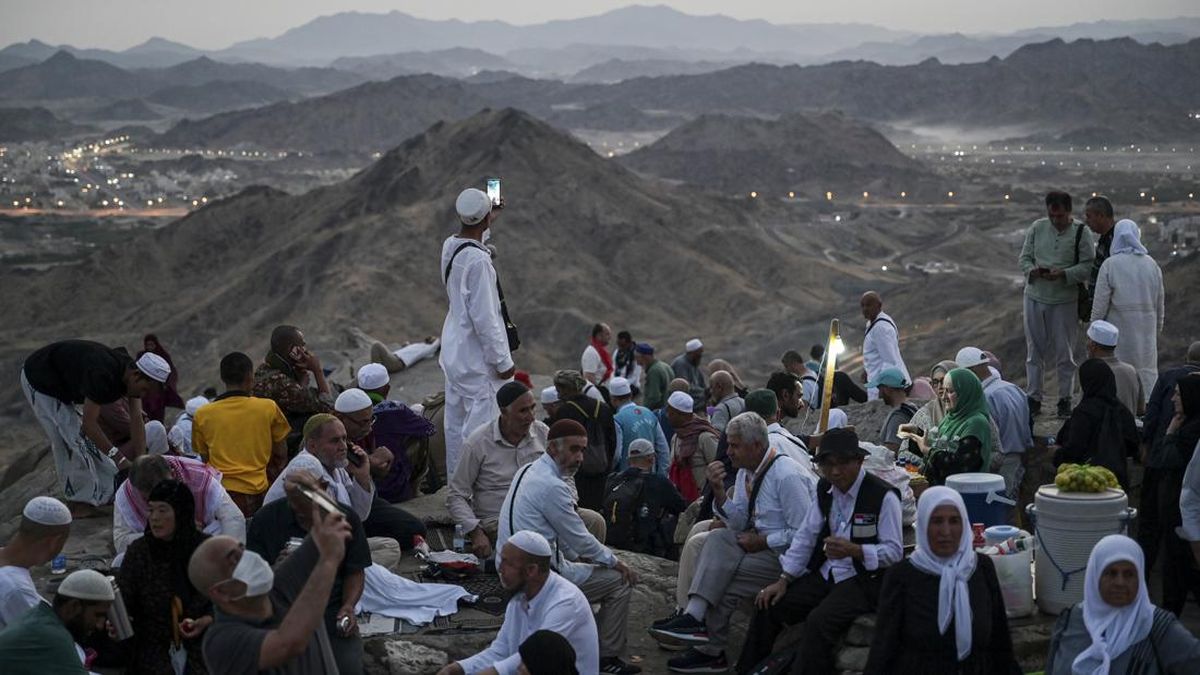
Jabal Nur is conveniently located about 7 kilometers (4.3 miles) from Masjid al-Haram. The ascent to Ghar Hira can be a lengthy undertaking. Therefore, it is recommended for pilgrims to plan their visit during the cooler parts of the day, either in the early morning or late afternoon, to mitigate the effects of the desert heat. The climb, though challenging, offers a tangible connection to the profound moment of revelation that reshaped human history. The quiet solitude of the cave, as pilgrims ascend, allows for deep introspection and remembrance of the Prophet’s spiritual retreat.
Jabal Thawr: A Refuge of Faith and a Testament to Sacrifice
Jabal Thawr, also known as Jabal Tsur, is a striking mountain characterized by its ten jagged peaks, historically referred to as Jabal Athal. It rises to an impressive height of 775 meters (2,543 feet). This mountain holds a critical place in Islamic history as the site where Prophet Muhammad and his close companion, Abu Bakr as-Siddiq, sought refuge during their perilous migration (Hijrah) from Makkah to Madinah. Pursued relentlessly by the polytheist Quraysh tribe, the Prophet and Abu Bakr hid for three days in Ghar Thawr, a cave located within Jabal Thawr, escaping their pursuers against all odds. This period of intense vulnerability and divine protection is a powerful testament to their faith and the intricate divine plan unfolding.
Situated in Misfalah, Makkah, Jabal Thawr is approximately 4-5 kilometers (2.5-3 miles) from Masjid al-Haram, making it a relatively short journey. While climbing to Ghar Thawr is possible, it is essential for visitors to wear sturdy, appropriate footwear suitable for navigating the rocky terrain. The cave itself, though small, offers a tangible link to one of the most defining moments in Islamic history. The story of their concealment, often cited with the detail of spiders weaving webs over the cave entrance and pigeons nesting, underscores the miraculous nature of their escape and the unwavering trust they placed in Allah.
Jabal Quaiqian: Echoes of Ancient Conflicts and Proximity to Sacred Sites
To the west of Masjid al-Haram lies Jabal Quaiqian, also known as Jabal Hindi. The mountain derives its name, Quaiqian, from the sound of clashing swords that reportedly resonated from its slopes during an ancient conflict between the Jurhum and Katura tribes. This mountain range stretches between Wadi Ibrahim to the east and Wadi Tuwa to the west. Its location is northwest of Masjid al-Haram, in close proximity to the sacred hill of Marwah, one of the two hills pilgrims traverse during the Sa’i ritual.
Pilgrims can reach Jabal Quaiqian by foot from Masjid al-Haram. However, it is important to be mindful of one’s conduct upon arrival, as the mountain is now situated within a residential area. The historical significance of Jabal Quaiqian lies not only in its ancient tribal conflicts but also in its geographical relation to the sacred precincts of Makkah, placing it within the spiritual orbit of the Haram.
Jabal Rahmah: The Mount of Mercy and the Reunion of Adam and Eve
Within the plains of Arafat stands Jabal Rahmah, a hill approximately 70 meters (230 feet) high. This mount is revered as the site where Prophet Adam and Siti Hawa (Eve) were reunited after their expulsion from Paradise. Dubbed the "Mount of Mercy," Jabal Rahmah serves as a powerful symbol of love, compassion, and forgiveness. At its summit, a white monument marks the spot of this pivotal reunion, reminding humanity of its origins and the divine grace that guided the first man and woman.
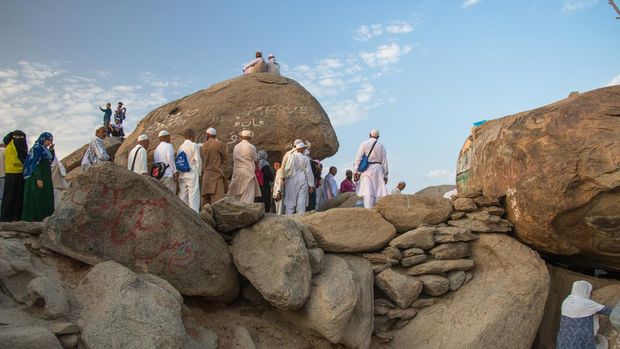
The location is particularly significant during the Day of Arafah (9th of Dhu al-Hijjah), a cornerstone of the Hajj pilgrimage, when pilgrims gather in Arafat for the Wukuf, a period of intense supplication and reflection. Jabal Rahmah is located about 20 kilometers (12 miles) from Makkah, and the journey by road from Masjid al-Haram typically takes around 30 minutes. The sheer number of pilgrims who gather here on the Day of Arafah underscores its profound spiritual resonance.
Jabal Omar: A Modern Hub with Spiritual Resonance
The final mountain of note is Jabal Omar, a vast range spanning between Al-Shabika and Al-Misfalah. Its name is a tribute to Omar Bin al-Khattab, a revered companion of Prophet Muhammad and the second Caliph. Jabal Omar is situated to the west of Masjid al-Haram and has become a focal point for modern development, with numerous hotels and accommodations built around its slopes.
Many pilgrims choose to stay in accommodations within the Jabal Omar area due to its close proximity to Masjid al-Haram. The area is well-served by a complimentary 24-hour shuttle bus service, facilitating easy access to the holy mosque for pilgrims. While primarily known for its urban development, its naming after a significant figure in Islamic history imbues it with a subtle spiritual significance, connecting contemporary pilgrims to the legacy of early Islam.
Broader Implications and Context
The historical mountains surrounding Makkah are more than just geographical landmarks; they are integral to the narrative of Islam. They serve as tangible touchpoints for pilgrims to connect with the foundational events and figures of their faith. The act of visiting these sites, understanding their stories, and reflecting on the perseverance and devotion of the early Muslims can profoundly deepen a pilgrim’s spiritual experience.
The preservation and accessibility of these historical sites are crucial for maintaining the rich tapestry of Islamic heritage. As Makkah continues to develop, balancing modernization with the preservation of these sacred landscapes is a continuous endeavor. The ongoing efforts to facilitate access for pilgrims while respecting the historical and spiritual sanctity of these mountains reflect Saudi Arabia’s commitment to serving as the custodian of Islam’s holiest sites. These mountains, silent witnesses to centuries of devotion and divine intervention, continue to inspire awe and devotion in the hearts of millions who journey to Makkah each year.
Related posts: