Exploring the Complex Fabric of Venezuela From Political Turmoil to a Rich Cultural and Natural Heritage

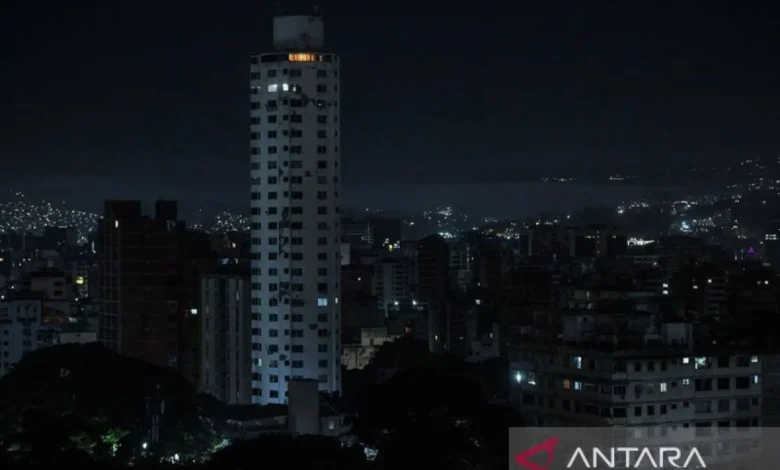
The geopolitical landscape of South America has been thrust into a state of heightened uncertainty following reports regarding the status of Venezuelan President Nicolás Maduro and the aggressive posturing of the United States administration under Donald Trump. This development marks a significant escalation in the long-standing friction between Washington and Caracas, a relationship defined by years of sanctions, diplomatic withdrawals, and ideological confrontations. While the world’s attention remains fixed on the unfolding political drama and the potential for a seismic shift in regional governance, Venezuela continues to be a nation of profound complexity, possessing a wealth of natural resources, a storied history, and a cultural identity that extends far beyond the headlines of political instability.
Officially known as the Bolivarian Republic of Venezuela, the nation occupies a strategic position at the northern tip of South America. Covering an area of approximately 912,050 square kilometers, it serves as a gateway between the Caribbean Sea and the vast Amazonian interior. With a population of roughly 30.5 million people, Venezuela is a demographic melting pot where Spanish serves as the primary language and the cultural fabric is deeply woven with threads of Roman Catholicism and Protestantism. Despite its current economic and political challenges, the country remains one of the world’s most significant players in the energy sector, holding the largest proven oil reserves on the planet.
The Geopolitical Context and the Chronology of Escalation
The reported detention of Nicolás Maduro is the culmination of a decade-long deterioration in U.S.-Venezuela relations. To understand the current crisis, one must look back at the transition from the era of Hugo Chávez to his successor, Maduro. Since Maduro took office in 2013, the United States has increasingly viewed his administration as undemocratic, leading to a series of escalating sanctions designed to cripple the Venezuelan government’s financial capabilities.
In 2019, the situation reached a boiling point when the U.S. and dozens of other nations recognized Juan Guaidó, the then-head of the National Assembly, as the legitimate interim president. This created a dual-government scenario that persisted for years. The U.S. Department of Justice further escalated tensions in 2020 by unsealing indictments against Maduro and several of his top lieutenants, accusing them of "narcoterrorism." The offer of a multi-million dollar bounty for information leading to his arrest set the stage for the high-stakes maneuvers currently being witnessed.
Recent reports suggest that the U.S. military and intelligence apparatus have intensified their focus on the region, citing concerns over regional stability and the influence of external actors such as Russia, China, and Iran in the Western Hemisphere. The "arrest" or "capture" narrative, while controversial and legally complex under international law, reflects a "maximum pressure" campaign that has seen the U.S. naval presence increase in the Caribbean.
International Reactions and Global Implications
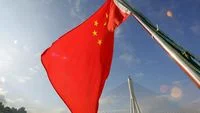
The international community remains sharply divided over the treatment of the Venezuelan leadership. China, a major creditor and strategic partner of Caracas, has officially protested U.S. actions, particularly those aimed at seizing or controlling Venezuelan oil assets. Beijing’s stance is rooted in the principle of non-interference in domestic affairs, arguing that the unilateral actions taken by Washington undermine international norms and threaten global energy stability.
Domestically, the reports of Maduro’s capture have triggered a wave of civil unrest. Pro-government supporters, often referred to as Chavistas, have taken to the streets in Caracas and other major cities, demanding the release of their leader and condemning what they describe as imperialist intervention. Conversely, segments of the opposition have expressed cautious hope that a change in leadership could lead to the lifting of sanctions and a return to economic normalcy. The Venezuelan Ministry of the Interior has reported casualties in clashes between security forces and protesters, highlighting the volatile nature of the current transition.
The implications for the global oil market are also severe. As Venezuela holds nearly 300 billion barrels of proven oil reserves, any sudden change in its political status or the control of its state-owned oil company, PDVSA, could lead to significant fluctuations in global crude prices. Analysts suggest that a prolonged conflict or a power vacuum could disrupt supply chains, prompting major powers like China to secure their energy interests through alternative means.
Historical Roots: From Indigenous Tribes to Sovereign State
Beyond the contemporary political fray, Venezuela’s history is a testament to resilience. The territory has been inhabited for at least 10,000 years, with the Carib, Arawak, and Chibcha peoples establishing complex societies long before European contact. Christopher Columbus arrived at the Orinoco Delta in 1498 during his third voyage, describing the land as a "terrestrial paradise."
The name "Venezuela" itself carries an Italian legacy. In 1499, explorer Amerigo Vespucci observed the indigenous stilt houses built over the waters of Lake Maracaibo. The sight reminded him of the canals of Venice, leading him to name the region Veneziola, or "Little Venice." Over the centuries, this name evolved into the Spanish "Venezuela."
Venezuela was the first Spanish colony to declare independence, a movement led by the iconic "Libertador," Simón Bolívar. After a period of being part of Gran Colombia—a short-lived republic comprising present-day Colombia, Ecuador, Panama, and Venezuela—the nation emerged as a fully sovereign state in 1830. This history of revolution and the pursuit of autonomy continues to inform the national psyche and the rhetoric of its current political leaders.
A Megadiverse Nation: Natural Wonders and Environmental Significance
Venezuela is recognized by Conservation International as one of only 17 "megadiverse" countries in the world. Its geography is incredibly varied, encompassing the northern reaches of the Andes Mountains, the vast central plains known as the Llanos, and the ancient tepuis (tabletop mountains) of the Guiana Highlands.
The jewel of Venezuela’s natural heritage is the Canaima National Park, a UNESCO World Heritage site. It is home to Angel Falls (Salto Ángel), the world’s highest uninterrupted waterfall. Falling from a height of 979 meters (3,212 feet) off the Auyán-tepui mountain, the falls are a global icon of natural beauty. The park also features the Mount Roraima tepui, which famously served as the inspiration for Sir Arthur Conan Doyle’s novel The Lost World.
Another meteorological marvel is the Catatumbo Lightning phenomenon. Located at the mouth of the Catatumbo River where it empties into Lake Maracaibo, this area experiences a near-continuous storm. For approximately 260 nights a year, the sky is illuminated by thousands of lightning bolts per hour. This phenomenon is so consistent that it has historically served as a natural lighthouse for sailors and is recognized by the Guinness World Records for the highest concentration of lightning on Earth.
The country’s biodiversity is equally impressive. The Orinoco River, one of the longest in South America, is home to the rare pink river dolphin and the Orinoco crocodile. On land, the capybara—the world’s largest rodent—roams the wetlands, while the jungles provide a sanctuary for jaguars and a vast array of avian species.
Socio-Cultural Identity: Baseball, Beauty, and Cacao
The cultural life of Venezuela is a vibrant mix of indigenous, African, and Spanish influences. Unlike many of its South American neighbors where football (soccer) is the undisputed king of sports, Venezuela’s national passion is baseball. The country has produced a significant number of Major League Baseball (MLB) stars, and the sport serves as a point of immense national pride and social cohesion.
In addition to sports, Venezuela is globally renowned for its success in international beauty pageants. The "Miss Venezuela" organization is a national institution, and the country holds a record number of Miss Universe and Miss World titles. This "beauty culture" is a significant aspect of social life, reflecting a broader national emphasis on aesthetics and public presentation.
Venezuela’s culinary and agricultural traditions also hold a place of honor. The country is one of the world’s premier producers of high-quality cacao. Venezuelan cacao, particularly the Criollo variety, is highly sought after by master chocolatiers worldwide for its complex flavor profile. The tradition of cacao cultivation dates back to the colonial era and remains a vital part of the rural economy.
Unique social traditions also persist despite modern hardships. In the capital city of Caracas, a charming Christmas tradition involves citizens—particularly children—strapping on roller skates to attend early morning church services. This "Patinatas" tradition is so popular that many streets are closed to motorized traffic during the holiday season to ensure the safety of the skaters.
Urban Landscapes and Architectural Curiosities
The urban development of Caracas offers a stark visual representation of the country’s boom-and-bust cycles. Two buildings, in particular, stand out as symbols of Venezuelan history and current reality. The "Tower of David" (Torre de David) is a 45-story skyscraper that was intended to be a glittering financial center before the death of its developer and the 1994 banking crisis halted construction. For years, it became the world’s tallest "vertical slum," housing thousands of squatters in a self-organized community, before the government began relocating residents.
Another architectural landmark is El Helicoide. Originally designed in the late 1950s as a futuristic, drive-in shopping mall where customers could park directly in front of shops via a spiral ramp, the project was never completed as intended. Today, the structure serves a far more somber purpose as the headquarters for the Bolivarian National Intelligence Service (SEBIN) and functions as a high-security prison. These structures serve as reminders of the grand ambitions of the mid-20th century and the complex social transformations that followed.
Conclusion: The Road Ahead
As Venezuela stands at a critical juncture, the world watches to see if the current political upheaval will lead to a democratic transition, a deepening of the humanitarian crisis, or a prolonged period of civil strife. The reported actions of the U.S. administration have set in motion a chain of events that will test the resilience of Venezuelan institutions and the strength of international alliances.
However, beneath the layers of political conflict lies a nation of immense potential and beauty. Venezuela’s identity is not solely defined by its leaders or its economic struggles, but by its extraordinary landscapes, its world-class resources, and a population that remains deeply connected to its unique cultural heritage. The resolution of the current crisis will require not only political maneuvering but a recognition of the complex history and the diverse aspirations of the Venezuelan people. For now, the "Little Venice" of Amerigo Vespucci remains a focal point of global concern, waiting for a path toward stability and prosperity.
Related posts: