Essential Prayers and Spiritual Foundations After the Islamic Marriage Contract A Guide to Building a Blessed Household

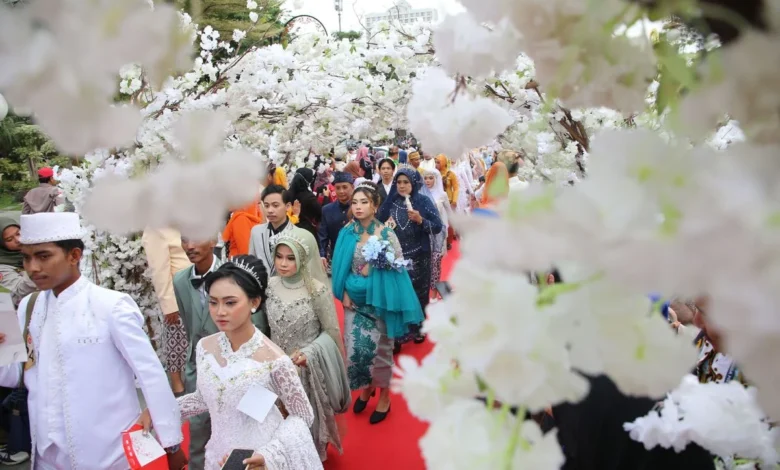
The completion of the solemnization of marriage, known in Islamic tradition as the Akad Nikah, marks more than just a legal union between two individuals; it signifies the beginning of a spiritual journey intended to be anchored in faith, mutual respect, and divine grace. In the wake of this sacred ceremony, Islam encourages a series of specific supplications or "dua" to be offered for the newlywed couple. These prayers serve as a formal petition to the Almighty, seeking that the newly established household be permeated with "barakah" (blessings), "mawaddah" (affection), and "rahmah" (mercy). This practice, deeply rooted in the Sunnah or the traditions of the Prophet Muhammad SAW, is not merely a ritualistic formality but a foundational spiritual act intended to shield the marriage from future adversities and align it with divine guidance.
The Significance of Post-Akad Supplications in Islamic Jurisprudence
In Islamic theology, the period immediately following the marriage contract is considered a highly auspicious time for prayer. Scholars emphasize that while the contract itself fulfills the legal requirements of the Sharia, the subsequent prayers provide the spiritual fortification necessary for the long-term success of the union. These supplications are traditionally recited by the officiant (penghulu), family members, and the invited guests, transforming the social gathering into a collective spiritual endeavor.
The most widely recognized and authentic prayer for the newlyweds, as documented in the prophetic traditions, is:
“Bārakallāhu laka wa bāraka ‘alaika wa jama’a bainakumā fī khair.”
Translated into English, this means: "May Allah bestow blessings upon you, and send down His blessings upon you, and unite the two of you in goodness."
This specific phrasing is derived from a Hadith narrated by Abu Hurairah RA and recorded in the major collections of Abu Dawud (No. 2130), At-Tirmidzi (No. 1091), and Ibnu Majah (No. 1905). Imam At-Tirmidzi classified this Hadith as "hasan sahih" (good and authentic), cementing its status as the primary recommendation for anyone wishing to congratulate a newly married couple.
Historical Context and the Transition from Pre-Islamic Traditions
The introduction of these specific prayers by the Prophet Muhammad SAW represented a significant cultural and spiritual shift in the Arabian Peninsula. Before the advent of Islam, the period of "Jahiliyyah" (the Age of Ignorance) saw marriage greetings that were often superficial or focused solely on material outcomes, such as the birth of male heirs or the accumulation of wealth.
Islamic scholars note that the Prophet SAW actively replaced these older customs with prayers that focused on "Barakah." Unlike simple happiness or prosperity, Barakah refers to a divine "increase" or "constancy" in goodness. By praying for Barakah, the community asks that the couple’s love remains constant during trials and that their resources, however modest, are sufficient and fulfilling. The shift from "congratulations" to "supplication" highlights the Islamic worldview that human efforts in marriage must be supplemented by divine intervention to achieve true harmony.
The Husband’s First Act: A Spiritual Initiation
Beyond the communal prayers offered by guests, Islam prescribes a specific intimate ritual for the husband immediately following the Akad Nikah. It is recommended for the husband to place his hand gently upon his wife’s forehead (the forelock) and recite a dedicated prayer. This act is intended to establish a bond of protection, kindness, and mutual spiritual responsibility from the very first moment of their private union.
The prayer, as taught by the Prophet SAW, is:
“Allāhumma innī as’aluka min khairihā wa khairi mā jabaltahā ‘alaihi, wa a’ūdzu bika min syarrihā wa syarri mā jabaltahā ‘alaihi.”
This translates to: "O Allah, I ask You for the goodness within her and the goodness of the nature You have placed in her. And I seek refuge in You from the evil within her and the evil of the nature You have placed in her."
This prayer is often misunderstood by those unfamiliar with Islamic semantics. It does not imply that the wife is inherently "evil." Rather, in the context of Islamic psychology, it acknowledges that every human being possesses a complex nature (fitrah) with the potential for both virtue and flaw. By reciting this, the husband humbles himself before God, asking to be a recipient of his wife’s best qualities while seeking divine protection against the natural human frictions that inevitably arise in any domestic life. It sets a tone of gentleness and spiritual leadership rather than one of dominance.
Analysis of the Pillars: Sakinah, Mawaddah, and Warahmah
The ultimate goal of these prayers is the realization of three states of being frequently mentioned in the Quran (Surah Ar-Rum, Verse 21): Sakinah, Mawaddah, and Warahmah.
- Sakinah (Tranquility): This refers to the peace and stability of the home. The prayers seek to make the household a sanctuary from the chaos of the outside world.
- Mawaddah (Love/Affection): This is the active, passionate love that draws two people together. The supplications ask that this flame be sustained throughout the years.
- Warahmah (Mercy/Compassion): Perhaps the most critical for long-term success, Rahmah is the mercy spouses show each other when the initial passion fades or when mistakes are made. It is the glue that holds a family together during times of illness, financial hardship, or old age.
Institutional Support and the Role of the Ministry of Religious Affairs
In Indonesia, the world’s most populous Muslim-majority nation, the importance of these spiritual foundations is recognized at the state level. The Indonesian Ministry of Religious Affairs (Kemenag) has recently intensified its efforts to ensure that the Akad Nikah is not treated as a mere administrative event.
Under recent initiatives, the Ministry has begun specialized training for "Penghulu" (marriage registrars). The objective is to transform these officials from simple administrators into spiritual advisors and family counselors. Data from the Ministry indicates that Indonesia sees approximately 1.7 to 2 million marriages annually. However, the rising divorce rates in several provinces have prompted the government to integrate "Bimbingan Perkawinan" (Marriage Guidance) programs. These programs emphasize the meanings behind the post-Akad prayers, ensuring that couples understand the weight of the vows they are taking and the spiritual tools available to them.
Chronology of the Post-Akad Ceremony
A typical contemporary Indonesian wedding follows a structured chronology that prioritizes these spiritual elements:
- The Khutbah Nikah: A sermon delivered just before the contract, reminding the couple of their duties to Allah and each other.
- The Ijab Qabul: The formal exchange of the marriage vow between the groom and the bride’s wali (guardian).
- The Sigat Ta’lik: In the Indonesian context, the groom often reads a conditional divorce agreement intended to protect the rights of the wife.
- The Communal Dua: Led by the Penghulu or a respected elder, where the "Barakallahu laka" prayer is recited by the entire assembly.
- The First Meeting (Khamrah): The private or semi-private moment where the husband recites the prayer on the wife’s forehead and provides the "mahar" (dowry).
Societal Implications and Family Resilience
The emphasis on prayer after the marriage contract has broader implications for societal stability. Sociologists arguing from a faith-based perspective suggest that when a community participates in the "Dua" for a new couple, it reinforces a social contract. The guests are not just witnesses; they are spiritual stakeholders in the success of that family unit.
Furthermore, the practice of "Barakallahu laka" serves as a psychological anchor. In an era where modern marriages are often pressured by social media expectations and economic instability, the Islamic tradition of seeking "Barakah" (blessing) encourages couples to find contentment in what they have and to strive for "Khair" (goodness) in their conduct rather than just material accumulation.
Experts in family resilience note that couples who maintain a shared spiritual life—starting with these foundational prayers—are statistically more likely to report higher levels of marital satisfaction. The act of praying together or for one another fosters a sense of "shared meaning," which is a key component in psychological models of healthy relationships.
Conclusion: A Spiritual Roadmap for the Future
As the Indonesian Ministry of Religious Affairs continues to modernize the KUA (Office of Religious Affairs) to become a "center for family resilience," the timeless prayers taught by the Prophet SAW remain the core of this effort. These supplications are more than just words; they are a roadmap for a life of mutual respect and divine connection.
By enriching the marriage ceremony with these prayers, the Muslim community seeks to build households that are not only legally recognized but spiritually vibrant. As the prayers suggest, the goal is to "unite the two in goodness," ensuring that the marriage serves as a source of benefit not only to the couple and their future children but to the broader society at large. In a rapidly changing world, these ancient traditions provide a sense of continuity, purpose, and hope for every new couple embarking on the journey of life together.