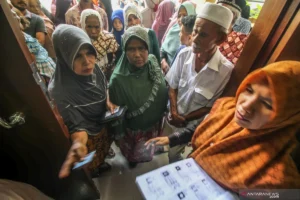
Commemorating Isra Mi’raj 2026 Reflecting on the Divine Journey and Spiritual Significance of the 1447 Hijriah Milestone

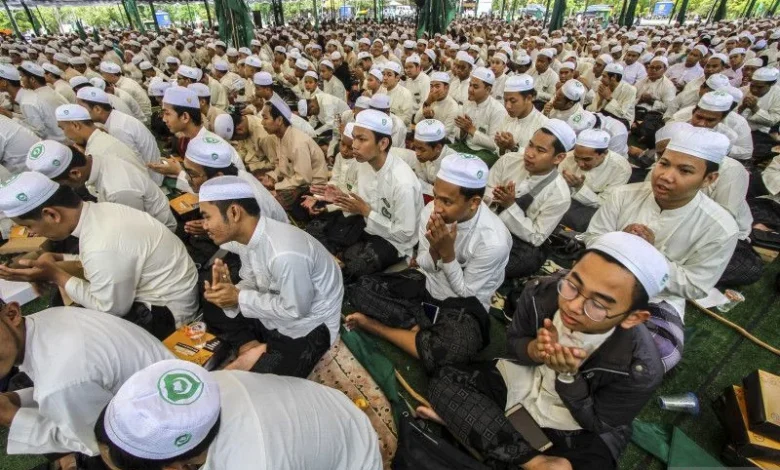
The global Muslim community is preparing to observe one of the most profound events in Islamic history, Isra Mi’raj, which is scheduled to take place on the 27th of Rajab, 1447 Hijriah, corresponding to Friday, January 16, 2026. This sacred occasion commemorates the miraculous night journey of the Prophet Muhammad SAW from the Masjid al-Haram in Mecca to the Masjid al-Aqsa in Jerusalem, followed by his ascension to the highest heavens. In Indonesia, the world’s most populous Muslim-majority nation, the event holds deep spiritual, cultural, and social significance, serving as a national holiday and a time for collective reflection, prayer, and community strengthening.
As the date approaches, various sectors of Indonesian society—ranging from religious organizations and government ministries to transportation providers and digital content creators—are mobilizing to facilitate the commemoration. The observance is not merely a historical remembrance but a contemporary opportunity for the faithful to renew their devotion and draw lessons from the Prophet’s journey, particularly regarding the establishment of the five daily prayers (Salat), which remains the cornerstone of Islamic practice.
The Theological and Historical Context of Isra Mi’raj
To understand the weight of Isra Mi’raj in 2026, one must look back at the historical context of the event, which occurred during a period known as Am al-Huzn or the "Year of Sorrow." During this time, the Prophet Muhammad SAW faced intense personal trials, including the passing of his beloved wife, Khadijah bint Khuwaylid, and his protective uncle, Abu Talib. These losses left the Prophet in a state of deep grief and increased his vulnerability to the persecution of the Quraish in Mecca.
Theologically, Isra Mi’raj was a divine gift of comfort and a demonstration of God’s omnipotence. The journey is divided into two distinct parts: Isra, the horizontal journey from Mecca to Jerusalem, and Mi’raj, the vertical ascension through the seven heavens. According to Islamic tradition, the Prophet was transported on a celestial being known as the Buraq. During the ascension, he met with various prophets of the past, including Adam, John the Baptist, Jesus, Joseph, Idris, Aaron, Moses, and Abraham, signifying the continuity and unity of the Abrahamic prophetic tradition.
The culmination of the journey was the Prophet’s arrival at Sidrat al-Muntaha, the Lote Tree of the Furthest Boundary, where he received the direct command from Allah SWT for the Muslim Ummah to perform fifty prayers a day. Following a series of interventions by Prophet Musa (Moses), who urged Muhammad SAW to ask for a reduction out of concern for the people’s capacity, the number was eventually reduced to five daily prayers, though the spiritual reward remained equivalent to fifty.
Chronology of the Commemoration and Public Observance
In the lead-up to January 16, 2026, the Indonesian Ministry of Religious Affairs (Kemenag) and various Islamic organizations such as Nahdlatul Ulama (NU) and Muhammadiyah provide guidance on the timing and essence of the celebration. While the Gregorian date is fixed for January 16, the lunar-based Hijri calendar means that preparations often begin weeks in advance as the month of Rajab commences.
The chronology of the 2026 commemoration is expected to follow a traditional yet modernized pattern:
- Early Rajab Preparations: Religious leaders begin delivering sermons (dakwah) focusing on the virtues of the month of Rajab and the upcoming Isra Mi’raj.
- The Eve of 27 Rajab: Communities gather in mosques and prayer rooms (musholla) for Istighosah (mass prayer), the recitation of the Quran, and the reading of the Barzanji or other poetic accounts of the Prophet’s life.
- The Main Event (January 16, 2026): National and regional Tabligh Akbar (grand religious gatherings) are held. These events often feature prominent scholars who contextualize the Prophet’s journey within modern challenges, such as ethics in the digital age and social justice.
- Post-Event Reflection: Families and educational institutions use the following days to discuss the practical applications of the lessons learned, particularly the importance of discipline in prayer and the pursuit of knowledge.
Logistical Preparations and Economic Impact
The designation of Isra Mi’raj as a national holiday in Indonesia invariably leads to significant movement within the country. For 2026, the holiday falls on a Friday, creating a "long weekend" that is expected to boost domestic tourism and travel.
Supporting data from the transportation sector highlights this trend. For instance, PT Kereta Api Indonesia (KAI) for the Palembang region has already announced the availability of approximately 10,672 tickets to accommodate the surge in travelers during the Isra Mi’raj long weekend. This proactive measure reflects a broader national strategy to manage the influx of passengers who travel to their hometowns (mudik) or visit religious sites and family members.
Economic analysts suggest that the "holiday effect" of Isra Mi’raj 2026 will provide a stimulus to the hospitality and retail sectors. Local markets near major mosques and pilgrimage sites often see a 15-25% increase in activity as pilgrims and tourists purchase food, religious attire, and souvenirs. Furthermore, the digital economy sees a spike in activity as millions of Indonesians utilize mobile data to share greetings, stream religious content, and use social media filters or "Twibbons" to mark the occasion.
The Digital Transformation of Religious Expression
In the contemporary era, the way Isra Mi’raj is celebrated has expanded beyond physical gatherings into the digital realm. The 2026 commemoration is expected to see a record-high engagement on social media platforms. The use of "Twibbons"—digital photo frames—and specialized posters has become a standard method for the younger generation to express their faith and participate in the global Ummah’s discourse.
Meaningful greetings play a crucial role in this digital celebration. These messages often blend traditional Arabic prayers with modern Indonesian or English sentiments, focusing on themes of spiritual elevation, light, and the "Mi’raj" of the soul. Examples of such sentiments that circulate during this period include:
- "May the light of Isra Mi’raj guide our hearts toward the path of righteousness and strengthen our commitment to the five daily prayers."
- "Wishing you a blessed Isra Mi’raj 1447 H. May we all find our own ‘ascension’ in faith and character this year."
- "On this holy day, let us reflect on the Prophet’s journey and strive to reach the highest stations of piety and wisdom."
This shift toward digital "Dakwah" allows the message of Isra Mi’raj to reach a wider, more diverse audience, transcending geographical boundaries and connecting the Indonesian diaspora with their cultural and religious roots.
Official Responses and Social Cohesion
Government officials and religious leaders emphasize that Isra Mi’raj is a moment for national unity. The Ministry of Religious Affairs typically issues a statement encouraging citizens to use the holiday as a time to foster Ukhuwah Islamiyah (Islamic brotherhood) and Ukhuwah Watoniyah (national brotherhood).
Inferred reactions from community leaders suggest a focus on the concept of "The Middle Path" (Wasatiyyah). In a world often characterized by polarization, the Prophet’s journey—which bridges the earthly and the divine—is framed as a call for balance. Leaders are expected to urge the public to avoid extremism and to use the spirit of the Prophet’s journey to navigate the complexities of modern life with patience and prayer.
Furthermore, the Indonesian Council of Ulama (MUI) often utilizes this period to remind the public of the importance of Masjid al-Aqsa. Given the geopolitical significance of the site in Jerusalem, Isra Mi’raj frequently serves as a catalyst for discussions on international solidarity and the pursuit of peace in the Middle East, reflecting Indonesia’s longstanding foreign policy positions.
Analysis: Implications for Faith and Society in 2026
As we look toward 2026, the commemoration of Isra Mi’raj serves as a barometer for the spiritual health of the community. In an increasingly fast-paced and technologically driven society, the mandatory five prayers—the primary gift of the Mi’raj—act as a "spiritual anchor."
The analysis of current trends suggests that the 2026 observance will highlight three key themes:
- Resilience through Faith: Following years of global uncertainty, the narrative of the Prophet overcoming his "Year of Sorrow" through divine intervention resonates deeply with those seeking hope.
- Technological Integration: The seamless blend of ancient tradition with modern technology (from AI-generated religious art to live-streamed sermons) indicates a religion that remains vibrant and relevant.
- Logistical Efficiency: The preparedness of state-owned enterprises like KAI demonstrates the government’s recognition of religious holidays as vital components of the national social fabric and economy.
In conclusion, the commemoration of Isra Mi’raj on January 16, 2026, is far more than a date on a calendar. It is a multi-faceted event that integrates profound theological truths with the practical realities of modern Indonesian life. Through prayer, travel, digital connection, and community gathering, the faithful will once again honor the journey of the Prophet Muhammad SAW, seeking to translate the lessons of the heavens into a more compassionate and disciplined life on earth. As the 1447 Hijriah milestone approaches, the message remains clear: the journey toward spiritual excellence is a continuous path, requiring both the humility of the Isra and the ambition of the Mi’raj.