Beyond the Badge: Understanding the Strategic Distinction Between Mitsubishi Pajero and Pajero Sport


JAKARTA — For automotive enthusiasts and everyday consumers alike, the nomenclature of Mitsubishi’s SUV lineup frequently generates a degree of confusion. Although they share a legendary namesake and a heritage deeply rooted in off-road dominance, the Mitsubishi Pajero and the Mitsubishi Pajero Sport are fundamentally distinct vehicles. Engineered with differing design philosophies, targeted at separate market segments, and built to fulfill divergent consumer expectations, these two nameplates represent entirely separate tiers within the broader global Sport Utility Vehicle ecosystem.
Clarifying this distinction has become increasingly crucial following recent global product developments, most notably the high-profile international debut of the completely redesigned flagship Pajero. As automotive markets adjust to the arrival of a new generation of top-tier off-roaders, industry stakeholders, brand representatives, and consumers are re-evaluating how these two pillars of Mitsubishi’s engineering legacy coexist, particularly within dynamic Southeast Asian markets such as Indonesia.
The Structural and Philosophical Divide
The core differentiation between the two models lies in their classification, physical dimensions, and mechanical positioning. According to Rifat Sungkar, Brand Ambassador for Mitsubishi Motors Indonesia, the Pajero and the Pajero Sport occupy strictly separate categories within the automotive hierarchy.
"Pajero is an exclusive SUV featuring a substantially larger body, whereas the Mitsubishi Pajero Sport falls firmly into the medium SUV class," Sungkar noted in an official statement detailing the vehicle characteristics.
This classification is not merely semantic; it dictates the structural architecture, interior spaciousness, technological sophistication, and price point of each vehicle. While the Pajero serves as a technological tour de force and an uncompromised flagship designed for cross-country endurance and absolute luxury, the Pajero Sport is optimized as a versatile, rugged, yet accessible multi-purpose medium SUV tailored for both family transport and demanding terrain.
Anatomy of a Flagship: The All-New Global Pajero
The dialogue surrounding these two vehicles intensified following the global debut of the next-generation Pajero on September 2, 2026. Unveiled initially in Thailand, this new iteration marked a comprehensive, ground-up overhaul of the vehicle that cemented Mitsubishi’s reputation in grueling international motorsports like the Dakar Rally.
The latest generation of the flagship model breaks away from conventional urban SUV trends, transforming entirely into a dedicated cross-country SUV engineered to sit proudly at the very pinnacle of the brand’s global portfolio. The physical footprint of the All-New Pajero underscores its commanding presence: it measures 4,920 millimeters in length, 1,925 millimeters in width, and 1,910 millimeters in height for variants equipped with 20-inch wheels, all underpinned by a robust 2,870-millimeter wheelbase.
Beneath the sculpted exterior lies a formidable powertrain engineered for extreme environments. The vehicle is propelled by an advanced 2.4-liter diesel engine capable of generating a staggering 480 Nm of maximum torque, with specific regional specifications calibrated to 470 Nm. To harness this power effectively across treacherous landscapes, the flagship integrates Mitsubishi’s renowned Super Select 4WD-II system seamlessly paired with the Super All-Wheel Control (S-AWC) vehicle dynamics integration system. However, Mitsubishi notes that exact specifications, feature packages, and mechanical tunings remain subject to regional market strategies and homologation requirements.
The Indonesian Landscape: The Enduring Legacy of the Pajero Sport
While the arrival of the All-New Pajero has captured global automotive headlines, the market reality in countries like Indonesia is shaped by a different vehicle that has spent years embedding itself into the cultural and infrastructural fabric of the archipelago.
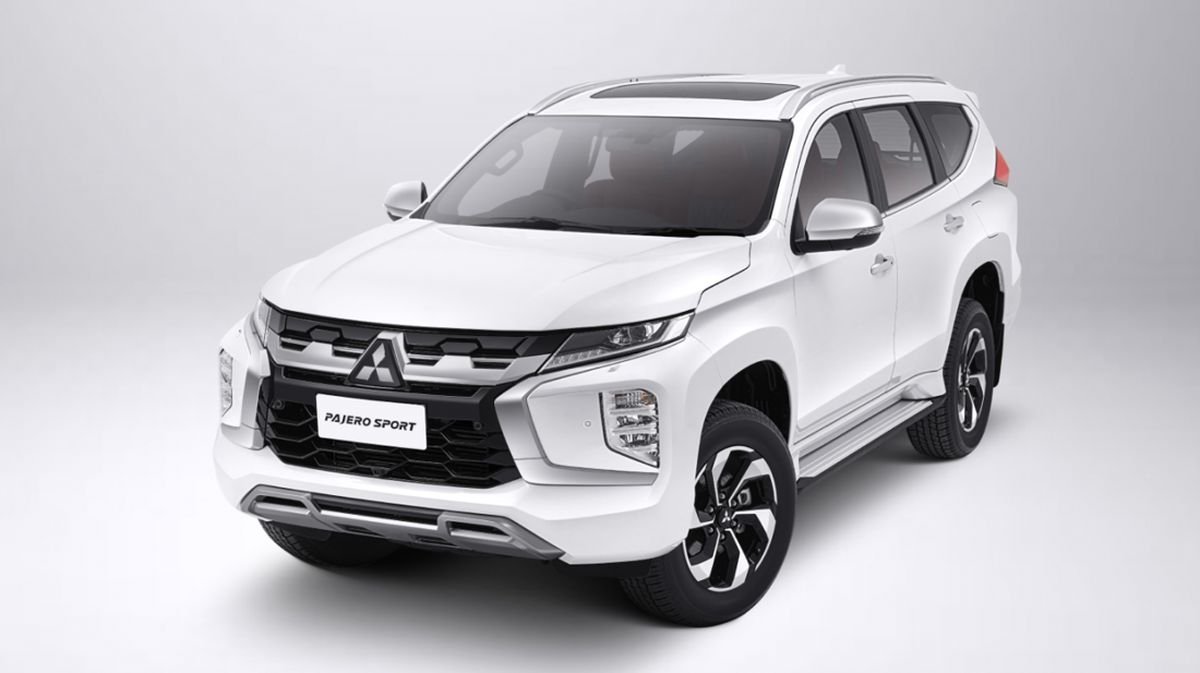
The Mitsubishi Pajero Sport currently circulating on Indonesian roads belongs to its third generation, which originally made its domestic market debut in 2016. Demonstrating the vehicle’s long-term commercial viability and adaptability, PT Mitsubishi Motors Krama Yudha Sales Indonesia (MMKSI) has overseen local assembly operations for the SUV, punctuated by major stylistic and technological facelifts introduced in 2021 and 2024.
Dimensionally, the Pajero Sport is more compact and city-friendly than its flagship sibling, measuring 4,840 millimeters long, 1,815 millimeters wide, and 1,835 millimeters high, with a wheelbase spanning 2,800 millimeters. Propelled by a proven 2.4-liter diesel engine delivering a robust maximum torque of 430 Nm, the Indonesian-spec Pajero Sport also features the sophisticated Super Select 4WD-II system, ensuring that its off-road credentials remain uncompromised despite its more mainstream market positioning.
Corporate and Brand Perspectives on Market Coexistence
Addressing potential consumer confusion regarding the overlapping nomenclature, senior leadership at Mitsubishi Motors has emphasized that both vehicles serve complementary rather than competing roles within the broader corporate strategy.
Irwan Kuncoro, Director of Sales and Marketing Division at PT MMKSI, elaborated on how the two vehicles interact within the commercial ecosystem. According to Kuncoro, while the All-New Pajero and the Pajero Sport share an identical foundational DNA and engineering heritage, they project distinct characters, strategic positioning, and tailored purposes designed to address a multifaceted customer base.
"In Indonesia, the Pajero Sport has earned deep and lasting trust from our customers and will unquestionably remain one of the primary pillars and model mainstays for Mitsubishi Motors," Kuncoro stated, reaffirming the company’s commitment to the locally assembled medium SUV.
Echoing this sentiment, Rifat Sungkar emphasized that the introduction of the new flagship global model does not diminish the appeal or the market viability of the Pajero Sport. Having commanded a dedicated following of SUV enthusiasts since its inception, the Pajero Sport continues to dominate a specific consumer segment that prioritizes rugged utility, spaciousness, and value within the medium SUV bracket.
"For the Indonesian market, the Pajero Sport will remain fully available," Sungkar assured consumers, reinforcing the message that the two nameplates serve entirely different consumer demographics and budgetary tiers.
Chronology of Evolution: From Dakar Dominance to Modern Utility
To fully appreciate the current positioning of both models, it is instructive to examine the historical trajectory that brought them to this juncture. The Pajero lineage traces its roots back to the late 20th century, where it evolved from a utilitarian four-wheel-drive prototype into a legendary champion of the grueling Paris-Dakar Rally. Over decades of competition, the engineering prowess forged in the deserts of Africa was transferred directly into commercial production units, cementing the Pajero name as a symbol of indestructible mechanical reliability.
As automotive markets shifted toward unibody crossovers and more fuel-efficient urban layouts in the 2000s, Mitsubishi recognized the necessity to diversify. This realization led to the development of the Pajero Sport, a ladder-frame medium SUV derived from pickup truck architecture designed to offer robust off-road capability combined with enhanced everyday comfort and passenger versatility.
The timeline of the Pajero Sport in Indonesia further illustrates this targeted strategy:
- 2016: The third-generation Pajero Sport launches in Indonesia, transitioning to local assembly to better meet domestic demand and optimize pricing structures.
- 2021: Mitsubishi introduces a significant facelift, upgrading interior technology, safety suites, and exterior styling to align with evolving consumer expectations.
- 2024: A subsequent round of updates refreshes the vehicle, incorporating advanced driver-assistance systems (ADAS) and refined powertrain efficiencies.
- 2026: The global automotive landscape witnesses the dramatic rebirth of the original nameplate with the debut of the All-New Pajero cross-country flagship in Thailand, resetting the benchmark for high-end off-road engineering.
Broader Industry Implications and Future Outlook
The clear delineation maintained by Mitsubishi between the Pajero and the Pajero Sport reflects a sophisticated understanding of regional market maturity in Southeast Asia. Indonesia, in particular, represents a critical hub for body-on-frame SUVs, where consumers place a high premium on ground clearance, flood-handling capabilities, towing capacity, and multi-row seating configurations.
By keeping the Pajero Sport anchored firmly in the medium SUV segment—supported by local manufacturing efficiencies and extensive after-sales networks—Mitsubishi ensures it retains a dominant foothold in high-volume commercial and family sectors. Simultaneously, the introduction of the All-New Pajero as an exclusive, high-end import allows the brand to cater to high-net-worth collectors, hardcore off-road purists, and enthusiasts seeking the absolute pinnacle of Mitsubishi’s automotive technology.
Ultimately, the confusion between the two vehicles highlights the enduring equity of the Pajero brand name. Rather than cannibalizing each other’s market share, the coexistence of the Pajero and the Pajero Sport demonstrates a cohesive product matrix. It reassures current owners of the medium SUV that their vehicles remain relevant and fully supported, while offering a tantalizing glimpse into the future of elite, cross-country mobility for those looking toward the absolute zenith of the brand’s engineering capabilities.
Related posts: