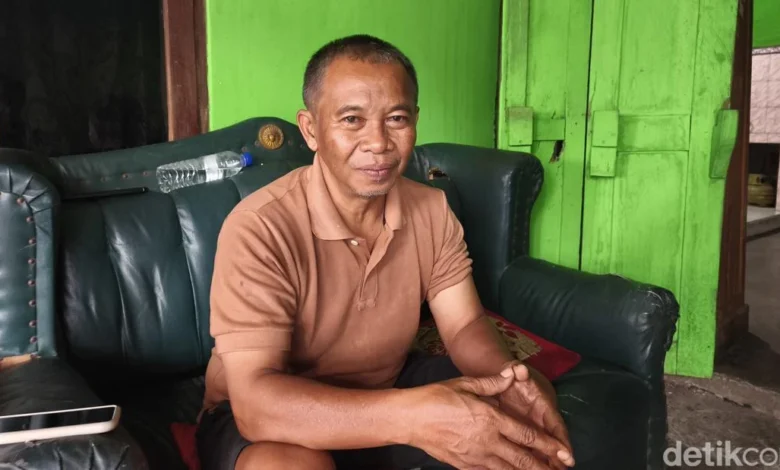
The harrowing sinking of the motor vessel KM Virgo Transport 8 in the Java Sea has left an indelible mark on its survivors, chief among them Haryono, a 58-year-old resident of Diwak Village, Bergas Subdistrict, Semarang Regency. For years, Haryono’s livelihood depended on the unpredictable rhythms of maritime transit. Employed as an escort for prospective agricultural laborers bound for palm oil plantations in Kalimantan, he routinely navigated the treacherous waters between Surabaya’s Tanjung Perak Port and the outer islands. Yet, no amount of professional familiarity with the sea could prepare him for the catastrophic events of mid-September 2026—a maritime disaster that tested the absolute limits of human endurance, resilience, and survival against overwhelming odds.
The tragedy unfolded against a backdrop of escalating safety concerns within Indonesia’s domestic ferry sector, where regulatory compliance, passenger manifests, and weather preparedness frequently face intense public scrutiny. Maritime authorities have long grappled with the vulnerabilities of aging vessels operating during periods of extreme sea states. The loss of KM Virgo Transport 8 prompted immediate legislative pushback, with members of the House of Representatives (DPR) forcefully demanding the suspension of any vessel operations failing to strictly adhere to standard operating procedures (SOP).
A Chronology of Omens and the Fateful Voyage
Haryono’s journey toward the disaster began with a series of unsettling omens that, in retrospect, seemed to foreshadow the impending calamity. On Friday, September 11, 2026, just hours before his scheduled departure to Tanjung Perak Port, Haryono attended a local community gathering celebrating the groundbreaking of a new early childhood education (PAUD) building. As customary, he returned home carrying a traditional blessing food package (bancakan). To his profound astonishment, the package slipped from his hands and spilled violently onto the ground at his doorstep—an unusual mishap that immediately troubled his superstitious sensibilities.
The journey south from Ungaran aboard a chartered travel vehicle ferrying 15 prospective plantation workers compounded his growing unease. The vehicle suffered two separate tire punctures within a brief span: first in Sragen, and subsequently near Mantingan after repairs had just been completed. Despite these anomalies, the entourage pressed forward, arriving at Surabaya’s Tanjung Perak Port at approximately 4:00 AM on Saturday, September 12. Seeking the earliest possible departure, Haryono booked passage on KM Virgo Transport 8. Originally scheduled to depart at 6:00 AM, the vessel’s departure time faced repeated delays, finally pulling away from the dock at approximately 10:00 AM.
Minutes after boarding, while resting in the economic class seating area, Haryono experienced a chilling premonition. He drifted into a brief slumber and suffered a vivid, distressing dream of the ship capsizing in broad daylight. Brushing the vision aside as idle anxiety, he continued with the voyage, partaking in the ship-provided lunch before falling into a deep sleep.
The Midnight Nightmare: Sinking in the Java Sea
The peaceful slumber was shattered at approximately 1:00 AM on Sunday, September 13, when fellow passengers shouted urgent warnings of the ship taking on water. Acting with immediate survival instincts, Haryono secured a life jacket before attempting to escape the rapidly flooding economic quarters. The vessel was already listing severely, transforming the exit doors into vertical obstacles. Utilizing a rolled-up sleeping mat as an improvised stepping stool and aided by an unseen push from behind, he managed to grasp the overhead structural framing.
Upon reaching the upper deck, the situation deteriorated catastrophically. The ship had achieved a nearly 90-degree list, violently hurling Haryono against safety railings and stairwells, leaving his left arm bruised and swollen and his back wracked with pain. Within minutes—scarcely five to ten minutes after reaching the upper deck—high waves battered the listing vessel, completely capsizing it and throwing Haryono deep into the churning darkness of the Java Sea.
Plunging into the deep water, Haryono was forced to swallow seawater multiple times to maintain buoyancy before finally breaking the surface. Amidst the pitch-black darkness and towering waves, he discovered a floating locker cabinet, clambering atop it for temporary refuge. Shortly thereafter, an emergency life raft (liferaft) automatically deployed nearby. Battling exhausting swells, he swam ten meters to reach the inflatable vessel, scaling its slippery rubber perimeter with his final reserves of strength.
Rescue Operations at Sea: From Self-Preservation to Heroism
Once aboard the life raft, Haryono quickly transitioned from survivor to rescuer. Hearing desperate cries for help from the surrounding water, he expended his remaining physical energy to haul three exhausted survivors onto the safety of the raft. As additional victims converged on the area, the group collectively assisted subsequent survivors, including the final woman to board, until the raft reached capacity. Recognizing that a trailing tether still connected the life raft to the capsized hulk of KM Virgo—threatening to drag them down as the wreck shifted—Haryono repeatedly urged his exhausted companions to cut the line. Following initial reluctance due to fatigue and panic, a fellow survivor courageously ventured back into the water to sever the tether, allowing the ocean currents to sweep the raft safely away from the wreck site.
For nearly ten hours, the occupants of the life raft drifted across the open sea until Monday morning, September 14, when they spotted a distant fishing vessel. Deploying emergency whistles and signaling lights, they successfully drew the attention of the crew of the KM Ikan Cahaya Bahari, a fishing boat operating out of Juwana, Pati Regency. The perilous transfer in high seas resulted in the successful rescue of 22 survivors—21 men and one woman. The hospitable crew of the fishing vessel immediately provided food, dry clothing, and shelter while broadcasting survivor data via social media to alert maritime authorities and families ashore.
Official Response and Evacuation by Military Assets
The large-scale rescue and evacuation operation shifted into high gear later that day and into the following morning. Two naval vessels—including the Indonesian Navy’s guided-missile frigate KRI Nala and a Basarnas (National Search and Rescue Agency) ship—rendezvoused with the fishing boat. Due to high wave conditions, the transfer of survivors to KRI Nala required the delicate deployment of rigid-hull inflatable boats (LCR), navigating treacherous swells in relay operations.
Aboard KRI Nala, survivors received immediate medical triage, warm meals, and dry amenities. It was during this phase that digital connectivity restored familial links. Haryono’s younger brother, Andrianto, discovered survivor manifests broadcasted on TikTok by naval personnel, enabling an emotional video call that confirmed Haryono’s safety to his anxiously awaiting relatives in Central Java. Following an extensive maritime sweep for additional missing persons, KRI Nala proceeded toward Banjarmasin.
Upon reaching South Kalimantan waters, complex navigational constraints necessitated further transfers via smaller naval craft, including KRI KAL Kumai, before the survivors finally made landfall at the port of Banjarmasin. Local emergency response teams, spanning military, police, medical personnel, and disaster agencies, processed the arrivals, administered medical care, and transferred the group to the Citra Raya Hotel for comprehensive recovery.
Post-Disaster Support and Community Solidarity
The aftermath of the tragedy brought significant administrative and financial interventions to cushion the blow for the traumatized survivors. Representatives of the Governor of South Kalimantan visited the hotel to distribute financial relief totaling IDR 5 million per survivor, alongside logistical assistance for repatriation flights. Concurrently, regional solidarity manifested in remarkable ways; Haryono’s local village head (Lurah) in Central Java remotely coordinated the delivery of a replacement mobile phone via courier service to re-establish direct communication channels.
Tensions briefly flared over compensation offers from KM Virgo’s management, who initially distributed IDR 500,000 as token "tali asih" (compassionate assistance) to groups housed elsewhere. Rejecting the initial sum as grossly inadequate to cover material losses, ruined belongings, and psychological trauma, Haryono and his fellow hotel occupants successfully negotiated a standardized settlement of IDR 5 million per victim, mirroring the provincial government’s baseline support.
On Saturday, September 19, Haryono boarded a repatriation flight arranged by the regional administration, touching down at Jenderal Ahmad Yani International Airport in Semarang. His arrival culminated in an emotionally charged reunion with his wife, children, local village officials, and neighbors—bringing a harrowing week of uncertainty to a joyous close.
Broader Implications and Maritime Safety Reform
The sinking of KM Virgo Transport 8 serves as a sobering reminder of the persistent vulnerabilities plaguing Indonesia’s archipelagic transportation network. Industry analysts emphasize that despite stringent regulatory frameworks, enforcement gaps regarding passenger manifest accuracy, vessel load capacities, and real-time weather monitoring continue to endanger human lives.
The political fallout—highlighted by parliamentary demands to halt non-compliant vessel operations—underscores an urgent institutional imperative to overhaul oversight mechanisms within the Directorate General of Sea Transportation. For survivors like Haryono, physical recovery from bruised limbs and psychological healing from the horrors of the Java Sea will take time. Yet, his remarkable survival stands as a testament to human resilience, community solidarity, and the critical importance of robust, coordinated maritime search and rescue infrastructure across the Indonesian archipelago.