Lee Se Young Stuns Viewers as the Homewrecker in The Remarried Empress Alongside Shin Min Ah and Ju Ji Hoon

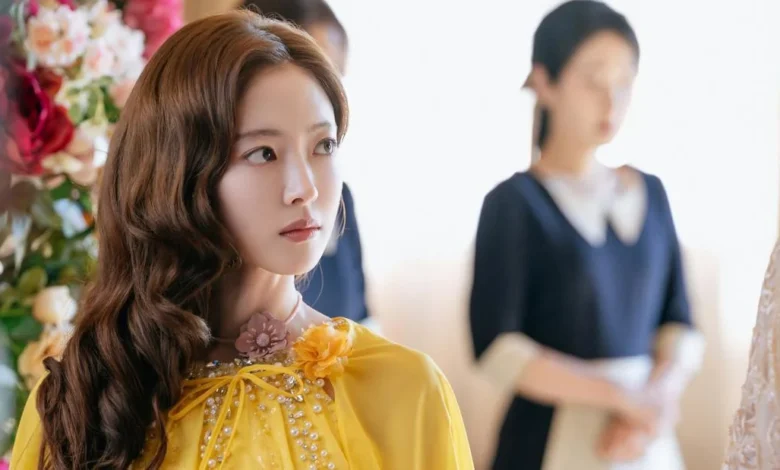
The global entertainment landscape has once again turned its collective gaze toward the burgeoning realm of high-budget Korean television dramas, with Disney+ Hotstar’s latest release, The Remarried Empress, capturing an unprecedented level of viewer engagement. Released in November 2026, the series has rapidly become a central fixture in international pop culture discourse, largely driven by the explosive performances of its stellar lead cast. Among them, acclaimed actress Lee Se Young has emerged as a focal point of public discussion, commanding both intense scrutiny and critical praise for her portrayal of Rashta, the polarizing catalyst who destabilizes the imperial household governed by actors Shin Min Ah and Ju Ji Hoon.
Main Facts and Plot Overview
The Remarried Empress adapts a immensely popular web novel and webtoon property of the same name, which accumulated hundreds of millions of views globally prior to its live-action adaptation. The narrative centers on Empress Navier, portrayed by Shin Min Ah, a paragon of intelligence, grace, and political acumen who has dutifully fulfilled her obligations as the ruler of the Eastern Empire. However, the foundational stability of her reign—and her marriage—is violently shaken by the arrival of Rashta, played by Lee Se Young.
Rashta’s introduction to the imperial palace upends the traditional power structures of the court. Once a runaway slave possessing no material wealth or political backing, Rashta’s life undergoes a dramatic, Cinderella-esque metamorphosis after she is rescued by Emperor Sovieshu, played by Ju Ji Hoon. Charmed by her ethereal beauty and feigned innocence, the Emperor elevates her from the lowest strata of society to a position of extraordinary privilege within the royal court, effectively sidelining and betraying his lawful wife, Empress Navier.
From the premiere episode, the dynamic between the trio establishes a high-stakes dramatic tension. While Rashta projects an aura of vulnerability and naivety in the presence of the Emperor, her interactions with Empress Navier reveal a calculated audacity. She unabashedly asserts her presence as a disruptive force within the imperial marriage, successfully inciting visceral emotional reactions from audiences worldwide who have rallied fiercely behind the sidelined Empress.
Chronology and Character Trajectories
The narrative trajectory of The Remarried Empress unfolds through a meticulously constructed web of political intrigue, class disparity, and emotional betrayal. Understanding the background of each character provides essential context for the explosive events depicted on screen.
The chronology of the conflict begins long before the physical setting of the imperial court. Rashta’s early life is defined by extreme subjugation, enduring physical abuse and psychological torment under the ownership of her former masters. Her decision to flee represents an act of desperate survival. When she crosses paths with Emperor Sovieshu during a royal hunting expedition, her destitute state contrasts sharply with the absolute authority wielded by the monarch.
Ju Ji Hoon’s character, Emperor Sovieshu, operates under the arrogant assumption that he can introduce a concubine into the imperial palace without destabilizing the political equilibrium or undermining the authority of Empress Navier. Historical and political precedents within the fictional empire dictate that a concubine holds a secondary status, but Sovieshu’s overt favoritism toward Rashta violates these unwritten rules, weaponizing affection against political stability.
Empress Navier, embodied by Shin Min Ah, initially maintains her composure, adhering to the strict codes of conduct expected of an imperial ruler. However, the continuous erosion of her marital status and the public humiliation orchestrated by the Emperor’s favoritism set the stage for a much larger ideological and political schism—one that promises to redefine the power balance of the entire empire as the series progresses.
Background Context of the Production
The journey of The Remarried Empress from a serialized digital comic to a tentpole streaming television series is a testament to the shifting economics of South Korea’s entertainment industry. For years, fantasy-romance and period dramas have dominated domestic ratings, but the globalization of streaming platforms has necessitated higher production values, cinematic framing, and internationally recognized casts.
Securing Shin Min Ah, Ju Ji Hoon, and Lee Se Young for the primary roles represents a casting coup for Disney+ Hotstar. Shin Min Ah brings decades of prestige and a reputation for choosing complex, emotionally resonant characters. Ju Ji Hoon, known for his commanding presence in historical and thriller projects, provides the necessary gravity and moral ambiguity for the role of Emperor Sovieshu.
Meanwhile, Lee Se Young’s inclusion underscores her versatility as an actress capable of anchoring both sympathetic leads and complex antagonists. Starting her career as a child actress in 1997 at the age of five, Lee has systematically built an enviable resume. Prior to her transformative role in The Remarried Empress, she cemented her status as a dramatic powerhouse through critically acclaimed performances in A Korean Odyssey (2017), Kairos (2020), The Red Sleeve (2021), and The Law Cafe (2022). Her transition into the role of a polarizing antagonist demonstrates a willingness to challenge her audience and subvert the expectations associated with her traditionally wholesome screen persona.
Industry Response and Critical Analysis
The premiere of The Remarried Empress has triggered widespread discussion across digital media platforms, generating significant traffic for entertainment portals and social media networks alike. Industry analysts point to the show as a prime example of the "villain economy" in modern television, where audiences actively engage with complex, morally gray characters who provoke strong emotional responses.
Media psychologists and cultural critics note that characters like Rashta serve as lightning rods for viewer engagement. By deliberately subverting the audience’s desire for immediate justice, creators can sustain long-term tension across multiple episodes. Lee Se Young’s performance has been singled out for its nuance; rather than portraying Rashta as a two-dimensional villain, the actress infuses the character with traces of her traumatic past, creating a psychological tension wherein viewers simultaneously despise her actions and understand the desperation that birthed them.
Furthermore, the casting choices have been lauded for their direct contribution to the series’ commercial viability. International markets have responded enthusiastically to the star power of the lead trio, contributing to record-breaking initial streaming numbers for Disney+ Hotstar within the Asian region. The series has consistently trended across major social media platforms in territories including Indonesia, the Philippines, Thailand, and South Korea, signaling a robust cross-cultural appeal.
Broader Impact and Societal Implications
Beyond its immediate entertainment value, The Remarried Empress touches upon enduring socio-political themes that resonate strongly with contemporary audiences. The narrative explores systemic power imbalances, the commodification of women within patriarchal structures, and the fragile nature of institutions built on absolute monarchy.
The character of Empress Navier represents the archetype of the dutiful institutionalist who realizes that compliance with an unjust system offers no protection against betrayal. Conversely, Rashta represents the subaltern rising from the absolute margins, albeit weaponizing her victimhood to navigate and exploit the very patriarchal structures that oppressed her. This dynamic moves the narrative beyond a simplistic "good versus evil" dichotomy, offering instead a critique of how societies pit women against one another within enclosed systems of power.
As the series continues its weekly rollout, the cultural footprint of The Remarried Empress is expected to expand further. The performances delivered by Shin Min Ah, Ju Ji Hoon, and particularly Lee Se Young have set a new benchmark for webtoon adaptations in the streaming era. By translating complex source material into high-end dramatic television, the production has not only satisfied a passionate preexisting fandom but has also successfully recruited a new global audience eager to witness the ultimate resolution of the imperial crisis.