Extreme Drought Triggers Sharp Surge in Chili Pepper Prices Across Tangerang Markets, Squeezing Consumers and Traders Alike

The traditional market stalls of Pasar Gudang Tigaraksa in Tangerang Regency, Banten, have become the latest battleground for household economic strain as soaring temperatures and prolonged dry spells take a heavy toll on agricultural yields. Over the past several weeks, consumers and local vendors alike have watched in dismay as the cost of staple chili varieties climbs to alarming heights. This persistent upward trajectory in prices highlights the fragile nature of Indonesia’s domestic food supply chains, particularly when faced with unpredictable meteorological phenomena such as extreme dry seasons driven by climatic anomalies.
For culinary enthusiasts and household managers in the region, the kitchen table has quietly transformed into a place of strict rationing. Chili peppers, foundational to virtually every traditional Indonesian culinary preparation ranging from fiery sambal to savory stews, have transitioned from an affordable daily staple into a heavily budgeted luxury. As market vendors struggle to maintain inventory and consumers scale back their purchases, the ripple effects of this agricultural shortfall are being felt deeply throughout the local economy, prompting urgent calls for systemic intervention and structural resilience within the nation’s agricultural sector.
Anatomy of the Price Surge: By the Numbers
The mathematical reality of the price hikes at Pasar Gudang Tigaraksa illustrates a severe distortion in the market dynamics of supply and demand. According to local vendors operating within the bustling marketplace, the cost of raw materials has escalated drastically since early September.
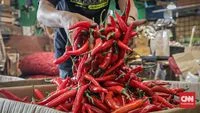
Soleh, a 46-year-old chili vendor who has spent years navigating the fluctuations of wholesale and retail agricultural markets, details the stark transformation in pricing structures. Raw bird’s eye chili, locally known as cabai rawit merah and widely prized for its intense heat, has surged to Rp85,000 per kilogram. This represents a staggering increase from its previous baseline of approximately Rp60,000 per kilogram.
Simultaneously, curly red chili, or cabai merah keriting, has experienced a parallel upward movement. Once trading at a stable normal price of around Rp40,000 per kilogram, the commodity now commands a retail price of Rp60,000 per kilogram. This represents a roughly 50 percent appreciation in cost over a compressed timeframe of just a few weeks.
Soleh notes that the impetus for these consumer-facing spikes originates further up the distribution chain at the central wholesale markets, where regional price setters pass down the mounting costs of procurement. "The price hikes started a few weeks ago, and the increase from the central wholesale market was extremely drastic," Soleh explains, pointing to the immediate transmission of agricultural stress from cultivation zones to urban retail hubs.
Chronology of a Crisis: The Weather Factor Behind the Harvest Failures
The genesis of the current crisis traces back to the onset of the extended dry season, which has gripped major agricultural producing zones across the island of Java. Unlike staple grains that possess robust drought-resistant traits or benefit from massive national irrigation infrastructure, chili plants are notoriously sensitive to environmental stressors. They require precise balances of moisture, soil drainage, and temperature regulation to thrive.
As the extreme dry season intensified over the middle quarters of the year, meteorological indicators signaled severe precipitation deficits across key farming centers in West Java, Central Java, and parts of East Java—the primary agrarian heartlands responsible for supplying the massive urban centers of Greater Jakarta, including Tangerang.
During the initial weeks of the dry spell, farming communities attempted to mitigate the lack of rainfall through manual irrigation using underground wells and river pumps. However, as water tables receded and hydrological drought set in, these emergency measures proved insufficient. By late August and early September, agricultural extension reports began highlighting widespread crop stress.
By mid-September, the situation deteriorated into widespread crop failure, or puso, across multiple farming districts in West Java. Plants withered under unrelenting solar radiation, blossoms dropped prematurely before fruit set could occur, and pest infestations—thriving in arid conditions—decimated what little foliage remained. Consequently, the volume of harvested produce arriving at central wholesale distribution centers plummeted drastically, setting the stage for the acute price inflation currently observed in retail markets such as Pasar Gudang Tigaraksa.
Trader and Consumer Realities: Adapting to the New Financial Pressures
The downstream consequences of agricultural failure are starkly visible in the daily ledgers of market vendors and the tight household budgets of everyday shoppers. For small-scale merchants, higher prices do not translate into higher profits; rather, they signal a contraction in trade volume and a corresponding drop in net income.
Soleh reports that his overall daily revenue has plummeted by approximately 30 percent since the price surge took hold. The psychological threshold of consumers has been severely tested, forcing shoppers to radically alter their purchasing habits. Where a household might previously have purchased a full kilogram of bird’s eye chili for weekly consumption, the reality of the current pricing structure has forced a dramatic downscaling.
"Demand drops significantly when prices are high," Soleh observes. "Customers who normally buy a full kilogram can now only afford a quarter or half a kilogram. They simply do not have the purchasing power to buy in bulk."
This sentiment is echoed by consumers navigating the congested aisles of the market. Tanti, a 37-year-old mother and shopper at Pasar Gudang Tigaraksa, articulates the compounding financial pressures facing working-class families. For Tanti, every rupiah spent at the vegetable stall is weighed against competing household necessities, ranging from children’s educational expenses to basic utilities and protein sources.
"If possible, I hope the prices can be reduced because we have so many financial needs, including provisions for our children and other essential household expenses," Tanti laments, capturing the widespread consumer fatigue associated with persistent food inflation.
Economic Implications and Broader Market Impacts
The localized crisis in Tangerang serves as a microcosm of broader macroeconomic vulnerabilities tied to climate variability and agricultural dependency. Volatile price fluctuations in high-frequency consumption items like chili peppers exert a disproportionate psychological and financial impact on inflation expectations and consumer confidence, particularly among low-to-middle-income segments of the population.
From a structural standpoint, the recurrent vulnerability of horticultural crops to extreme weather events underscores systemic gaps in the agricultural value chain. Unlike non-perishable goods, fresh produce lacks significant buffer stock capabilities, leaving markets immediately exposed to supply shocks. When primary supply zones in West Java suffer climatic distress, alternative regional sourcing networks are frequently insufficient to bridge the supply deficit in the short term.
Furthermore, the economic squeeze experienced by chili farmers due to crop failure, contrasted with the high retail prices that do not fully enrich the primary producer, highlights longstanding logistical inefficiencies. Middlemen and multi-tiered distribution networks often absorb significant margins, while the producers bear the brunt of climate risks without adequate safety nets or crop insurance schemes.
Policy Responses and Path Forward
In light of recurring agricultural shocks driven by climate change, economists and agricultural policy experts increasingly emphasize the necessity for proactive government intervention and structural adaptation. While short-term market stabilization measures—such as market operations (operasi pasar), subsidized transport for food logistics, and inter-regional supply matching—can offer temporary relief, long-term resilience requires a fundamental overhaul of farming practices.
Stakeholders, including vendors like Soleh and consumers like Tanti, look toward regional and national authorities to implement sustainable solutions. These include expanding access to modern agricultural technologies, such as precision drip irrigation systems, drought-resistant seed varieties, and protected agricultural structures like greenhouses or shade net farming, which can shield vulnerable crops from extreme weather anomalies.
Additionally, strengthening cold-chain infrastructure and establishing strategic regional food reserves for high-volatility horticultural commodities can help smooth out seasonal supply dips. By decoupling food production from strict meteorological dependence, policymakers can better insulate both farmers from catastrophic losses and consumers from sudden inflationary shocks.
As the extreme dry season persists and agricultural recovery remains dependent on the eventual arrival of predictable rainfall patterns, the resilience of traditional markets in Tangerang and across the archipelago will continue to be tested. Navigating these climate-induced economic pressures will demand sustained coordination between central government agencies, regional agricultural offices, logistical providers, and farming communities to ensure food security and price stability for all segments of society.
Related posts: