Indonesia Bolsters Mineral Export Integrity and Revenue Through Enhanced BUMN Collaboration to Combat Under-Invoicing and Identify Strategic Resources

Jakarta – In a decisive move to safeguard national revenue and fortify the integrity of its critical mineral export sector, PT Danantara Sumber Daya Indonesia (DSI) and PT Sucofindo have cemented a strategic partnership aimed at eradicating under-invoicing practices and strengthening the governance of mineral exports. This significant collaboration, formalized following high-level discussions, is poised to usher in a new era of transparency and accountability in Indonesia’s lucrative mining industry, with particular emphasis on identifying and valuing strategic associated minerals, including Rare Earth Elements (REE) and radioactive components. The initiative underscores the Indonesian government’s unwavering commitment to maximizing state income, ensuring legal certainty in trade, and accelerating the national mineral downstreaming agenda.
The problem of under-invoicing has long plagued commodity-rich nations like Indonesia, representing a substantial drain on state coffers. Under-invoicing occurs when exporters declare a lower value for their goods than the actual transaction price, primarily to reduce tax liabilities, evade royalties, or facilitate illicit capital flight. Globally, the estimated losses from such illicit financial flows, including trade mis-invoicing, run into hundreds of billions of dollars annually, significantly impacting developing economies. In Indonesia, a nation heavily reliant on its natural resources, the impact of under-invoicing in the mining sector alone is projected to deprive the state of potentially trillions of rupiah in taxes, royalties, and non-tax revenues each year. This not only erodes the financial capacity of the state to fund public services and infrastructure but also creates an unfair playing field for legitimate businesses, distorting market competition and deterring foreign direct investment that prioritizes ethical conduct. The collaboration between DSI and Sucofindo directly addresses this systemic issue by introducing a more robust, independent verification mechanism designed to ensure that the declared value of exported minerals accurately reflects their true market worth.
Chronology of Enhanced Synergy and Strategic Discussions
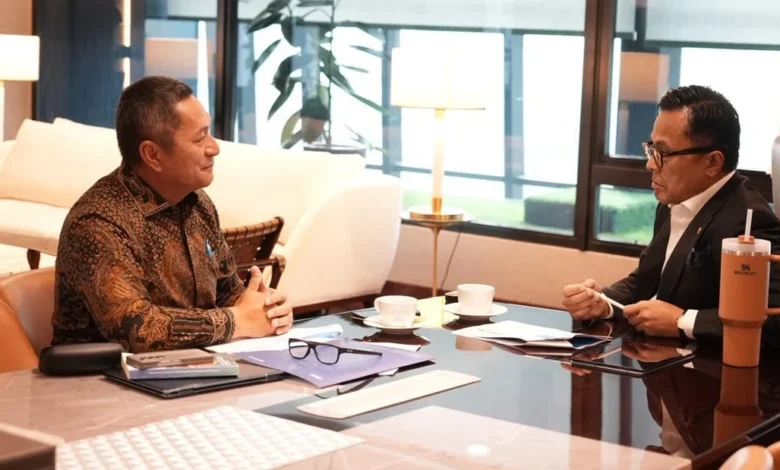
The formalization of this intensified synergy followed a pivotal meeting held on Wednesday, July 22, 2026, between Dony Oskaria, who serves as the Head of the BUMN Management Body (BP BUMN) and Chief Operating Officer (COO) of Danantara, and the President Director of PT Sucofindo. This high-level discussion, convened amidst an ongoing national push for enhanced state revenue optimization and resource management, delved into several critical areas. Key on the agenda were concrete steps to prevent under-invoicing, the strategic advancement of methodologies for identifying associated minerals, bolstering export risk mitigation frameworks, and synchronizing efforts to foster a more effective and integrated governance system for the mineral sector. Dony Oskaria, a vocal proponent of transparent and accountable trade practices, emphatically stated during the meeting, "We must no longer allow any room for under-invoicing practices." His assertion, later reiterated via the official Instagram account of BP BUMN on Thursday, July 23, 2026, underscored the urgency and gravity with which the state-owned enterprises are approaching this challenge. The discussions highlighted a collective resolve to leverage the combined strengths of BUMNs to build a more resilient and transparent export ecosystem.
Sucofindo’s Expanded Role in Independent Verification
Under this reinforced collaboration, PT Sucofindo, a renowned Indonesian inspection, supervision, and certification company, will significantly amplify its role as an independent verifier. This expansion is crucial for ensuring the utmost transparency and accountability in the valuation of mineral export transactions. Sucofindo’s mandate will encompass meticulous checks on the quantity, quality, and market value of exported minerals, utilizing its extensive technical expertise, state-of-the-art laboratory facilities, and network of experienced surveyors. The company’s verification processes will serve as a critical safeguard against misdeclarations, providing an unbiased assessment that can be cross-referenced by customs authorities and other regulatory bodies. For decades, Sucofindo has been a trusted partner in various industrial sectors, including mining, oil and gas, agriculture, and manufacturing, offering a comprehensive suite of services ranging from cargo surveying and product certification to environmental monitoring and technical consulting. Its established reputation for integrity and technical competence positions it ideally to undertake this enhanced verification mandate, which is vital for bolstering investor confidence and ensuring that Indonesia’s natural wealth contributes maximally to national development. "Verification must truly be strengthened so that all transactions can be accounted for," Dony Oskaria concluded, emphasizing the non-negotiable standard of accountability that this partnership aims to instill across the mineral export value chain.
Strategic Identification of Associated Minerals: Unlocking Hidden Value
Beyond curbing under-invoicing, a significant facet of this collaboration involves Sucofindo’s strengthened role in supporting the national mineral export governance through the development of strategies for identifying associated minerals. This includes critically important commodities such as Rare Earth Elements (REE) and, notably, radioactive elements. Indonesia possesses vast mineral reserves, and many primary mineral deposits often contain commercially viable or strategically important byproducts that are frequently overlooked or undervalued during standard extraction processes. The systematic identification and proper valuation of these associated minerals are paramount to enhancing legal certainty, streamlining export procedures, and, crucially, supporting Indonesia’s ambitious mineral downstreaming (hilirisasi) agenda.
Rare Earth Elements (REE) are a group of 17 chemically similar metallic elements that are indispensable for modern technologies, ranging from electric vehicles, wind turbines, and smartphones to advanced defense systems. The global demand for REE is skyrocketing, driven by the clean energy transition and technological advancements, making their secure supply a geopolitical and economic imperative. China currently dominates the global REE market, controlling a significant portion of mining, processing, and refining capacity. Diversifying the global supply chain has become a strategic priority for many nations. Indonesia, with its rich geological tapestry, is believed to hold significant, yet largely unquantified, REE reserves. Identifying and accurately assessing these resources is a critical step towards developing a domestic REE industry, adding immense value to Indonesia’s mineral output, and positioning the nation as a key player in the global high-tech supply chain.
Similarly, the presence and concentration of radioactive elements, often found alongside other minerals, necessitate stringent identification and management protocols. While presenting potential environmental and health risks if mishandled, these elements also hold strategic value for various industrial and energy applications. Proper identification is not only crucial for regulatory compliance and safe handling but also for potentially recovering valuable isotopes or ensuring secure disposal, aligning with international best practices for responsible mining. By developing robust identification strategies, Indonesia aims to prevent the illicit trade of such materials, ensure environmental stewardship, and potentially harness new economic opportunities from previously disregarded byproducts. This proactive approach underscores a holistic vision for mineral resource management that transcends mere extraction, focusing on comprehensive value capture and responsible resource utilization.
The Broader Mandate of State-Owned Enterprises (BUMNs)
This collaboration between DSI and Sucofindo is not an isolated initiative but rather an integral part of a broader government strategy to empower State-Owned Enterprises (BUMNs) as key drivers of national economic development and good governance. The Ministry of State-Owned Enterprises (Kementerian BUMN) has consistently pushed for BUMNs to transcend their traditional profit-making roles and actively contribute to the nation’s strategic objectives, including fostering economic stability, enhancing public services, and upholding ethical business practices. Through this synergy, BP BUMN, in conjunction with Danantara, is actively championing the strengthening of BUMNs’ roles in creating a more accountable export verification system. This entails not only technological upgrades and process improvements but also fostering a culture of integrity and transparency across the entire supply chain. By leveraging the collective expertise and resources of BUMNs, Indonesia aims to create a robust regulatory environment that supports legal certainty, mitigates risks associated with international trade, and significantly strengthens the competitiveness of its mining industry in the global market. This integrated approach ensures that BUMNs act as catalysts for sustainable economic growth, ensuring that the benefits of Indonesia’s natural endowments are maximized for the welfare of its citizens.
Implications for Indonesia’s Mining Sector and Global Trade
The successful implementation of this enhanced collaboration carries profound implications for Indonesia’s mining sector, national economy, and international trade standing.
Economic Impact: The primary economic benefit will be a substantial increase in state revenue. By accurately valuing mineral exports and curtailing under-invoicing, the government can expect higher tax collections, royalties, and non-tax revenues. This influx of funds can then be channeled into critical public infrastructure projects, education, healthcare, and other developmental programs. Furthermore, a transparent and equitable trading environment fosters fair competition, attracting legitimate domestic and foreign investors who seek stable and predictable regulatory frameworks. This can lead to increased investment in upstream and downstream mineral processing, creating jobs and stimulating local economies.
Regulatory and Governance Impact: The initiative promises to enhance legal certainty and regulatory clarity within the mining sector. With a robust and independent verification system, disputes over commodity values will likely decrease, and the risk of fraudulent activities will be significantly reduced. This improved governance will also provide more accurate data for policy-making, allowing the government to formulate more effective strategies for resource management, conservation, and industrial development. The move aligns with international best practices for transparency in extractive industries, potentially improving Indonesia’s standing in global indices related to ease of doing business and anti-corruption efforts.
Environmental and Social Impact: The systematic identification of associated minerals, particularly radioactive elements, has crucial environmental and social dimensions. Proper identification and handling ensure safer mining operations, better waste management, and reduced environmental contamination risks. It also allows for responsible resource extraction that considers the long-term sustainability of natural ecosystems and the well-being of local communities. This commitment to responsible mining can bolster Indonesia’s reputation as an environmentally conscious producer, which is increasingly important for attracting ethically-minded investors and consumers.
International Trade Competitiveness: By reinforcing export transparency and accountability, Indonesia positions itself as a reliable and credible trading partner in the global minerals market. Compliance with international trade standards and the eradication of illicit practices will enhance the competitiveness of Indonesian mineral products, potentially opening new markets and strengthening existing trade relationships. This is particularly relevant for strategic minerals like REE, where global buyers prioritize secure, transparent, and ethically sourced supplies.
Challenges and Future Outlook
Despite the clear benefits, the implementation of such an ambitious initiative will undoubtedly face challenges. These include the need for continuous technological investment in advanced verification tools, ongoing capacity building for personnel, and potential resistance from parties who have benefited from the previous loopholes. Ensuring consistent application across all ports and mineral types will require sustained effort and robust oversight.
Looking ahead, this collaboration sets a precedent for how BUMNs can collectively address complex national challenges. Future steps will likely involve the development of standardized protocols for mineral valuation, the deployment of cutting-edge digital technologies for real-time data analysis, and closer coordination with customs authorities, the Ministry of Finance, and the Ministry of Energy and Mineral Resources. The long-term vision is to establish Indonesia as a global leader in responsible and transparent mineral resource management, ensuring that its rich natural endowments translate into sustainable prosperity for all its citizens. The commitment articulated by Dony Oskaria and the leadership of Sucofindo marks a significant stride towards realizing this vision, promising a more accountable, resilient, and prosperous future for Indonesia’s vital mineral sector.
Related posts: