Pupuk Indonesia Strengthens Subsidized Fertilizer Distribution for Fisheries Sector in Pangkep to Boost Aquaculture Productivity

Jakarta, CNN Indonesia — State-owned fertilizer producer PT Pupuk Indonesia (Persero) has intensified its efforts to optimize the distribution of government-subsidized fertilizers designated for the fisheries and aquaculture sector in Pangkajene and Kepulauan (Pangkep) Regency, South Sulawesi. This strategic initiative is designed to ensure that local fish cultivators receive their rightful allocations efficiently, thereby supporting regional food security, enhancing productivity, and bolstering the welfare of coastal communities heavily reliant on aquaculture.
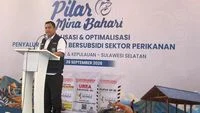
The commitment was officially reiterated by Pupuk Indonesia Regional CEO 4, Wisnu Ramadhani, during the prominent "Pilar Mina Bahari" stakeholder engagement event held on Saturday, September 26, 2026. The program serves as a critical bridge connecting state-owned enterprises, regional governments, and local cultivators to evaluate distribution channels, resolve logistical bottlenecks, and reinforce regulatory compliance across the supply chain.
Ensuring Strict Regulatory Compliance and Transparency
During his address at the event, Wisnu emphasized that Pupuk Indonesia maintains an unwavering commitment to safeguarding the availability of subsidized agricultural and fishery inputs in exact accordance with government-determined quotas. By maintaining strict adherence to national allocations, the company aims to eliminate scarcity risks and directly cater to the operational needs of registered fish farmers.
"Pupuk Indonesia is fully committed to ensuring the availability of subsidized fertilizers in accordance with the established allocations, thereby effectively fulfilling the operational needs of fish cultivators," Wisnu stated. "We also continue to strengthen coordination with regional governments and all relevant stakeholders to ensure that distribution proceeds in strict compliance with applicable regulations, guaranteeing that the fertilizer is received exclusively by eligible community members."
In the fisheries sector, the distribution of subsidized fertilizers is subject to stringent criteria. Eligibility is restricted strictly to aquaculture practitioners who are actively affiliated with recognized fish cultivator groups (Kelompok Pembudidaya Ikan) and are duly registered in the official electronic fisheries extension and management system, known as the e-RPSP, administered by the Ministry of Marine Affairs and Fisheries (KKP).
To prevent leakage, misallocation, and administrative discrepancies, the redemption process relies on a robust digital framework. Farmers and cultivators must present their official Resident Identity Cards (KTP) and process transactions through the integrated digital application known as iPubers. This mechanism not only guarantees precision in identifying eligible beneficiaries but also ensures absolute transparency and real-time transaction recording. Furthermore, to prevent industrial-scale hoarding under the guise of smallholder subsidies, regulatory provisions mandate a strict maximum land plot size of two hectares specifically designated for fish grow-out and enlargement activities.
Substantial Allocation and Current Distribution Progress in Pangkep
Pangkep Regency occupies a strategic position in South Sulawesi’s maritime and aquaculture landscape, making it a primary focal point for government intervention. For the fiscal year 2026, the regency has been granted a substantial national quota of subsidized fertilizers tailored explicitly for the fisheries and aquaculture sector, totaling 27,156 tons.
This total allocation is meticulously divided among several specialized product categories designed to optimize pond productivity, water quality management, and biological growth:
- Urea: 10,519 tons
- NPK Phonska: 5,950 tons
- Organic Fertilizer: 7,246 tons
- SP-36: 3,441 tons
According to official monitoring data compiled up to September 24, 2026, the cumulative realization of subsidized fertilizer distribution in Pangkep Regency has reached 11,562 tons, translating to approximately 43 percent of the total annual allocation. A granular breakdown of the realized volume indicates steady absorption, led by 4,969 tons of Urea, alongside 790 tons of organic fertilizer, and 475 tons of SP-36, with the remainder continuing to flow through authorized retail kiosks in the upcoming quarters.
Pupuk Indonesia has continuously urged all active participants within the supply and distribution ecosystem—ranging from industrial producers and regional government bureaus to local distributors, agricultural extension officers, and individual fish cultivators—to maintain a comprehensive understanding of prevailing laws and execute the distribution workflow in an orderly, transparent manner.
Stakeholder Alignment and Strategic Collaboration
The successful execution of the subsidized distribution program relies heavily on multi-sectoral synergy. Through the Pilar Mina Bahari event, Pupuk Indonesia actively fostered dialogue to iron out logistical challenges, streamline administrative verification at the grassroots level, and bridge communication gaps between policymakers and end-users.
Weighing in on the initiative, the Director General of Aquaculture at the Ministry of Marine Affairs and Fisheries, Tb Haeru Rahayu, underscored that the state-allocated fertilizer quotas for the fisheries sector must be utilized with maximum efficiency by verified beneficiaries. He noted that optimal utilization directly correlates with the long-term environmental sustainability of aquaculture operations, which in turn stimulates local economic growth and improves the standard of living for rural fishing communities.
"The allocation provided by the government is a vital instrument designed to support sustainable practices. It must be leveraged judiciously by those who meet the regulatory benchmarks," Tb Haeru Rahayu remarked. "Proper application not only safeguards the continuity of local aquaculture businesses but also serves as a catalyst for tangible improvements in regional welfare."
Echoing these sentiments, the Regent of Pangkep, Muhammad Yusran Lalogau, highlighted the critical importance of absolute precision in public assistance distribution. He stressed that local governance structures must remain proactive in monitoring aid streams to guarantee that government-backed subsidies reach the intended recipients without administrative friction.
"It is imperative that all forms of state assistance, including subsidized fertilizers, are deployed effectively and targeted accurately to the rightful communities," Bupati Muhammad Yusran Lalogau stated. "Strengthening coordination between local government agencies, state enterprises, and the grassroots community is indispensable if we are to maximize the socio-economic dividends of this program across Pangkep Regency."
Broader Implications for Regional Food Security and Aquaculture Resilience
The systematic enhancement of fertilizer distribution in Pangkep carries profound implications for the broader economic landscape of South Sulawesi. Aquaculture is a foundational pillar of the regional economy, providing livelihoods for thousands of coastal households engaged in brackishwater pond farming (tambak), freshwater cultivation, and floating net cage operations.
Historically, fluctuations in operational costs—particularly concerning chemical inputs and nutrient management for pond productivity—have posed significant vulnerabilities for small-scale fish farmers. By maintaining steady, subsidized access to essential inputs like Urea and SP-36, the government effectively cushions cultivators against global commodity price volatility. This financial relief enables farmers to maintain optimal stocking densities, manage water chemistry effectively, and achieve higher survival and growth rates for commodities such as milkfish (bandeng), shrimp (udang), and tilapia (mujair).
Furthermore, the integration of digital tools like the iPubers application represents a major milestone in Indonesia’s broader bureaucratic reform. By tethering subsidy redemption to biometric identity verification via the KTP and cross-referencing national databases, the state minimizes systemic corruption, reduces administrative leakages, and compiles highly accurate empirical data. This data-driven approach empowers policymakers to make informed adjustments to future subsidy allocations, tailoring supply precisely to demographic shifts and ecological demands.
As Pupuk Indonesia and its governmental partners continue to monitor distribution milestones through the remainder of 2026, the collaborative framework established in Pangkep serves as a benchmark for other aquaculture-heavy regions across the Indonesian archipelago. Through sustained vigilance, transparent digital governance, and active stakeholder engagement, the state aims to secure a resilient, self-sustaining fisheries sector capable of driving national economic prosperity from the grassroots up.
Related posts: