Studying abroad remains a premier objective for thousands of Indonesian students seeking to expand their academic horizons, yet a significant portion of these applicants inadvertently jeopardize their educational future due to administrative oversights and poor logistical planning. As the global demand for international education rises, US consular officials have observed a recurring pattern of avoidable errors that delay, or in some cases entirely derail, the visa issuance process. During the EducationUSA Indonesia Fall Fair 2026, held at the Hotel Le Meridien, Jakarta, on Sunday, September 20, 2026, senior diplomatic representatives emphasized the critical importance of meticulous preparation and adherence to strict bureaucratic protocols.
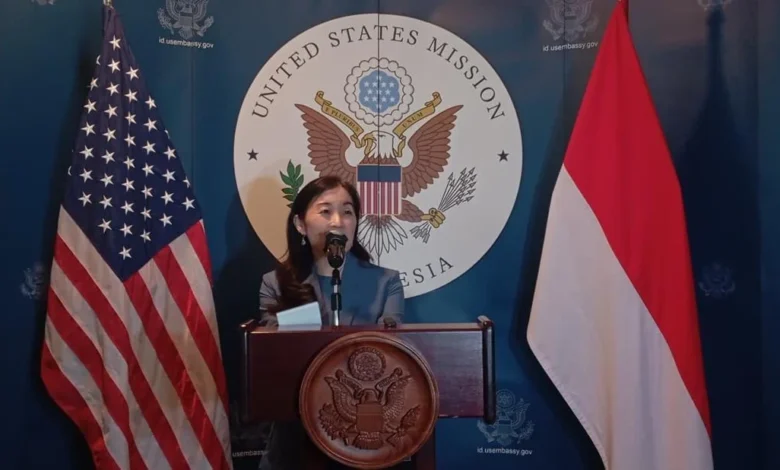
The event, which serves as a vital bridge between prospective Indonesian students and US higher education institutions, highlighted that while academic qualifications are often robust, the administrative barrier of visa procurement remains the most common point of failure. US Chargé d’Affaires Joy Sakurai underscored that the most frequent pitfall involves students scheduling their immigration interviews too close to their anticipated date of departure. This lack of lead time ignores the reality of the bureaucratic pipeline, which requires substantial intervals for background checks, passport processing, and physical visa printing.
The Chronology of Visa Preparation: Why Timing Matters
The timeline for securing a student visa is not merely a suggestion; it is a rigid framework that requires synchronization with university academic calendars. For many students, the excitement of an acceptance letter often leads to a false sense of security, causing them to postpone the immigration process until the final weeks before the semester begins. This procrastination often leaves no room for error, such as delays in document verification or the need for additional administrative processing, which can sometimes extend the timeline by several weeks.
From a strategic perspective, the application cycle should ideally commence as soon as the Form I-20—the Certificate of Eligibility for Nonimmigrant Student Status—is issued by the host university. Once this document is in hand, the subsequent steps, including paying the SEVIS I-901 fee and submitting the DS-160 online visa application, should be treated with the same urgency as a final examination. The consular process is sensitive to fluctuations in volume; peak seasons, particularly the months preceding the Fall intake in August and September, witness a surge in applications that naturally increases processing times. Failure to anticipate this high-volume period is a primary driver of student frustration.
The Complexity of Nomenclature and Documentation
One of the most nuanced challenges identified by the US Embassy involves the discrepancy in naming conventions between Indonesia and the United States. In Indonesia, it is culturally common for individuals to possess names comprising three, four, or more words, occasionally lacking a distinct "family name" as understood in Western legal frameworks. Conversely, the US immigration system is optimized for a binary "First Name/Last Name" structure.
Chargé d’Affaires Joy Sakurai highlighted that this structural mismatch leads to a high frequency of errors during the online data entry phase. When a student’s name appears differently across their passport, the DS-160 application form, and the visa interview appointment booking, it triggers an immediate red flag in the security verification system. "They must use all the information exactly as it appears in their passport," Sakurai advised. "If the name on the ID, the appointment request, and the passport do not align, the consular officers face significant hurdles in verifying the identity of the applicant, which inevitably stalls the process."
This issue is not merely clerical; it is a matter of national security protocol. Discrepancies create ambiguity, and in the high-security environment of US immigration, ambiguity is rarely resolved quickly. Applicants are strongly urged to cross-reference their official identification documents multiple times before hitting the submission button on any government portal.
Strategic Planning and Resource Utilization
The EducationUSA Indonesia Fall Fair 2026 served as a reminder that the path to a degree in the US is as much about logistics as it is about intellectual merit. The fair, which hosted representatives from dozens of American universities, provided a platform for students to clarify requirements directly with institutions and embassy staff.
Beyond the logistical hurdles, students are encouraged to leverage the digital resources provided by the US Department of State and the EducationUSA network. These platforms offer step-by-step guides on how to navigate the complex web of visa requirements. "We have partners and resources available that provide detailed breakdowns of the process," Sakurai noted. "The objective is to ensure that students are organized, proactive, and fully prepared with the necessary documentation well before their travel date."
Analysis of visa refusal rates suggests that while many refusals are based on substantive criteria—such as insufficient financial backing or lack of proof of intent to return to one’s home country—a notable percentage of "administrative processing" delays could be mitigated through better document management. Preparation, in this context, involves creating a dedicated folder containing the passport, the I-20 form, financial statements, academic transcripts, and the visa appointment confirmation page. Maintaining a digital and physical copy of these files is considered best practice.
Broader Implications for Indonesian Students
The implication of these administrative failures extends beyond the personal disappointment of a student who misses their flight. For the Indonesian student body, consistent issues with visa documentation can lead to a perception of poor preparedness, potentially impacting the efficiency with which future cohorts are processed. Moreover, the delay in arriving at a university can have severe academic consequences, including the inability to attend orientation, missing initial course registration, or being forced to defer admission by a full semester.
Furthermore, the financial impact of poor planning cannot be overstated. Non-refundable travel bookings, housing deposits, and tuition payments are often at stake when a visa is not secured in time. The advice from the US diplomatic mission is clear: treat the visa application as a critical academic project.
Conclusion: A Call for Proactive Management
As the US continues to be a top destination for Indonesian students, the demand for student visas (F-1 and M-1 categories) is expected to remain high. The shift toward digital applications has improved the speed of initial processing, but it has also made the system less forgiving of human error. The recommendation for prospective students is to adopt a "zero-error" mentality regarding documentation.
By acknowledging the specific challenges—such as name formatting and the necessity for early scheduling—students can significantly enhance their chances of a smooth transition to their studies in the United States. The message from the September 2026 event was unequivocal: success in studying abroad begins long before the first lecture; it begins with the discipline and foresight to master the administrative process. Students who remain organized, verify every character on their forms, and respect the timelines of the immigration system are those who ultimately succeed in realizing their international education goals. As the academic cycle moves forward, the onus remains on the applicants to bridge the gap between their ambitions and the reality of the global immigration landscape.
Related posts: