Thailand Prepares to Host 33rd Southeast Asian Games 2025, Continuing a Rich Legacy of Regional Sporting Unity and Cultural Exchange

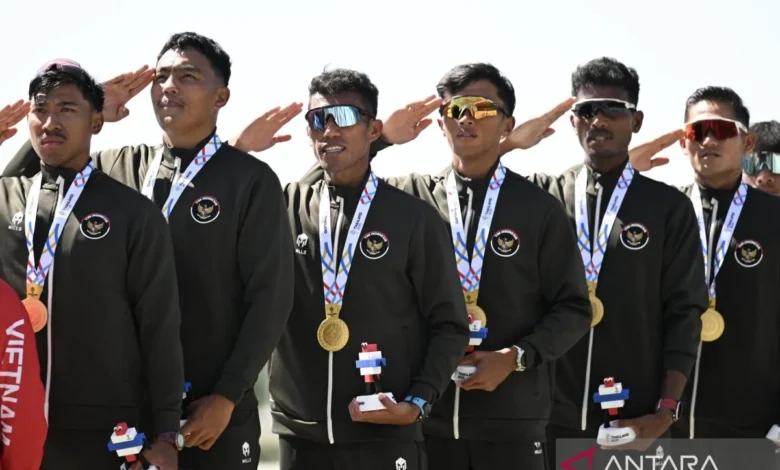
Jakarta (ANTARA) – The 33rd Southeast Asian Games (SEA Games), a paramount multi-sport event in the Southeast Asian region, is set to commence its exhilarating eleven-day spectacle from December 9 to 20, 2025, with Thailand proudly assuming the mantle of host nation. This biennial championship, exclusively catering to athletes from member states of the Association of Southeast Asian Nations (ASEAN), underscores the enduring spirit of camaraderie and athletic excellence that has defined the region for over six decades. Operating under the vigilant oversight of the Southeast Asian Games Federation (SEAGF), and further sanctioned by the International Olympic Committee (IOC) and the Olympic Council of Asia (OCA), the SEA Games serves as a critical platform for regional sporting development and cultural exchange.
A Vision Forged: The Genesis of the Southeast Asian Games
The origins of what is now known as the SEA Games trace back to a visionary proposal in 1957, when the event was initially conceived as the Southeast Asian Peninsular Games (SEAP Games). The groundbreaking idea was championed by Laung Sukhumnaipradit, then Vice-President of the Thai Olympic Committee. Sukhumnaipradit harbored a profound belief in the power of sports to transcend political boundaries and foster deeper bonds of understanding and friendship among the nascent nations of Southeast Asia. His vision extended beyond mere competition; he aspired to create a regional sporting event that mirrored the prestige and organizational standards of established global multi-sport extravaganzas like the Asian Games and the Olympic Games. This ambition aimed to elevate the standard of sports development across the ASEAN member states, ensuring that athletes in the region had a consistent, high-level competitive platform.
The initial concept found a receptive ear in Dave Kitcher, the then-coach of the Thai Athletics Association. Kitcher played a pivotal role in disseminating Sukhumnaipradit’s proposal, engaging with representatives from Cambodia and Vietnam in a series of discussions held between February 8 and 14, 1958. Both nations enthusiastically endorsed the initiative, recognizing its potential for regional solidarity. Momentum gathered swiftly, culminating in a significant meeting of the Thai Olympic Committee on February 22, 1958. This pivotal gathering brought together delegates from Cambodia, Vietnam, Myanmar (then Burma), Laos, and Malaya (now Malaysia). The consensus reached was unanimous: to officially launch the South East Peninsular Games (SEAP Games) in Bangkok, Thailand, in December of the same year. Furthermore, the attendees committed to staging the event every two years and resolved to establish the SEAP Games Federation to govern its operations. Thus, Thailand, Vietnam, Malaysia, Cambodia, Myanmar, and Laos were formally recognized as the pioneering nations behind the SEAP Games. This foundational period laid the groundwork for a sporting tradition that would grow exponentially, embodying the collective aspirations of a dynamic and interconnected region.
From Peninsular to Pan-Regional: Evolution and Expansion
The inaugural SEAP Games materialized as scheduled, held in Bangkok, Thailand, from December 12 to 17, 1959. This historic event marked the practical realization of Sukhumnaipradit’s vision. Notably, Cambodia, one of the founding proponents, was unable to participate in this first edition. Its place was filled by Singapore, which formally acceded to the SEAP Games membership in the same year, demonstrating the early appeal and expanding reach of the regional competition. The initial Games, though smaller in scale than its modern incarnation, successfully established the precedent for regional sporting excellence and cooperation.
The subsequent decades witnessed a steady expansion of the Games’ membership, reflecting the broader geopolitical shifts and the formation of ASEAN itself. A significant milestone occurred during the 8th SEAP Games in 1975, when the Federation Committee made a strategic decision to invite Indonesia, Brunei Darussalam, and the Philippines to join. These nations officially became members in 1977. This expansion was not merely an increase in participant numbers but a profound transformation, moving the Games beyond its "Peninsular" designation to encompass a wider geographical and cultural spectrum of Southeast Asia. Consequently, in 1977, the SEAP Games Federation officially rebranded itself as the Southeast Asian Games Federation (SEAGF), and in parallel, the event itself was formally renamed the Southeast Asian Games (SEA Games). This name change accurately reflected its inclusive, pan-regional character. The journey of expansion continued into the new millennium, with Timor-Leste becoming the latest addition to the SEA Games family in 2003, bringing the total number of participating nations to its current roster of eleven. This growth underscores the Games’ evolving role as a comprehensive regional sporting festival.
The Enduring Allure and Unique Character of the SEA Games
A distinctive feature that sets the SEA Games apart from global sporting behemoths like the Olympics is its inherent flexibility regarding the sports program. Unlike the largely fixed roster of disciplines at the Olympic Games, the SEA Games grants the host nation considerable latitude to introduce a select number of local or traditional sports. This policy is not merely an organizational convenience; it represents a deliberate effort to celebrate and showcase the rich cultural heritage and unique identity of the host country on an international stage.
This flexibility transforms the Games into a vibrant tapestry of regional cultures. For instance, the 2003 Games in Vietnam saw the inclusion of Vovinam, a traditional Vietnamese martial art, alongside pencak silat, a martial art with deep roots across Southeast Asia. In 2019, the Philippines introduced arnis, their national martial art, and obstacle course racing, reflecting a contemporary and dynamic approach to sports. More recently, the 2023 Games in Cambodia garnered international attention for featuring bokator, an ancient Khmer martial art, offering a rare glimpse into Cambodia’s martial traditions. Such inclusions not only generate local enthusiasm but also foster cross-cultural appreciation among participating nations and global audiences. While this flexibility can sometimes lead to debates over fairness or the inclusion of lesser-known sports, its primary benefit lies in its ability to highlight the diverse sporting landscape of Southeast Asia and offer unique competitive experiences.
For the upcoming 33rd SEA Games in 2025, Thailand is set to host a formidable lineup of 50 sports. To accommodate this extensive program, the multi-sport event will be strategically distributed across three key locations: the bustling capital city of Bangkok, the coastal province of Chonburi, and the southern province of Songkhla. This decentralized approach allows for broader regional engagement, leverages existing infrastructure, and showcases different facets of Thailand’s geography and culture to the thousands of athletes, officials, and spectators expected to attend.
Organizational Framework and Global Oversight
The operational backbone of the SEA Games is the Southeast Asian Games Federation (SEAGF). Comprising National Olympic Committees (NOCs) from all eleven member states, the SEAGF is responsible for the overall governance, coordination, and promotion of the Games. Its duties encompass setting rules, selecting host cities, ensuring fair play, and safeguarding the integrity of the competition. The SEAGF operates within the broader framework of international sports governance, maintaining close ties with the International Olympic Committee (IOC) and the Olympic Council of Asia (OCA). This hierarchical structure ensures that the SEA Games adhere to global sporting standards, anti-doping regulations, and ethical principles, thereby maintaining its credibility and standing within the international sports community. The IOC’s oversight provides a crucial link to the global Olympic movement, offering guidance and support, while the OCA ensures regional alignment with broader Asian sporting initiatives, often serving as a stepping stone for athletes aspiring to compete at the Asian Games or even the Olympics.
Economic and Socio-Cultural Impact on Host Nations
Hosting the SEA Games is a monumental undertaking, requiring significant investment in infrastructure, logistics, and event management. However, the benefits for the host nation often extend far beyond the immediate sporting spectacle. Economically, the Games serve as a powerful catalyst for tourism, drawing thousands of athletes, officials, media personnel, and spectators, who contribute to local economies through accommodation, dining, transportation, and leisure activities. The influx of visitors often stimulates the hospitality sector, leading to job creation and increased revenue.
Beyond direct tourism, hosting necessitates substantial infrastructure development or upgrades, including new sports venues, athlete villages, transportation networks, and communication facilities. While these projects represent considerable capital expenditure, they leave a lasting legacy that benefits local communities for years to come, improving public services and fostering economic growth. For instance, the improved road networks or expanded public transport systems developed for the Games continue to serve citizens long after the medals have been awarded.
Culturally, the SEA Games is a powerful platform for national identity and regional pride. The opportunity to showcase a nation’s hospitality, cultural traditions, and sporting prowess on a regional stage can significantly boost national morale and foster a sense of unity. The opening and closing ceremonies, often elaborate productions incorporating traditional music, dance, and storytelling, become a profound expression of the host country’s unique identity. For participating athletes, the Games represent the pinnacle of regional competition, a chance to represent their nation, achieve personal bests, and forge friendships with peers from across Southeast Asia, reinforcing the spirit of regional cooperation envisioned by the Games’ founders.
A Stepping Stone for Sporting Excellence and Regional Unity
For many athletes in Southeast Asia, the SEA Games represents a crucial stepping stone in their sporting careers. It provides invaluable international competitive experience, allowing them to test their skills against the best in the region and gain exposure to multi-sport event environments. Success at the SEA Games often serves as a springboard for athletes aiming for higher echelons of competition, such as the Asian Games, Commonwealth Games, or even the Olympic Games. National Olympic Committees often use the SEA Games as a benchmark for talent identification and development, investing in promising athletes who demonstrate potential at this level. The competitive environment, coupled with the regional camaraderie, creates a unique development pathway that is vital for nurturing future champions.
Moreover, the Games continue to reinforce regional unity and understanding. In a region marked by diverse cultures, languages, and historical narratives, sports provide a neutral and unifying ground. Athletes, coaches, and spectators from different nations come together, not as rivals in a political sense, but as competitors and enthusiasts sharing a common passion. This interaction fosters mutual respect, breaks down stereotypes, and strengthens the fabric of regional identity, embodying the initial vision of Laung Sukhumnaipradit for a stronger, more connected Southeast Asia through the shared joy and challenge of sport.
Challenges and the Road Ahead
Despite its many successes, the SEA Games is not without its challenges. Issues such as the highly variable nature of sports programs, which can sometimes favor the host nation, often spark debate. Funding, infrastructure development, and logistical complexities in organizing such a large-scale event consistently pose significant hurdles. Ensuring fair judging, maintaining strict anti-doping protocols, and managing the environmental impact of large events are ongoing responsibilities for the SEAGF and host countries.
However, the enduring popularity and significance of the SEA Games attest to its fundamental value. As Thailand prepares to welcome the region’s finest athletes in 2025, the Games will once again serve as a testament to the power of sport to unite, inspire, and celebrate the rich tapestry of Southeast Asian identity. The continuous evolution of the Games, adapting to modern challenges while staying true to its founding principles, ensures its vital role in the regional sporting calendar and its ongoing contribution to the spirit of ASEAN solidarity. The 33rd edition promises to be another memorable chapter in this cherished regional tradition, showcasing not only athletic prowess but also the enduring bonds that tie the nations of Southeast Asia together.
Related posts: