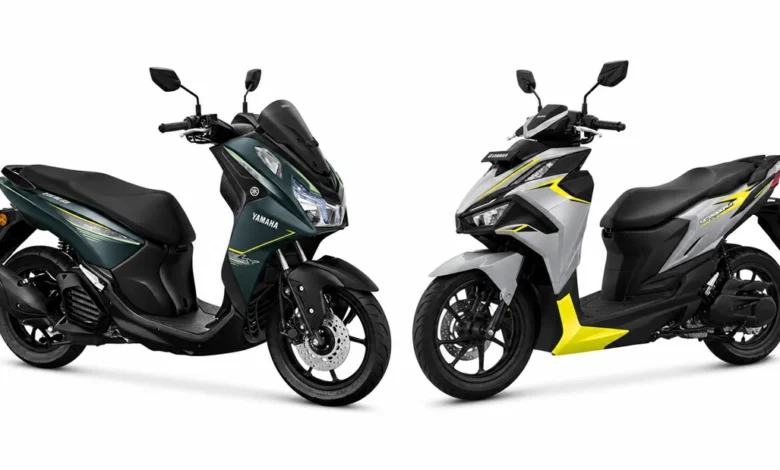
The Indonesian automatic scooter market, particularly the competitive 150-160cc segment, is experiencing a significant surge in interest and innovation. This dynamic landscape sees Yamaha’s premium daily commuter, the Lexi LX 155, directly challenging Honda’s sportier and more contemporary Vario Evo 160. As of July 2026, official pricing reveals a remarkably close contest across their respective model ranges, indicating a strategic battle for market share between these two automotive giants.
Analyzing the latest price lists released in July 2026, both the Yamaha Lexi LX 155 and the Honda Vario Evo 160 demonstrate a competitive pricing strategy, with their various trims aligning closely in terms of cost. This pricing alignment suggests a deliberate move by both manufacturers to capture a broad spectrum of consumers within this lucrative segment, appealing to different priorities such as affordability, advanced features, and aesthetic preferences.
At the entry-level, the Yamaha Lexi LX 155 Standard emerges as the more accessible option, retailing at Rp 27,850,000 On-The-Road (OTR) Jakarta. In contrast, Honda positions its Vario Evo 160 CBS variant at Rp 28,525,000 OTR Jakarta. This initial difference translates to a saving of Rp 675,000 for consumers opting for the Yamaha Lexi LX 155 Standard over the Honda Vario Evo 160 CBS. This price point is crucial for attracting first-time buyers or those seeking an economical yet capable daily transport solution.
Moving up to the mid-tier offerings, the competitive landscape shifts. Yamaha’s Lexi LX 155 S Version is priced at Rp 29,650,000. However, Honda counters with its Vario Evo 160 CBS Nitro, which is positioned at a more attractive Rp 28,775,000. In this specific comparison, the Honda Vario Evo 160 CBS Nitro holds a price advantage of approximately Rp 875,000 over its Yamaha counterpart. This mid-range pricing strategy suggests Honda’s intent to offer enhanced features or a more appealing design at a competitive price point, potentially drawing in consumers who are willing to spend slightly more for perceived value.
The premium segment further highlights the intense rivalry. The top-of-the-line Yamaha Lexi LX 155 Connected/ABS is listed at Rp 32,500,000. Honda’s flagship offering, the Vario Evo 160 ABS, comes in at Rp 31,406,000. In this highest trim comparison, the Honda Vario Evo 160 ABS presents a more budget-friendly option, with a price difference of around Rp 1,094,000 compared to the Yamaha Lexi LX 155 Connected/ABS. This significant price gap at the premium end could be a decisive factor for consumers seeking advanced technology and safety features without incurring the highest possible cost.
Yamaha Lexi LX 155 Pricing Structure (July 2026, OTR Jakarta)
The Yamaha Lexi LX 155 lineup, designed to cater to the modern urban commuter with a focus on comfort and premium features, presents the following pricing as of July 2026:
- Lexi LX 155 Standard: Rp 27,850,000
- Lexi LX 155 S Version: Rp 29,650,000
- Lexi LX 155 Connected/ABS: Rp 32,500,000
The Lexi LX 155, since its initial introduction, has aimed to carve out a niche in the premium commuter segment. Its design emphasizes a relaxed riding posture, ample storage, and advanced features intended to enhance the daily riding experience. The ‘Connected/ABS’ variant, in particular, signifies Yamaha’s commitment to integrating modern technology, such as smartphone connectivity, alongside essential safety features like Anti-lock Braking System (ABS) for enhanced rider confidence.
Honda Vario Evo 160 Pricing Structure (July 2026, OTR Jakarta)
Honda’s response to the evolving market demands, the Vario Evo 160, brings a sportier aesthetic and updated technology to the forefront. Its pricing for July 2026 in Jakarta is as follows:
- Vario Evo 160 CBS: Rp 28,525,000
- Vario Evo 160 CBS Nitro: Rp 28,775,000
- Vario Evo 160 ABS: Rp 31,406,000
The Vario Evo 160 represents an evolution of Honda’s highly successful Vario series, known for its reliability, fuel efficiency, and sporty appeal. The "Evo" designation suggests an updated platform, potentially incorporating new design elements and technological advancements. The "CBS" (Combi Brake System) and "ABS" variants ensure that safety is a key consideration, catering to riders who prioritize a secure braking experience. The "Nitro" variant likely denotes specific aesthetic enhancements or feature packages within the CBS trim.
Comparative Analysis: Price and Market Positioning
Overall, the pricing strategy reveals a nuanced competitive landscape. Yamaha Lexi LX 155 holds a clear advantage in terms of initial affordability with its Standard variant. This positions it as a strong contender for budget-conscious consumers who still desire the premium feel and 155cc engine displacement. However, as consumers ascend the trim levels, the Honda Vario Evo 160 increasingly becomes the more compelling value proposition, particularly in its mid-tier and top-tier configurations.
The Honda Vario Evo 160 CBS Nitro, for instance, offers a more attractive price point than the Lexi LX 155 S Version, suggesting that Honda is leveraging its manufacturing efficiencies and market understanding to deliver more features or design appeal at a lower cost in this segment. The most significant price disparity is observed in the ABS variants, where the Vario Evo 160 ABS is nearly Rp 1.1 million cheaper than its Lexi counterpart. This substantial difference could sway many buyers towards the Honda, especially if the feature sets are perceived as comparable.
This pricing dynamic is indicative of the manufacturers’ strategies to capture different consumer segments. Yamaha seems to be targeting a premium experience from the outset, potentially justifying a slightly higher entry price for its base model by emphasizing comfort and advanced technology. Honda, on the other hand, appears to be adopting a strategy of offering competitive pricing across a wider range of features, making its Vario Evo 160 a more accessible premium option, especially in its higher trims.
Contextualizing the Competition: The 150-160cc Segment in Indonesia
The 150-160cc automatic scooter segment in Indonesia is not merely a battleground for pricing; it represents a critical nexus of consumer demand. This displacement class offers a compelling balance between urban maneuverability and the power required for longer commutes or highway travel. It’s a segment that appeals to a wide demographic, from young professionals seeking stylish and efficient daily transport to experienced riders looking for a comfortable and capable secondary vehicle.
For years, Honda and Yamaha have been the dominant forces in the Indonesian two-wheeler market, each commanding significant brand loyalty and market share. Their rivalry in this segment is a long-standing one, characterized by continuous innovation and aggressive product launches. The introduction of updated models like the Lexi LX 155 and Vario Evo 160 underscores their commitment to maintaining leadership in this lucrative category.
The Indonesian motorcycle market, being one of the largest globally, places immense importance on factors such as fuel efficiency, maintenance costs, availability of spare parts, and resale value. While the article focuses on initial purchase prices, these underlying economic considerations invariably influence consumer decisions. Both Yamaha and Honda have established robust after-sales networks across the archipelago, a factor that significantly bolsters consumer confidence.
Technological Advancements and Consumer Expectations
In recent years, consumer expectations have evolved beyond basic transportation. Features such as LED lighting, digital instrument clusters, keyless ignition, USB charging ports, and advanced braking systems (ABS and CBS) have become increasingly sought after. The inclusion of these technologies in both the Lexi LX 155 and Vario Evo 160 highlights the manufacturers’ efforts to meet these rising demands.
The "Connected" feature on the Yamaha Lexi LX 155, for example, points towards an increasing integration of digital lifestyles with mobility. This could involve features like navigation assistance, ride tracking, or vehicle status notifications accessible via a smartphone application. Honda’s approach with the Vario Evo 160, emphasizing sporty design and updated safety features, caters to a segment of consumers who prioritize a dynamic riding experience and enhanced safety.
Implications for the Market and Consumers
The intense competition and closely matched pricing in the 150-160cc automatic scooter segment have several significant implications:
- Increased Consumer Choice: The rivalry benefits consumers by providing a wider array of choices at various price points and feature sets. Buyers can now find scooters that precisely match their individual needs and budget.
- Accelerated Innovation: To maintain their competitive edge, both manufacturers are likely to continue investing in research and development. This could lead to further technological advancements, improved performance, and enhanced rider comfort in future iterations of these models.
- Price Sensitivity: The close pricing suggests that manufacturers are keenly aware of price sensitivity within this segment. Any significant deviation in pricing by one manufacturer could lead to a substantial shift in market share.
- Focus on Value Proposition: Beyond just price, the emphasis is increasingly on the overall value proposition – the combination of features, performance, reliability, design, and after-sales support that a vehicle offers.
Future Outlook
The battle between the Yamaha Lexi LX 155 and Honda Vario Evo 160 is set to remain a focal point of the Indonesian automatic scooter market. As July 2026 unfolds, dealerships will likely witness increased foot traffic as consumers weigh the merits of each offering. The pricing strategy indicates a calculated approach from both Yamaha and Honda, aiming to solidify their positions while attracting new buyers. The long-term success of each model will depend not only on their initial pricing but also on their performance in terms of sales figures, customer satisfaction, and their ability to adapt to the ever-evolving demands of the Indonesian rider.
It is important to note that the prices mentioned are On-The-Road (OTR) for Jakarta. Prices in other regions and cities across Indonesia may vary due to differences in regional taxes, delivery charges, and dealer markups. Prospective buyers are strongly advised to visit their nearest authorized dealerships to obtain the most accurate and up-to-date pricing information for their specific location. This ensures transparency and allows for informed purchasing decisions within the dynamic Indonesian automotive market.