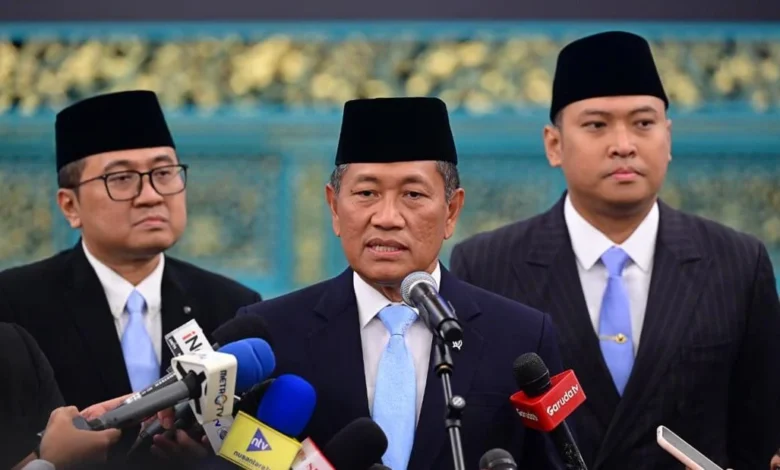
The Indonesian government has officially inaugurated the Universitas Republik Indonesia (URI), a landmark educational institution designed to serve as the primary training ground for the nation’s future administrative and corporate elite. Announced by the Governor of URI, Donny Ermawan Taufanto, the establishment of this university represents a foundational shift in how the state identifies, nurtures, and promotes leadership talent within the civil service and state-owned enterprises (BUMN). Drawing direct inspiration from the prestigious Institut National du Service Public (INSP) in France, URI aims to centralize and elevate the standards of public service education to meet the complex challenges of the 21st century.
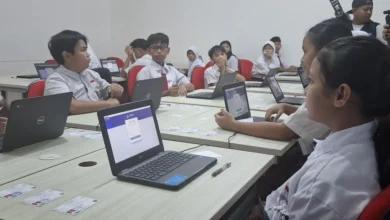
The launch of URI is not merely an academic expansion but a strategic consolidation of Indonesia’s human capital development apparatus. As part of this initiative, the government has confirmed plans to integrate the existing National Institute of Public Administration (Lembaga Administrasi Negara or LAN) into the URI framework. This restructuring is intended to streamline the training of civil servants and ensure a unified curriculum that emphasizes managerial excellence, ethical leadership, and strategic thinking. Currently, the institution has already commenced operations with its inaugural cohort, consisting of 399 newly recruited BUMN employees who are undergoing intensive training under "Batch 1" of the URI program.
The Vision of President Prabowo Subianto
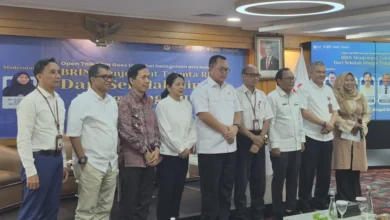
The conception of Universitas Republik Indonesia is deeply rooted in the strategic vision of President Prabowo Subianto, who has frequently emphasized the necessity of a highly disciplined and intellectually capable bureaucratic class. During a press conference at the State Palace following a late-night inauguration ceremony on Wednesday, July 23, 2026, Governor Donny Ermawan Taufanto explained that the President sought to replicate the success of developed nations that possess dedicated institutions for grooming state leaders.
"This is what was envisioned by the President," Donny stated. "Our neighboring countries and global powers have long maintained institutions similar to what we are creating today. In France, for instance, there was the ENA, which has now evolved into the INSP. Many of France’s highest-ranking officials and heads of state are graduates of that system. We expect URI to perform a similar function for Indonesia—molding the character, mindset, and managerial skills of our young talents so they can lead this nation in the future."
The government’s ambition extends beyond a single campus. Donny revealed that the master plan includes the establishment of 10 URI campuses across the Indonesian archipelago. This decentralization of elite training is intended to ensure that leadership development is not confined to the capital but is accessible to talent from various regions, reflecting the diverse geographic and social fabric of the country.
Learning from the French Model: From ENA to INSP
To understand the trajectory of URI, it is essential to examine the French model that serves as its blueprint. The Institut National du Service Public (INSP) was established by French President Emmanuel Macron on January 1, 2022. It replaced the legendary École Nationale d’Administration (ENA), which had been the gateway to the highest levels of French government since its founding by Charles de Gaulle in 1945.
The transition from ENA to INSP was a historic move intended to address criticisms of elitism and a lack of social diversity within the French civil service. While ENA was successful in producing presidents, prime ministers, and industry titans—including Macron himself—it had increasingly become viewed as a symbol of a closed-off, privileged class. By creating the INSP, the French government aimed to maintain the high intellectual standards of the "Grandes Écoles" system while opening the doors to a wider range of socio-economic backgrounds.
The INSP is dedicated to the recruitment, initial training, and ongoing professional development of top-level executives and managers in the French public sector. According to the INSP Roadmap 2025-2026, the institute is responsible for monitoring a common core program for public service schools that train senior executives across three branches of public service: the state, the hospital service, and the local civil service, as well as the judiciary.
By adopting this model, the Indonesian government signals a move toward a more meritocratic and professionalized bureaucracy. The integration of LAN into URI suggests that the "generalist" training previously offered to civil servants will be replaced by a more specialized, rigorous, and competitive curriculum similar to that of the INSP.
A Chronology of Institutional Reform
The establishment of URI is the culmination of several years of policy deliberation regarding the efficiency of the Indonesian state apparatus. The following timeline outlines the key milestones leading to the current launch:
- September 2024 – November 2025: The government conducted a comprehensive review of the National Institute of Public Administration (LAN) and the training modules for BUMN recruits. During this period, high-level delegations visited Paris to study the organizational structure of the INSP.
- January 2026: President Prabowo Subianto signed the executive order authorizing the creation of Universitas Republik Indonesia and the eventual merger of LAN into the new university structure.
- March 2026: The recruitment process for the first batch of URI students began, targeting high-performing graduates and new entries into the state-owned enterprise sector.
- July 23, 2026: Official inauguration of URI and the swearing-in of Donny Ermawan Taufanto as Governor of the institution.
- August 2026: Scheduled commencement of the first full academic year for the consolidated URI-LAN programs.
Rigorous Selection and Curriculum Standards
Mirroring the INSP’s stringent entry requirements, URI is expected to implement a selection process that tests both the intellectual depth and the practical specialized knowledge of candidates. In the French system, selection is conducted through a multi-stage process involving French embassies globally, ensuring that even international components of public service are represented.
The INSP selection process, which URI is likely to emulate, includes:
- Written Expression Test: A one-hour examination designed to ensure that candidates possess the requisite communication skills to handle high-level administrative tasks and benefit from the institute’s practical training.
- Reflection and Knowledge Test: A 90-minute essay-based exam where candidates must demonstrate their ability to reason, argue, and synthesize information based on a choice of complex questions.
- Specialization Test: A 90-minute assessment of specific expertise. Candidates typically choose between tracks such as International Relations or Comparative Administration and Public Management. This involves both multiple-choice questions and short-answer responses.
- Oral Examination: An interview conducted by a jury of experts to assess the candidate’s personality, motivation, and suitability for a career in senior public management.
By implementing such a rigorous framework, URI aims to move away from seniority-based promotions toward a system where the most capable individuals are fast-tracked into positions of influence.
Broader Implications for Indonesia’s Governance
The establishment of Universitas Republik Indonesia carries significant implications for the country’s long-term governance and economic stability. By focusing on both government officials and BUMN managers, the government is attempting to bridge the gap between public policy and corporate efficiency.
1. Professionalization of BUMN Leadership
Indonesian state-owned enterprises play a critical role in the national economy, covering sectors from energy and banking to infrastructure. However, these entities have often faced challenges regarding governance and political interference. By training BUMN employees alongside government administrators at URI, the state hopes to instill a sense of "corporate statesmanship"—leaders who are commercially savvy but deeply committed to the national interest.
2. Enhancing Bureaucratic Neutrality and Competence
One of the primary goals of the URI-LAN integration is to create a "technocratic" layer of government that remains stable regardless of political cycles. If URI can successfully replicate the INSP’s focus on merit, it could significantly reduce the influence of patronage in civil service appointments, leading to more effective policy implementation.
3. Global Competitiveness
As Indonesia seeks to solidify its position as a top-ten global economy by 2045, the quality of its administrative leadership is paramount. A world-class training institution like URI ensures that Indonesian officials can negotiate on equal footing with international counterparts and manage complex global challenges, such as digital transformation and the green energy transition.
Official Responses and Public Sentiment
The announcement has been met with a mixture of optimism and cautious observation from political analysts and civil society. Proponents argue that a centralized, high-standard university is exactly what Indonesia needs to break the "middle-income trap" through better governance.
"The integration of LAN into URI is a bold move," said a senior policy analyst from the Centre for Strategic and International Studies (CSIS). "If executed correctly, it will eliminate the silos that currently exist between different government training programs. However, the challenge will be ensuring that URI does not become a new ‘ivory tower’ that is disconnected from the realities of local governance in Indonesia’s remote provinces."
Government officials have been quick to reassure the public that URI will prioritize diversity. Governor Donny Ermawan Taufanto emphasized that the character-building aspect of the curriculum is intended to create leaders who are "down-to-earth" yet possess "world-class thinking."
Conclusion: A New Era for the Indonesian State
The creation of Universitas Republik Indonesia marks the beginning of a new chapter in the nation’s journey toward "Golden Indonesia 2045." By looking toward the French INSP as a guiding star, the Indonesian government is signaling its commitment to a future defined by meritocracy, professional excellence, and strategic foresight.
As the 399 pioneers of Batch 1 begin their journey this year, the eyes of the nation will be on URI to see if it can truly transform the culture of Indonesian leadership. With plans for 10 campuses and the total integration of the civil service training infrastructure, URI is set to become the heartbeat of the Indonesian state, producing the architects who will design the country’s future.