The Intersection of Islamic Jurisprudence and Modern Social Dynamics Regarding Same-Sex Relations in Contemporary Indonesia

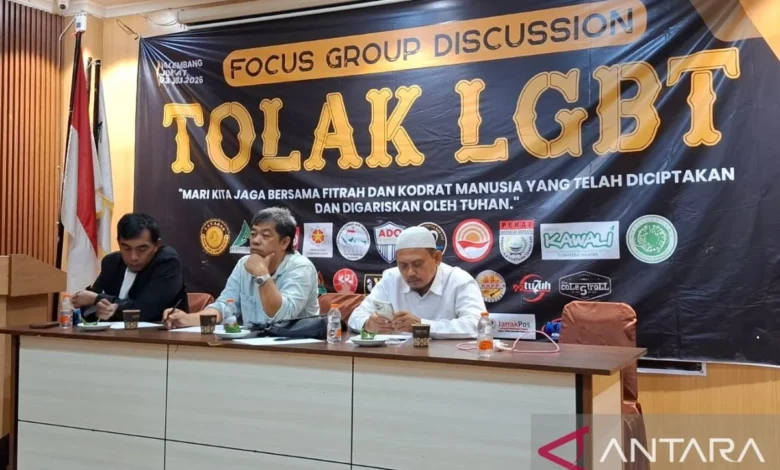
The discourse surrounding the Lesbian, Gay, Bisexual, and Transgender (LGBT) community has resurfaced with renewed intensity across the Indonesian archipelago, triggered by recent media reports concerning alleged private gatherings and an escalating debate over advocacy campaigns on various social media platforms. This resurgence of public attention has not only polarized digital spaces but has also prompted a deep re-examination of how traditional Islamic teachings intersect with modern societal shifts. In a nation where the majority of the population adheres to Islam, the theological perspective on same-sex relations remains a cornerstone of the national conversation, influencing everything from local governance to the broader cultural identity of the state.
The recent wave of controversy began following reports of alleged same-sex parties in urban centers, which quickly went viral, drawing condemnation from conservative groups and sparking a broader inquiry into the legal and moral boundaries of such activities within the Indonesian context. Simultaneously, the visibility of LGBT advocacy on social media has reached an all-time high, leading to a direct clash between progressive activists and traditionalist factions. This friction is not merely a social disagreement but is deeply rooted in the interpretation of Sharia (Islamic law) and its application in a modern, democratic, yet religiously conservative society.
The Theological Foundations of Islamic Prohibition
In the framework of Islamic teaching, the practice of same-sex relations is viewed as a deviation from the established "fitrah" or the natural, divinely ordained state of human existence. According to mainstream Islamic scholarship, the only legitimate channel for the expression of sexual desire is within the bounds of a legal marriage between a man and a woman. This view is not merely a cultural preference but is grounded in a rigorous interpretation of the Quran and the Hadith (the recorded sayings and traditions of the Prophet Muhammad).
The primary scriptural reference used by scholars to address this issue is the story of Prophet Lut (Lot), as detailed in the Quran. In Surah Al-A’raf, verses 80 and 81, the text provides a clear narrative regarding the Prophet’s admonition of his people. The verses read: "And (We also sent) Lut (to his people). (Remember) when he said to his people, ‘Do you commit a shameful deed such as no one in all the nations has done before you? For you practice your lusts on men in preference to women: ye are indeed a people transgressing beyond bounds.’"
Islamic exegetes (mufassirun) interpret these verses as a definitive condemnation of homosexual acts. The term "fahishah," used in the text, is often translated as an "abomination" or "indecency," signifying a grave moral transgression. Scholars argue that the story of the people of Lut serves as a perpetual warning against the abandonment of heteronormative structures, which Islam views as the essential building block of a stable and moral society.
Beyond the Quranic text, the Hadith literature provides further clarity on the legal status of such acts in Islamic jurisprudence. A notable narration by Al-Baihaqi, sourced from Abu Musa, records the Prophet Muhammad as saying: "When a man comes upon a man, they are both practitioners of zina (adultery/fornication), and when a woman comes upon a woman, they are both practitioners of zina." This classification of same-sex acts under the umbrella of "zina" has significant implications for Islamic legal thought, as it categorizes the behavior as a major sin that undermines the sanctity of the family unit.
The Role of the Indonesian Ulema Council (MUI)
In Indonesia, the interpretation of these religious texts is institutionalized through the Majelis Ulama Indonesia (MUI), the country’s top clerical body. While the MUI is not a formal government agency, its fatwas (religious edicts) carry immense weight in the social and political spheres. In 2014, the MUI issued Fatwa Number 57, which specifically addresses Lesbian, Gay, Sodomy, and Molestation.
The fatwa unequivocally states that homosexual behavior is "haram" (forbidden) and constitutes a violation of both religious law and the national ideology of Pancasila, which emphasizes belief in a supreme God. The MUI argues that the promotion of LGBT lifestyles threatens the moral fabric of the nation and the psychological development of the youth. This fatwa has served as a foundational document for various local regulations (Perda) that seek to restrict LGBT-related activities in several provinces and cities across Indonesia.
The MUI’s stance is reflective of a broader consensus among Indonesian Muslim organizations, including Nahdlatul Ulama (NU) and Muhammadiyah. While these organizations may differ on political tactics, they remain largely unified in their theological rejection of same-sex relations. They emphasize that while the acts are prohibited, the individuals involved should be guided back to "the right path" through "dakwah" (preaching) and counseling, rather than through violence.
Administrative and Legislative Responses
The theological debate has increasingly bled into the realm of public policy. One of the most significant recent developments is the introduction of Presidential Decree (Perpres) Number 111 of 2025. While the decree covers a broad range of cultural and social issues, groups like the Communication Body of Indonesian Mosque Youth (BKPRMI) have hailed it as a strategic tool to protect the nation from the perceived "threat" of LGBTQ culture. The BKPRMI and similar organizations argue that the decree provides a legal framework for the state to prioritize traditional family values in educational and cultural programming.
On a regional level, the response has been even more direct. In West Java, the Vice Governor recently made headlines by threatening to dismiss any Civil Servant (ASN) found to be involved in LGBT networks or advocacy. This move highlights the growing trend of "bureaucratic policing" of private behavior, justified by the need to maintain the "integrity and morality" of the state apparatus. Such statements reflect a broader sentiment among regional leaders that the presence of LGBT individuals in public office is incompatible with the religious values of their constituents.
Human Rights, Ethics, and the Call for Non-Violence
Despite the rigid theological prohibition, a crucial element of the current discourse is the emphasis on "akhlak" or moral character in dealing with the LGBT community. The original teachings of Islam, as cited by many contemporary Indonesian scholars, forbid the use of violence, bullying, or extrajudicial persecution against any individual.
The consensus among many moderate scholars is that while the "sin" must be rejected, the "humanity" of the individual must be respected. This nuanced position attempts to balance religious conviction with the universal principles of human rights. "Islam teaches us to preach with wisdom and beautiful exhortation," one scholar noted, referencing the Quranic mandate for "dakwah bil hikmah." This approach advocates for a social environment where individuals are encouraged to seek religious guidance without the fear of physical harm or social ostracization.
However, the reality on the ground often proves more complex. Human rights organizations, both domestic and international, have frequently raised concerns about the rising tide of intolerance and the potential for "moral panics" to lead to the marginalization of vulnerable groups. They argue that the criminalization of private behavior and the rhetoric of "threat" can embolden vigilante groups and lead to a climate of fear.
Broader Implications and Societal Impact
The ongoing debate over LGBT issues in Indonesia is indicative of a larger struggle for the country’s identity. As Indonesia seeks to position itself as a leading global economy and a model for "moderate Islam," it faces the challenge of reconciling traditional religious values with the increasing influence of global human rights norms.
From a sociological perspective, the "LGBT issue" serves as a proxy for anxieties about globalization, Western cultural imperialism, and the perceived erosion of traditional family structures. For many Indonesians, the defense of traditional marriage is seen as a defense of the nation itself. This explains why the debate is often so charged and why political figures frequently use the issue to bolster their conservative credentials.
Furthermore, the impact on the younger generation is a primary concern for both sides of the debate. Religious educators are doubling down on curriculum that emphasizes traditional gender roles, while digital-native youth are increasingly exposed to global narratives of inclusivity. This generational divide suggests that the conversation is far from over and will likely continue to evolve as the digital landscape changes.
In conclusion, the intersection of Islam and LGBT issues in Indonesia is a multifaceted phenomenon that involves deep-seated theological convictions, political maneuvering, and a complex social reality. While the religious prohibition remains firm based on the Quran, Hadith, and MUI fatwas, the challenge for the Indonesian state and its people lies in navigating this issue with a commitment to justice, non-violence, and social harmony. The resolution of this tension will significantly define the future of Indonesia’s social contract and its standing in the international community.