Ministry of Education Addresses Viral Harassment of Teacher at SMAN 1 Purwakarta Through Character-Based Discipline and Regulatory Frameworks


The Indonesian Ministry of Primary and Secondary Education has officially responded to a viral incident involving students at SMAN 1 Purwakarta who were recorded showing disrespect and harassing a female teacher. The incident, which gained widespread attention across social media platforms, depicted several students gesturing inappropriately—specifically by raising their middle fingers—toward a teacher wearing a hijab as she walked away from them. In the wake of the public outcry, the Ministry has confirmed that disciplinary measures have been enacted, including a 19-day suspension for the involved students, while emphasizing the importance of fostering a "Safe and Comfortable School Culture" as mandated by national regulations.
Detailed Chronology of the SMAN 1 Purwakarta Incident
The controversy began when a short video clip started circulating on platforms such as X (formerly Twitter), TikTok, and Instagram. The footage, recorded within the premises of SMAN 1 Purwakarta, showed a group of male students standing in a corridor. As a female teacher walked past them, one and then several other students raised their middle fingers toward her back. The teacher appeared unaware of the specific gestures at the moment they occurred, as her back was turned to the group, but the recording captured the act clearly, leading to immediate condemnation from netizens who viewed the behavior as a significant breach of the traditional Indonesian values of "unggah-ungguh" (etiquette) and "akhlak" (morality).
Following the viral spread of the video, the school administration of SMAN 1 Purwakarta launched an internal investigation to identify the individuals involved. The process included reviewing the digital evidence and interviewing the students in the presence of their guardians. By mid-April 2026, the school reached a decision regarding the sanctions. The students were issued a 19-day suspension, during which they are required to undergo home-based guidance and counseling. This period is intended not only as a punishment but as a restorative phase to ensure the students understand the gravity of their actions and the impact of their disrespect on the educational environment.
Official Response from the Ministry of Education
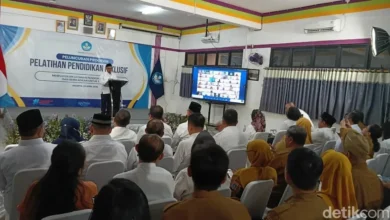
Minister of Primary and Secondary Education (Mendikdasmen) Abdul Mu’ti addressed the situation following the launch of the 2026 Inclusive Education Training Program at SMPN 16 Jakarta. He confirmed that the Ministry had received a comprehensive report regarding the incident and that the resolution was handled in accordance with Permendikdasmen No. 6 of 2026. This specific regulation outlines the standards for creating a school environment that is both safe and comfortable for all participants, including educators.
"The report is in, and the matter has been resolved," Minister Mu’ti stated. "The students involved have issued a formal apology to the teacher. We have handled this in accordance with the ministerial regulations concerning safe and comfortable schools." The Minister emphasized that while the students have been disciplined, the ultimate goal of the intervention is character building. He expressed hope that such an incident would serve as a critical learning point for students nationwide, reinforcing the idea that schools must be sanctuaries of mutual respect.
Mu’ti further linked the incident to the "Pancasila Student Pledge" (Ikrar Pelajar Pancasila), a cornerstone of the current national curriculum. He noted that the pledge explicitly requires students to honor and love their parents and teachers. "This is something we must emphasize to build safe schools and make education a part of our process in building civilization and noble character," he added. The Ministry’s stance reflects a broader policy shift toward integrating moral philosophy into everyday school life to prevent the erosion of social ethics in the digital age.
Local Governance and Parental Involvement
The case also drew the attention of Dedi Mulyadi, a prominent political figure and former Governor of West Java, who frequently engages in social and educational issues within the province. Through his social media channels, Mulyadi shared updates on the reconciliation process. He confirmed that the students’ parents were summoned to the school to discuss their children’s behavior.
According to Mulyadi’s reports, the meeting was highly emotional. "I am quite concerned about this event," Mulyadi remarked after receiving a briefing from the Head of the Education Office. "Based on the information provided, the parents were called to the school. They were in tears, feeling deep regret over their children’s actions."
The involvement of parents is a critical component of the 19-day suspension. Rather than a simple absence from school, the "home-based guidance" model requires parents to take an active role in the moral rehabilitation of their children. This approach aligns with the Indonesian educational philosophy that education is a collaborative effort between the school, the family, and the community. The suspension serves as a cooling-off period to prevent further tension within the school while providing a structured environment for reflection.
The Regulatory Framework: Permendikdasmen No. 6 of 2026
The invocation of Permendikdasmen No. 6 of 2026 highlights a rigorous legal framework designed to protect the dignity of educators and the safety of students. This regulation was established to address a rising trend of behavioral issues in schools, ranging from bullying among peers to harassment directed at staff.
Key components of this regulation include:
- Code of Conduct Standards: Clearly defining what constitutes harassment and professional misconduct within the school gates.
- Restorative Justice Mechanisms: Encouraging apologies and mediation while maintaining firm disciplinary consequences.
- Teacher Protection: Ensuring that educators can perform their duties without fear of intimidation or mockery.
- Psychological Support: Providing counseling for both the victim (to ensure their professional morale is maintained) and the perpetrator (to address the root causes of the behavioral outburst).
The application of this regulation in the SMAN 1 Purwakarta case sets a precedent for how similar incidents should be handled across Indonesia. It moves away from purely punitive measures toward a system that prioritizes the restoration of the "school’s soul" through accountability and character education.
Broader Context of Student Behavior and Social Media
The incident at SMAN 1 Purwakarta does not exist in a vacuum. Educational experts point to a growing challenge in the digital era where the desire for "viral content" or peer validation sometimes overrides traditional social norms. The act of filming the harassment suggests that the students may have viewed the disrespect as a form of social currency or a joke, failing to recognize the institutional and personal harm caused to the teacher.
Data from the Ministry of Education over the past few years suggests a fluctuating trend in school discipline cases. While physical violence has seen some decline due to stricter anti-bullying policies, "symbolic violence"—which includes verbal abuse, digital harassment, and disrespectful gestures—remains a persistent issue. The Ministry has responded by doubling down on the "Profil Pelajar Pancasila" (Pancasila Student Profile), which identifies six key traits students should possess: faith in God, global diversity, cooperation, independence, critical reasoning, and creativity. Respect for authority figures, particularly teachers, is viewed as an essential output of "noble character" (akhlak mulia).
Implications for the Future of Indonesian Education
The resolution of the SMAN 1 Purwakarta case serves as a multi-layered lesson for the Indonesian educational system. First, it underscores the power of social media as a double-edged sword; while it can facilitate harassment, it also acts as a tool for accountability, bringing hidden misconduct to the attention of high-level officials.
Second, the 19-day suspension and the subsequent "home guidance" highlight the necessity of parental accountability. The emotional reaction of the parents in Purwakarta suggests a disconnect between the values taught at home and the behavior exhibited in peer groups. Moving forward, the Ministry is expected to strengthen programs that bridge the gap between home and school environments.
Finally, the incident reinforces the importance of teacher dignity. Teachers are the backbone of the nation’s intellectual and moral development. Harassment, even if non-physical, creates a toxic workplace that can lead to teacher burnout and a decline in the quality of instruction. By taking a firm stand through Permendikdasmen No. 6 of 2026, the government is signaling that the protection of educators is a national priority.
As the 2026 academic year progresses, the Ministry of Primary and Secondary Education aims to use this case as a case study for school principals nationwide. The objective is to shift the focus from merely reacting to viral incidents to proactively cultivating an atmosphere where "Safe and Comfortable Schools" are not just a regulatory requirement, but a lived reality for every teacher and student in Indonesia. The emphasis remains on building a civilization where knowledge is accompanied by virtue, ensuring that the next generation of Indonesian citizens is defined not just by their academic achievements, but by their respect for those who guide them.
Related posts: