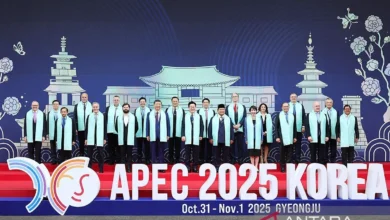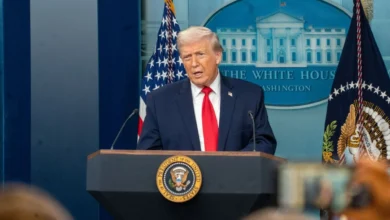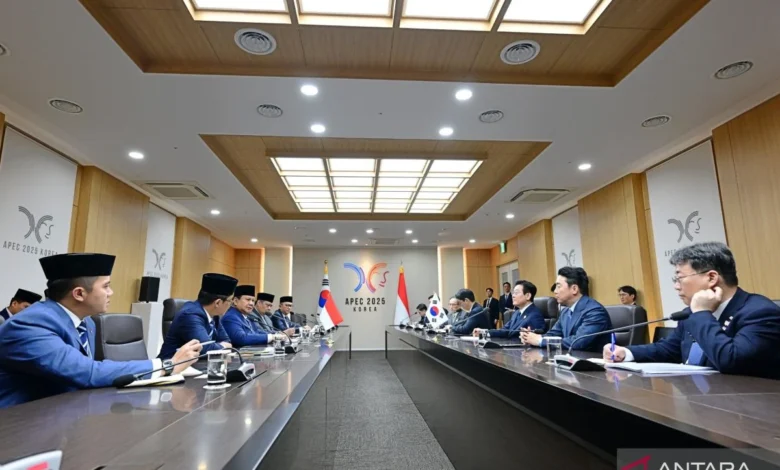
The Asia-Pacific Economic Cooperation (APEC) forum continues to stand as a cornerstone of global economic stability, serving as a vital platform for dialogue and collaboration among the world’s most influential economies. In a significant move to solidify Indonesia’s standing on the international stage, President Prabowo Subianto attended the APEC Economic Leaders’ Meeting (AELM) 2025, held in South Korea from October 31 to November 1, 2025. This participation underscores Jakarta’s enduring commitment to regional cooperation, trade liberalization, and sustainable development within the Pacific Rim. As the world navigates a complex landscape of supply chain shifts, digital transformation, and climate imperatives, the 2025 summit in South Korea provided a timely venue for Indonesia to advocate for inclusive growth and heightened investment in the Southeast Asian region.
The Strategic Importance of APEC in the Modern Era
Established in 1989, APEC was born out of a growing interdependence among Asia-Pacific economies. Unlike many other international bodies, APEC operates on the basis of non-binding commitments and open dialogue, allowing member economies to reach consensus on sensitive trade and investment issues. Today, the forum represents approximately 62 percent of global Gross Domestic Product (GDP) and nearly half of the world’s total trade. For Indonesia, as one of the founding members, APEC is not merely a talk shop but a strategic vehicle to influence regional policy and secure market access for its burgeoning industrial and agricultural sectors.
The 2025 summit in South Korea focused heavily on the themes of "Innovation, Inclusion, and Integration." Against the backdrop of rapid advancements in Artificial Intelligence (AI) and the global transition toward green energy, the member economies sought to harmonize regulations that facilitate cross-border digital trade while ensuring that the benefits of such growth reach small and medium-sized enterprises (SMEs). President Prabowo’s presence at the summit signaled a continuation of Indonesia’s "active and independent" foreign policy, seeking to balance relations with major powers while prioritizing national economic interests.
A Chronology of APEC’s Expansion and Membership
The strength of APEC lies in its diverse membership, which spans four continents and includes the world’s two largest economies—the United States and China—alongside emerging powerhouses and smaller, trade-dependent nations. The forum has grown from a group of 12 founding members to 21 "economies" (a term used because the forum includes Hong Kong and Chinese Taipei, which participate as economic entities rather than sovereign states).
The following is the detailed list of APEC member economies and the chronology of their entry into the forum:
The Founding Members (1989)
The first wave of membership occurred during the inaugural ministerial meeting in Canberra, Australia. These twelve nations laid the groundwork for what would become the premier forum for facilitating economic growth and free trade in the region.
- Australia: Joined November 6–7, 1989. As the host of the first meeting, Australia has been a primary driver of the APEC agenda.
- Brunei Darussalam: Joined November 6–7, 1989.
- Canada: Joined November 6–7, 1989, representing the North American interest in Pacific trade.
- Indonesia: Joined November 6–7, 1989. Indonesia’s involvement has been pivotal, notably hosting the 1994 summit where the "Bogor Goals" for free and open trade were established.
- Japan: Joined November 6–7, 1989, bringing its industrial and technological prowess to the forum.
- South Korea: Joined November 6–7, 1989. As the host of the 2025 summit, South Korea continues to be a leader in digital innovation within the bloc.
- Malaysia: Joined November 6–7, 1989.
- New Zealand: Joined November 6–7, 1989.
- The Philippines: Joined November 6–7, 1989.
- Singapore: Joined November 6–7, 1989, serving as a global hub for finance and logistics.
- Thailand: Joined November 6–7, 1989.
- United States: Joined November 6–7, 1989, ensuring the forum’s significance in global geopolitics.
The Second Wave (1991)
Two years after its inception, APEC expanded to include three major Chinese economies, a move that significantly boosted the forum’s total trade volume and regional representation.
- China (People’s Republic of China): Joined November 12–14, 1991.
- Hong Kong, China: Joined November 12–14, 1991.
- Chinese Taipei (Taiwan): Joined November 12–14, 1991.
The Third Wave (1993)
As APEC transitioned from ministerial meetings to annual leaders’ summits—the first of which was hosted by U.S. President Bill Clinton at Blake Island—two more nations were added to the fold.
- Mexico: Joined November 17–19, 1993.
- Papua New Guinea: Joined November 17–19, 1993.
The Fourth Wave (1994)
- Chile: Joined November 11–12, 1994. Chile’s entry strengthened APEC’s ties with South America’s Pacific coast.
The Final Expansion (1998)
The last major expansion occurred in the late 1990s, bringing the total to the current 21 members. Since 1998, a moratorium on new membership has been in place to ensure the forum remains manageable and focused on its core objectives.
- Peru: Joined November 14–15, 1998.
- Russia: Joined November 14–15, 1998.
- Vietnam: Joined November 14–15, 1998.
Indonesia’s Role and President Prabowo’s 2025 Agenda
President Prabowo Subianto’s attendance at the 2025 South Korea summit is viewed by analysts as a critical moment for Indonesia’s "Golden Indonesia 2045" vision. The President’s agenda focused on several key pillars: downstreaming of natural resources, food security, and energy transition. By engaging with leaders from the U.S., China, and Japan, the Indonesian delegation sought to attract high-quality investment into the country’s burgeoning electric vehicle (EV) battery ecosystem and renewable energy infrastructure.
During bilateral meetings on the sidelines of the summit, President Prabowo reportedly emphasized that Indonesia is open for business but remains committed to adding value to its exports. This policy of "hilirisasi" or downstreaming—where raw materials like nickel are processed domestically—was a central theme in discussions with trade partners. Indonesia aims to transition from a raw material exporter to a manufacturing hub, a shift that requires the cooperation of APEC partners for technology transfer and market access.
Furthermore, the President addressed the issue of the digital divide. As APEC pushes for a "Digital Pacific," Indonesia has advocated for policies that support digital literacy and infrastructure in developing economies. The goal is to ensure that the digital economy does not exacerbate existing inequalities but rather provides a platform for MSMEs to participate in global value chains.
Economic Data and Regional Impact
The importance of APEC to the global economy cannot be overstated. According to APEC Secretariat data, the region’s real GDP grew by approximately 3.5% in 2024, and projections for 2025 remain optimistic despite global inflationary pressures. Trade within the APEC region has seen a significant shift toward services and digital products, which now account for a growing share of total regional trade.
For Indonesia, the APEC region is the destination for more than 70% of its total exports. Countries like China, the United States, and Japan remain Indonesia’s top trading partners. The forum’s work on "Ease of Doing Business" and the "Single Window" customs systems has directly contributed to reducing transaction costs for Indonesian exporters. In 2025, the focus on "Green Customs" and sustainable supply chains is expected to further influence how Indonesia manages its maritime trade and logistics.
Broader Implications and Geopolitical Analysis
The 2025 APEC Summit took place during a period of significant geopolitical recalibration. The ongoing competition between the United States and China continues to cast a long shadow over regional trade discussions. However, APEC remains one of the few forums where the leaders of both superpowers sit at the same table to discuss economic cooperation.
Analysts suggest that for middle powers like Indonesia, APEC serves as a "buffer" and a "bridge." By focusing on technical cooperation and economic integration, APEC allows nations to find common ground even when political tensions are high. The 2025 summit’s focus on "Supply Chain Resilience" is a direct response to the disruptions seen in previous years, emphasizing the need for diversified and transparent logistics networks that are less susceptible to geopolitical shocks.
The adoption of the "Gyeongju Declaration" (anticipated from the South Korean host) likely reinforces the Putrajaya Vision 2040, which aims for an "open, dynamic, resilient and peaceful Asia-Pacific community." This long-term vision is essential for Indonesia as it seeks to graduate from a middle-income country to a developed economy over the next two decades.
Conclusion: The Path Forward
As the APEC 2025 summit concludes, the focus shifts to the implementation of the agreements reached in South Korea. For Indonesia, the success of the summit will be measured by the flow of foreign direct investment (FDI) and the successful negotiation of trade barriers that affect its key industries. President Prabowo Subianto’s participation has reinforced Indonesia’s status as a leader in the Global South and a vital player in the Asia-Pacific narrative.
The 21 member economies of APEC, despite their varying levels of development and differing political systems, remain united by a shared interest in regional prosperity. As the world moves deeper into the mid-2020s, the collaborative spirit of APEC will be more necessary than ever to tackle global challenges that no single nation can solve alone. From climate change to the ethical governance of AI, the roadmap laid out in the 2025 summit will guide the regional economy toward a more integrated and sustainable future. Through its active involvement, Indonesia ensures that its national interests are woven into the fabric of this global progress, securing a more prosperous outlook for its 280 million citizens.