Magnitude 7.4 Earthquake Strikes Northern Japan Triggering Tsunami Warnings and Widespread Alarm in Tokyo

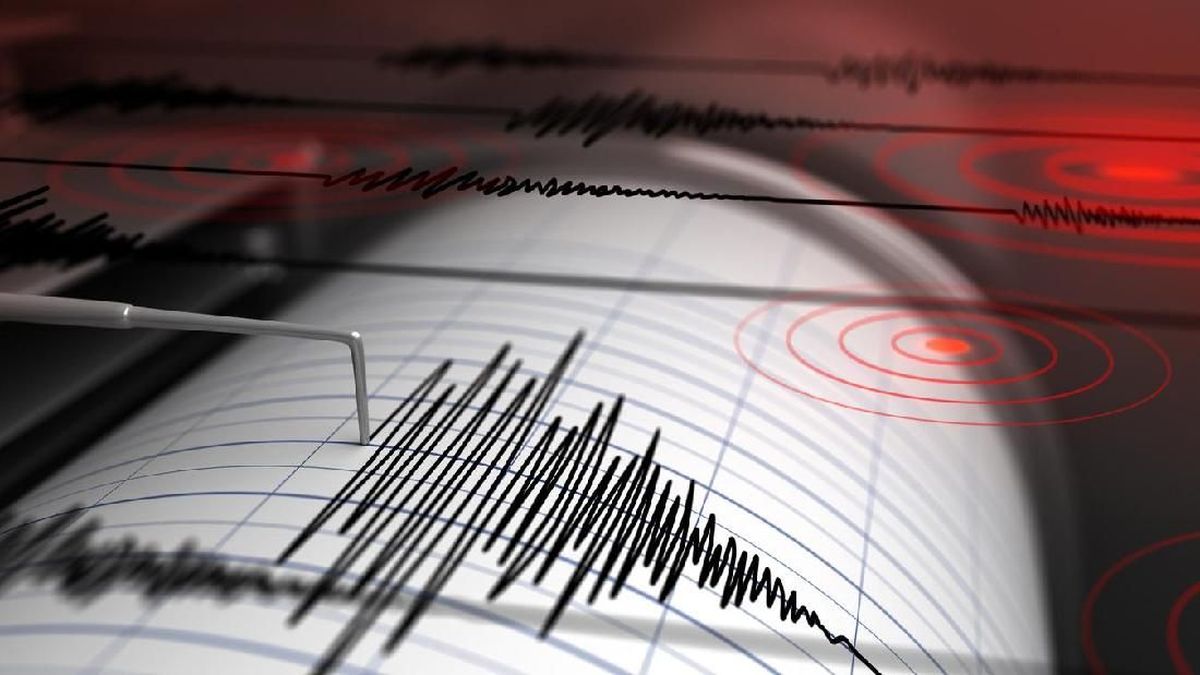
A massive magnitude 7.4 earthquake struck the northern regions of Japan on Monday afternoon, sending powerful shockwaves across the main island of Honshu and prompting authorities to issue urgent tsunami warnings for several coastal prefectures. The Japan Meteorological Agency (JMA) recorded the tremor at approximately 4:53 p.m. local time, with the epicenter located in the Pacific Ocean off the coast of Iwate Prefecture. The depth of the quake and its significant magnitude triggered immediate alarms throughout the nation’s sophisticated disaster prevention network, bringing transportation systems to a halt and forcing thousands of residents to seek higher ground.
The JMA quickly escalated its response, issuing a tsunami warning for waves estimated to reach up to three meters (approximately 10 feet) along the coasts of Iwate, Miyagi, and Fukushima prefectures. Local broadcasters interrupted regular programming to display bright red warning banners, urging citizens to "evacuate immediately" and "do not go near the coast." The memory of the 2011 Great East Japan Earthquake remains a defining factor in the nation’s psychological and administrative response to such events, and the speed of Monday’s evacuation orders reflected a "safety-first" doctrine that has been refined over decades of seismic activity.
Immediate Seismic Impact and Tsunami Alerts
The earthquake, which occurred at a time when many workers were preparing to leave their offices and students were heading home from school, was felt with varying degrees of intensity across more than half of Japan’s prefectures. In the areas closest to the epicenter, such as the coastal towns of Iwate, the shaking was described by witnesses as violent and prolonged, lasting for over a minute. The JMA’s seismic intensity scale, known as the Shindo scale, reportedly reached "6-upper" in some districts, a level at which it is difficult to remain standing and unreinforced concrete walls are likely to collapse.
In Tokyo, located hundreds of kilometers to the south of the epicenter, the impact was nonetheless significant. High-rise office buildings in the Shinjuku and Marunouchi districts swayed visibly for several minutes, a design feature intended to absorb kinetic energy but one that often causes motion sickness and alarm among occupants. Public address systems in the capital’s major train stations, including Shibuya and Shinjuku, immediately broadcasted alerts in multiple languages, informing commuters of delays and advising them to stay away from glass windows and heavy shelving.
The tsunami warning remained the primary concern for emergency management officials in the hours following the initial rupture. By 5:15 p.m., coastal sirens were wailing in fishing villages and port cities. The JMA cautioned that while the first wave might not be the largest, a series of waves could continue to strike the coast for several hours. Residents were instructed to remain in evacuation centers until the warnings were officially lifted, as the receding water between wave crests can be just as dangerous as the incoming surges.
Geographical and Tectonic Context of the Iwate Offshore Event
The region off the coast of Iwate is part of the "Ring of Fire," a horseshoe-shaped zone of intense seismic and volcanic activity encircling the Pacific Ocean. Specifically, this earthquake occurred near the Japan Trench, a subduction zone where the Pacific Plate is being forced beneath the Okhotsk Plate. The friction and pressure built up by these tectonic movements are periodically released in the form of high-magnitude earthquakes.
Geologists note that the Iwate offshore area is particularly prone to "megathrust" events. Monday’s 7.4 magnitude quake is categorized as a major earthquake capable of causing widespread damage. The specific mechanism of this event—a shallow thrust faulting—is the most common cause of tsunamis, as the vertical displacement of the seabed displaces a massive volume of seawater, creating waves that travel at the speed of a jet aircraft across the open ocean before slowing and growing in height as they reach shallower coastal waters.
Emergency Response and Evacuation Protocols
Following the earthquake, the Japanese government immediately established an emergency task force at the Prime Minister’s Office in Tokyo. Prime Minister Kishida, or the presiding head of state, typically issues a directive to prioritize the saving of lives and the rapid assessment of damage. "We are currently gathering information on the extent of the damage and casualties," a government spokesperson stated during a televised press conference shortly after the quake. "Our priority is to ensure that every citizen in the warning zones has reached higher ground."
The Self-Defense Forces (SDF) were placed on high alert, with reconnaissance aircraft dispatched to survey the coastal lines of Iwate and Miyagi for signs of tsunami damage or fires. Local fire departments and police units in northern Japan began door-to-door checks in neighborhoods with high elderly populations, ensuring that those with limited mobility were not left behind during the rush to evacuation sites.
In many coastal towns, the "Tsunami Tendenko" philosophy—a local tradition teaching that individuals must run to high ground independently without waiting for others to ensure the maximum number of survivors—was put into practice. Schools, which serve as designated evacuation centers, saw hundreds of families gathering on rooftops and upper floors as night began to fall.
Impact on National Infrastructure and Transportation
The earthquake caused immediate and widespread disruptions to Japan’s highly integrated infrastructure. East Japan Railway Company (JR East) suspended operations of the Tohoku, Yamagata, and Akita Shinkansen lines as a safety precaution. The high-speed trains are equipped with an Early Earthquake Detection System that automatically cuts power and applies emergency brakes when initial P-waves are detected, often stopping the trains seconds before the more destructive S-waves arrive.
At Sendai Airport and Iwate’s regional airports, runways were temporarily closed to inspect for cracks or liquefaction. Several flights were diverted to Tokyo or Osaka, while passengers at coastal terminals were moved to higher floors. Major highways in the Tohoku region were also closed to allow for structural inspections of bridges and tunnels, leading to significant traffic congestion on secondary roads.
Energy providers reported that tens of thousands of households lost power in the immediate aftermath of the shaking, primarily due to the automatic tripping of circuit breakers and localized damage to distribution lines. While most of these outages were resolved within hours, the disruption added to the difficulty of coordinating rescue efforts in the dark.
Nuclear Safety and Industrial Implications
Given the proximity of the epicenter to the sites of the 2011 disaster, the status of nuclear power plants was a matter of international concern. Tokyo Electric Power Company (TEPCO) and Tohoku Electric Power conducted immediate inspections of the Fukushima Daiichi, Fukushima Daini, and Onagawa nuclear power stations.
Initial reports from the Nuclear Regulation Authority (NRA) indicated that no new abnormalities were detected at the plants. Cooling systems for spent fuel pools remained operational, and radiation monitoring posts showed no increase in levels. However, the psychological weight of another major quake in this region cannot be overstated, and the government faced immediate pressure to provide transparent, real-time data regarding the integrity of these facilities.
Beyond energy, the northern region of Japan is a hub for high-tech manufacturing, including semiconductor and automotive parts factories. Several major corporations announced temporary halts in production to assess damage to precision machinery. Even minor structural misalignments in these facilities can lead to weeks of downtime, potentially impacting global supply chains that are already sensitive to disruptions in the East Asian sector.
Historical Context and the Legacy of 2011
Monday’s earthquake inevitably drew comparisons to the March 11, 2011, disaster, which saw a magnitude 9.0 quake trigger a catastrophic tsunami and nuclear meltdown. While the 7.4 magnitude of the current event is significantly less powerful in terms of energy release—roughly 250 times less powerful than a 9.0—it still ranks among the strongest earthquakes to hit the region in recent years.
Since 2011, Japan has invested billions of dollars in sea walls, early warning systems, and disaster education. The "3-meter tsunami" predicted on Monday tested these new defenses. While many of the newly constructed sea walls are tall enough to withstand a wave of that size, officials emphasized that walls can fail or be overtopped, and that evacuation remains the only foolproof method of survival.
The social fabric of the Tohoku region has been shaped by its history of resilience. Many of the people evacuating on Monday were survivors of the 2011 tragedy. This shared history often results in a highly disciplined public response, but it also carries a heavy burden of trauma that local mental health authorities are increasingly tasked with addressing following such "trigger" events.
Meteorological Analysis and Aftershock Projections
The JMA has warned that the region should expect significant aftershocks for at least one week following the initial 7.4 magnitude event. These aftershocks, which could potentially reach magnitudes of 6.0 or higher, pose a threat to buildings already weakened by the first tremor. Furthermore, the risk of landslides has increased in the mountainous terrain of Iwate and Miyagi, as the heavy shaking has loosened soil that may be further destabilized by seasonal rains.
Seismologists are analyzing the data to determine if this quake is a "standalone" event or a precursor to a larger rupture. While "foreshocks" are rare, they are a documented phenomenon in Japanese seismic history. Consequently, the JMA has maintained a high alert status, advising residents to keep emergency "go-bags" ready and to remain vigilant regarding official communications.
Socio-Economic Resilience and Disaster Preparedness
As the situation continues to unfold, the focus will eventually shift from immediate survival to recovery and economic assessment. Japan’s ability to absorb such shocks is a testament to its rigorous building codes and a culture of preparedness that is arguably the most advanced in the world. From "earthquake-proof" skyscrapers in Tokyo to the tsunami markers that dot the northern coastline, the nation is built to withstand the fury of the Pacific Plate.
However, the frequency of these events continues to challenge the national budget and the aging population of the northern prefectures. As young people migrate to larger cities, the task of maintaining disaster readiness in rural coastal towns becomes increasingly difficult. Monday’s earthquake serves as a stark reminder that despite technological advancements, the forces of nature remain unpredictable and require constant vigilance.
In the coming days, international aid agencies and seismic researchers will look to Japan for data on how the latest earthquake affected modern structures and how the warning systems performed. For now, the people of Iwate, Miyagi, and Fukushima remain in a state of watchful waiting, hoping that the sea remains calm and that the ground beneath them has finally settled. The government has pledged full support for any necessary reconstruction, emphasizing that the lessons learned from this 7.4 magnitude event will be integrated into the nation’s ever-evolving strategy for disaster risk reduction.
Related posts: