Prime Minister Netanyahu Vows Severe Punishment for Israeli Soldier Who Vandalized Statue of Jesus Christ in Southern Lebanon

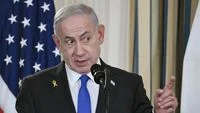
The Israeli government has moved swiftly to condemn the actions of a soldier from the Israel Defense Forces (IDF) who was captured on video desecrating a religious icon in a Christian village in southern Lebanon. Prime Minister Benjamin Netanyahu, facing significant international and domestic pressure, issued a stern statement on Monday, April 20, promising that the individual responsible for the act would face severe disciplinary and legal consequences. The incident, which involved the destruction of a statue of Jesus Christ, has ignited a firestorm of criticism across the Middle East and among global religious communities, threatening to complicate the fragile ceasefire and the diplomatic narrative surrounding Israel’s military operations in Lebanese territory.
The controversy erupted after a video began circulating widely on social media platforms, showing an IDF soldier in full combat gear using a sledgehammer to strike the head of a crucifix. The statue, which depicted Jesus Christ, was situated in the village of Debl, a predominantly Christian community located in the rugged hills of southern Lebanon, just a few kilometers from the Israeli border. The footage, which appeared to be recorded by a fellow soldier, showed the perpetrator striking the icon with force until the head was severed, an act that has been characterized by religious leaders as a profound violation of sanctity and a direct assault on the Christian faith.
Official Condemnation from the Israeli Leadership
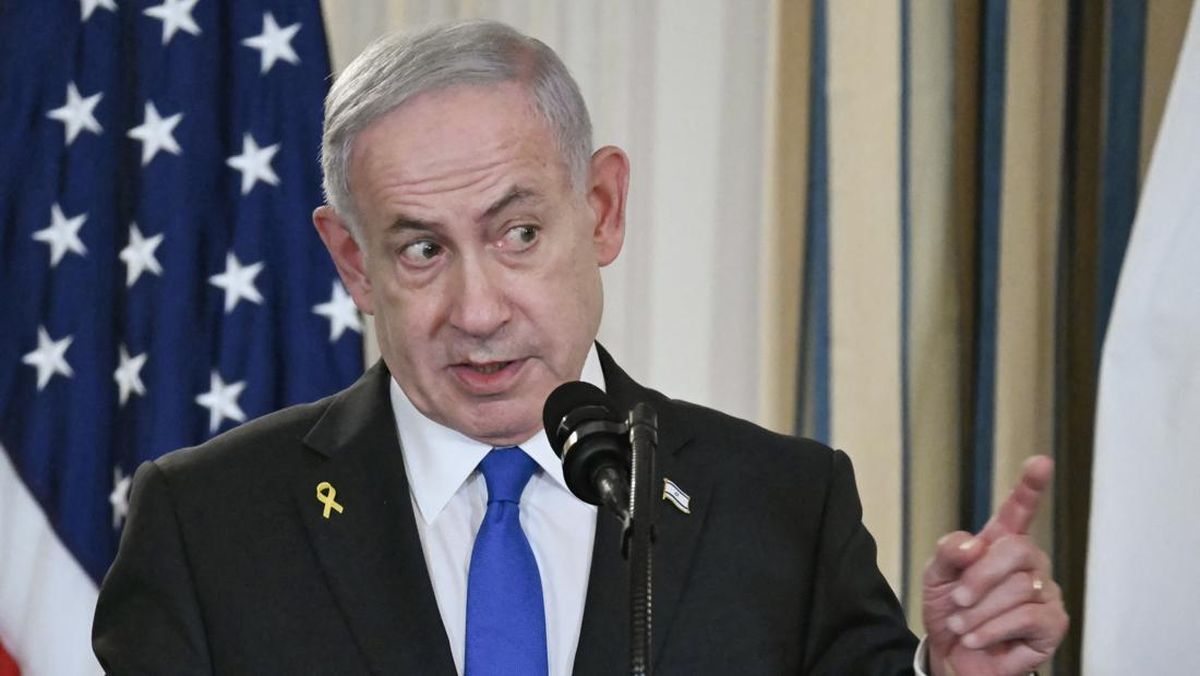
In a statement posted to his official account on X (formerly Twitter), Prime Minister Netanyahu expressed his deep disapproval of the soldier’s behavior, emphasizing that such actions do not represent the values of the State of Israel or its military. "I was shocked and saddened to learn that an IDF soldier damaged a Catholic religious icon in southern Lebanon," Netanyahu stated. He further noted that the military has launched a formal criminal investigation into the matter. "I condemn this act in the strongest possible terms. The military is conducting a criminal investigation into this matter and will take firm disciplinary action against the perpetrator."
Netanyahu’s swift response was echoed by Foreign Minister Gideon Saar, who described the incident as "shameful and despicable." Saar, who recently assumed the role of Foreign Minister, recognized the potential diplomatic fallout from the event, particularly regarding Israel’s relations with Christian communities worldwide and its Western allies. "I am confident that the necessary decisive action will be taken against anyone who committed this heinous act," Saar said on social media. He also offered a formal apology, stating, "We apologize for this incident and to every Christian whose feelings were hurt."
The IDF spokesperson’s unit also released a statement confirming the authenticity of the video and identifying the soldier as a member of the forces currently operating in southern Lebanon. The military described the vandalism as "extremely serious" and noted that the soldier’s conduct was "completely inconsistent with the values expected of its troops." The IDF has pledged to work with local community leaders in Debl to ensure the restoration of the religious site and the replacement of the damaged statue.
The Context of the Incident in Debl
The village of Debl is one of several historic Christian enclaves in southern Lebanon that have found themselves on the front lines of the conflict between Israel and the militant group Hezbollah. For decades, these communities have maintained a delicate existence, often caught between the crossfire of regional powers. Unlike many villages in the south that are strongholds for Hezbollah, Debl and its neighbors have historically sought to remain neutral, focusing on the preservation of their religious heritage and communal safety.
The desecration occurred during a period of heightened tension. Although a ceasefire agreement was recently brokered to end the intensive fighting that began in early March, the Israeli military maintains a presence in several southern Lebanese villages. Under the terms of the cessation of hostilities, a gradual withdrawal is planned, but IDF units remain on the ground to monitor the situation and prevent the re-emergence of militant infrastructure. It was during these "clearing operations" that the act of vandalism took place.
The choice of target—a crucifix—is particularly sensitive. In the multi-confessional landscape of Lebanon, religious symbols are more than just objects of worship; they are markers of identity and communal survival. For the residents of Debl, the sight of a foreign soldier systematically destroying a symbol of their faith has evoked memories of past conflicts and raised fears about the future of religious pluralism in the region.
Reactions from Religious and International Observers
The international response to the incident was immediate. Adeeb Joudeh AlHusseini, the hereditary custodian and key holder of the Church of the Holy Sepulchre in Jerusalem, issued a scathing critique of the soldier’s actions. AlHusseini, whose family has held the keys to one of Christianity’s holiest sites for centuries, argued that the incident was not an isolated case of individual misconduct but rather a symptom of a deeper disregard for religious sensitivities.
"This is not a passing incident; it is a direct violation of sanctity that goes beyond stone and wood, attacking the dignity of faith itself," AlHusseini said in a public statement. He further challenged the Israeli government’s rhetoric regarding its respect for all religions, stating that such "practices on the ground" contradict official claims of tolerance. AlHusseini called on the international community to hold the Israeli authorities accountable and demanded a clear policy to end all forms of violations against holy sites.
In Lebanon, the Maronite Church and other Christian denominations have expressed "deep pain and indignation." Local bishops have called for the United Nations Interim Force in Lebanon (UNIFIL) to document the damage and provide better protection for civilian and religious infrastructure. The incident has also been seized upon by political actors in Lebanon, who argue that the IDF’s presence is a threat to the nation’s cultural and religious fabric.
The "Image War" and Military Discipline
The destruction of the statue in Debl highlights a recurring challenge for the IDF in the age of social media: the behavior of individual soldiers and its impact on national strategic goals. In recent months, several videos have emerged showing Israeli soldiers engaging in behavior that critics describe as unprofessional or inflammatory, ranging from the destruction of civilian property to the filming of "victory" videos in sensitive areas.
Military analysts suggest that these incidents undermine Israel’s efforts to portray its military operations as targeted solely at militant groups like Hezbollah and Hamas. When soldiers record themselves committing acts of vandalism, they provide ammunition to critics who argue that the military’s conduct is indiscriminate. The "image war" is a critical component of modern conflict, and the desecration of a Christian icon is particularly damaging to Israel’s standing with its supporters in Europe and the United States, where Christian Zionism and general support for the protection of religious minorities are significant political forces.
The IDF’s "Code of Ethics," known as Ruach Tzahal (The Spirit of the IDF), explicitly mandates the protection of human dignity and the respect for the beliefs and holy sites of all people. The military prosecution is expected to use this code as the basis for the court-martial of the soldier involved. Legal experts indicate that the perpetrator could face charges of "conduct unbecoming of a soldier," "destruction of property," and "offending religious sentiments," which carry potential prison sentences and dishonorable discharge.
Broader Implications for the Region
The timing of this incident is particularly precarious as Lebanon attempts to navigate the aftermath of the recent war. The conflict, which escalated significantly following Hezbollah’s involvement in the regional spillover from the Gaza war, has displaced hundreds of thousands of people and caused billions of dollars in infrastructure damage. The ceasefire, while currently holding, is viewed as fragile.
Incidents that inflame sectarian or religious tensions can serve as catalysts for renewed violence. In Lebanon’s complex political system, where power is shared among religious groups, the protection of the Christian minority is a cornerstone of national stability. If the Christian community feels targeted by Israeli forces, it could shift the internal political dynamics of Lebanon, potentially driving various factions closer together in opposition to the Israeli presence.
Furthermore, the incident complicates Israel’s diplomatic efforts to build a regional coalition against Iranian influence. Countries like Jordan, Egypt, and the signatories of the Abraham Accords (such as the UAE and Bahrain) place a high premium on religious coexistence. Public displays of religious intolerance by Israeli personnel can alienate these partners and make public cooperation with Israel more difficult for Arab leaders.
Conclusion and Future Outlook
As the criminal investigation into the soldier’s actions continues, the Israeli government is under pressure to prove that its condemnation is backed by tangible action. The restoration of the statue in Debl and the public sentencing of the soldier will be closely watched by international observers and religious leaders alike.
For the residents of southern Lebanon, the incident serves as a grim reminder of the costs of war and the vulnerability of their heritage. For the State of Israel, it represents a significant public relations failure that requires immediate and transparent remediation. In the broader context of Middle Eastern geopolitics, the event underscores the reality that in a land where every stone carries religious significance, the actions of a single individual can have repercussions that echo far beyond the battlefield. The path to a lasting peace in the region depends not only on the silencing of guns but also on the restoration of respect for the diverse faiths that call the Levant home.
Related posts: