US President Donald Trump Announces Sharp Tariff Increase on South Korean Imports Amid Trade Agreement Ratification Delay

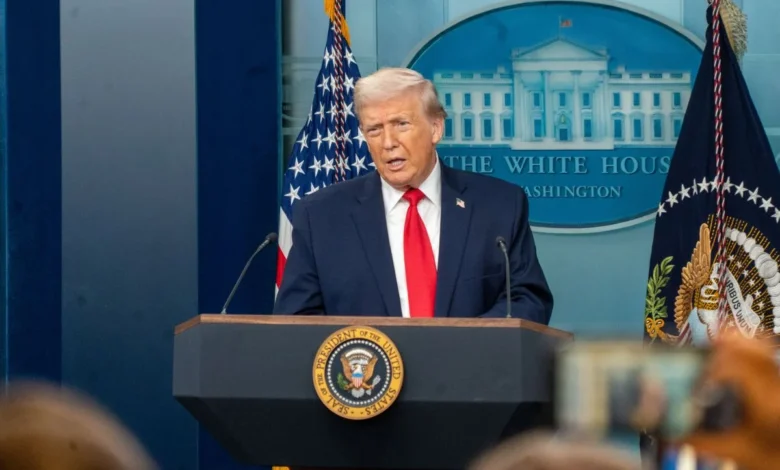
United States President Donald Trump announced on Monday, January 26, a significant escalation in trade tensions with South Korea, declaring his intention to raise tariffs on key South Korean imports from 15 percent to 25 percent. The decision, communicated via social media, marks a sharp departure from the collaborative tone established late last year and signals a return to a more aggressive "America First" trade stance. President Trump cited the South Korean legislature’s failure to ratify a previously negotiated bilateral trade agreement as the primary catalyst for the move, accusing the body of failing to uphold its end of a "historic" deal.
The targeted tariff hike specifically focuses on three vital sectors of the South Korean economy: automotive products, timber, and pharmaceuticals. Additionally, the President stated that "all other Reciprocal Tariffs" would similarly be adjusted to the 25 percent level. According to the President, the South Korean National Assembly has exercised its prerogative to delay the ratification of the deal, but he argued that this inaction constitutes a breach of the spirit of the agreement reached between the two executive branches in 2025.
The Breakdown of the 2025 Trade Accord
The current friction stems from a trade framework finalized between President Trump and South Korean President Lee Jae Myung on October 29, 2025, during a high-profile state visit to Seoul. This agreement was intended to modernize the existing Korea-U.S. Free Trade Agreement (KORUS FTA) and address long-standing trade imbalances that the Trump administration has frequently criticized.
Under the terms of the October 2025 agreement, the United States had agreed to implement a blanket 15 percent tariff on South Korean imports. While significant, this figure was positioned as a concession, as it was 10 percentage points lower than the 25 percent "universal" tariff the Trump administration had previously threatened to impose on global trading partners. In exchange for this preferential rate, the South Korean government and its private sector conglomerates committed to a massive investment package in the United States, totaling approximately $350 billion.
The investment was designed to stimulate the American manufacturing sector, particularly in the fields of electric vehicle (EV) batteries, semiconductors, and green energy infrastructure. President Trump had lauded the deal as a "Great Deal for both Nations" during its initial drafting on July 30, 2025, and reiterated its importance during his subsequent trip to Korea. However, the President’s latest statement reflects growing impatience with the pace of the South Korean legislative process. "The South Korean Legislature has not lived up to its Deal with the U.S.," Trump stated, emphasizing that the legislative delay has effectively nullified the tariff concessions offered by Washington.
Chronology of the US-South Korea Trade Dispute
The escalation follows a year of intense negotiations and shifting diplomatic tides. To understand the current impasse, it is necessary to examine the timeline of events that led to the January 26 announcement:
- July 30, 2025: President Trump and President Lee Jae Myung reach a preliminary "Grand Bargain" in Washington. The deal outlines the $350 billion investment commitment from South Korea in exchange for a lower 15 percent tariff threshold.
- October 29, 2025: During a presidential visit to Seoul, the two leaders sign the finalized terms of the agreement. The event is celebrated as a cornerstone of the bilateral alliance, aimed at securing supply chains and reducing dependence on other regional powers.
- November – December 2025: The agreement is sent to the South Korean National Assembly for ratification. Internal political friction in Seoul begins to surface, as opposition lawmakers voice concerns over the impact of the investment outflow on the domestic South Korean labor market.
- Early January 2026: Reports emerge from Seoul that the National Assembly’s trade committee has requested more time to review the "Reciprocal Tariff" clauses, citing potential harm to South Korea’s pharmaceutical and agricultural sectors.
- January 26, 2026: President Trump issues his directive via social media, raising the tariff rate to 25 percent effective immediately or in the very near future, citing the legislative stall as the justification.
Economic Data and Sectoral Impact
South Korea remains one of the United States’ most critical trading partners, with bilateral trade volume consistently exceeding $100 billion annually. The impact of a 10 percent increase in tariffs—bringing the total to 25 percent—is expected to be felt deeply across several high-value industries.
The Automotive Industry:
The automotive sector is perhaps the most vulnerable. South Korean car manufacturers, including Hyundai Motor Group and Kia, have a massive footprint in the American market. While these companies have established manufacturing plants in states like Alabama and Georgia, a significant portion of their high-end models and components are still imported from South Korea. A 25 percent tariff would likely force these companies to either raise vehicle prices for American consumers or absorb the costs, potentially leading to reduced profit margins and a slowdown in their planned U.S. expansions.
Pharmaceuticals and Biotech:
The inclusion of pharmaceuticals in the tariff hike is a strategic move that could have far-reaching consequences for the U.S. healthcare system. South Korea has become a global hub for "biosimilars" and contract manufacturing, with companies like Samsung Biologics and Celltrion providing essential manufacturing capacity for American drug firms. Higher tariffs on these products could lead to increased costs for healthcare providers and patients in the United States, at a time when drug pricing remains a sensitive political issue.
Timber and Raw Materials:
While less publicized than high-tech sectors, the timber industry is a significant component of the "reciprocal" trade balance. South Korean timber products are used extensively in various construction and manufacturing supply chains. The 25 percent tariff is expected to disrupt these supply lines, potentially increasing costs for the U.S. housing market.
Official Responses from Seoul
The reaction from South Korea has been one of cautious concern and diplomatic mobilization. The Blue House (the South Korean presidential office) issued a brief statement on Monday evening, noting that they had not yet received a formal, official notification of the tariff increase through traditional diplomatic channels.
"We are currently verifying the intent and the specific details behind the social media announcement," a spokesperson for the South Korean presidency stated. "Our priority remains the stable management of our trade relationship with our closest ally."
In response to the threat, the South Korean Minister of Trade is scheduled to lead a high-level delegation to Washington D.C. later this week. The mission’s goal is to engage in emergency talks with U.S. Trade Representative (USTR) officials to clarify the status of the October agreement and to explain the legislative hurdles currently facing the National Assembly.
Domestic politics in South Korea play a major role in this delay. President Lee Jae Myung’s administration faces a divided legislature, where opposition parties have argued that the $350 billion investment package is "too lopsided" in favor of the United States. Critics in Seoul argue that such a massive transfer of capital could lead to "industrial hollowing out" in South Korea, particularly in the high-tech sectors that the country relies on for its own economic growth.
Broader Implications and Analysis
The move by the Trump administration to increase tariffs on a key ally sends a powerful signal to the global community regarding the enforcement of trade deals. From a policy perspective, this action reinforces the "reciprocal" trade doctrine that has defined the current administration’s approach. By using tariffs as a tool to pressure a foreign legislature, the U.S. is signaling that executive-level agreements must be backed by swift domestic legislative action, or the "carrots" offered during negotiations will be withdrawn.
Market Volatility:
Global markets reacted sharply to the news, with South Korean electronics and automotive stocks seeing a dip in early trading. Analysts warn that if the 25 percent tariff remains in place for an extended period, it could trigger a broader cooling of trade relations in the Indo-Pacific region.
Supply Chain Resilience:
The $350 billion investment that was the centerpiece of the 2025 deal was intended to "onshore" critical supply chains to the U.S. If South Korea scales back this investment in retaliation for the higher tariffs, the U.S. strategy for semiconductor and battery independence could face significant setbacks.
Geopolitical Considerations:
Beyond economics, the U.S.-South Korea relationship is a cornerstone of security in Northeast Asia. While the Trump administration has traditionally sought to decouple trade issues from security arrangements, persistent economic friction can sometimes spill over into broader diplomatic cooperation. Maintaining a unified front on regional security while engaged in a high-stakes trade war presents a complex challenge for both Washington and Seoul.
As the South Korean Trade Minister prepares for his journey to Washington, the international community will be watching closely to see if a compromise can be reached. The central question remains whether the South Korean National Assembly can be moved to act quickly enough to satisfy the White House, or if the 25 percent tariff will become the new "status quo" for one of the world’s most significant economic partnerships. For now, the "Grand Bargain" of 2025 hangs in the balance, caught between the executive ambitions of two presidents and the domestic realities of legislative politics.
Related posts: