Warren Buffett Steps Down as Berkshire Hathaway Chairman After Six Decades of Legendary Leadership

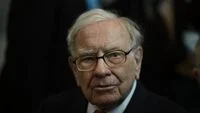
JAKARTA — Warren Buffett, globally revered as the Oracle of Omaha and widely acknowledged as one of the most successful and influential investors in modern financial history, officially stepped down as the chairman of Berkshire Hathaway on Friday, September 18. This monumental transition marks the definitive conclusion of more than six decades of visionary leadership at the helm of the massive conglomerate. While relinquishing the chairmanship, Buffett will retain his seat on the board of directors, ensuring that his unparalleled institutional wisdom remains accessible to the executive team.
In recognition of his towering contributions, lifetime achievements, and foundational role in shaping the modern identity of the firm, Berkshire Hathaway appointed Warren Buffett as chairman emeritus. This prestigious, honorary designation is traditionally reserved for founders, pioneering executives, or retired directors whose visionary guidance has left an indelible, long-term impact on an organization.
Reflecting upon the passage of time and his remarkable tenure, Buffett addressed his shareholders in a poignant letter published over the weekend. "Time always wins. However, time has been remarkably generous to me," Buffett wrote. "After more than 60 years, I still possess the best job in the world. Not many individuals of my age can make that claim, and I have never felt better about what lies ahead."
A Carefully Orchestrated Succession Plan
The leadership transition sees Buffett’s eldest son, Howard Buffett, step into the role of non-executive chairman. Having served as a director at Berkshire Hathaway since 1993, Howard brings decades of familiarity with the conglomerate’s ethos and corporate governance structure. In his new capacity, he will lead the board of directors and help oversee the strategic direction and governance of the enterprise. However, unlike his father during the peak of his executive duties, Howard Buffett will not be involved in the day-to-day operational management of the vast corporate portfolio.
Instead, Howard Buffett’s primary responsibility will be safeguarding the unique corporate culture that has defined Berkshire Hathaway for generations. This corporate philosophy heavily emphasizes decentralization, granting Berkshire’s sprawling network of subsidiary business units the autonomy to manage their daily operations independently, largely free from heavy-handed interference by central management.
This governance shift arrives nearly nine months after Buffett formally stepped down as the chief executive officer (CEO) of Berkshire Hathaway, handing over the operational reins to his handpicked successor and longtime lieutenant, Greg Abel. Together, these structural changes represent the final, graceful milestones in a meticulously planned, multi-year succession strategy designed to ensure absolute continuity and stability for investors, employees, and market observers alike.
Market analysts and economic strategists have lauded the seamless execution of the handover. Brian Jacobsen, chief economic strategist at Annex Wealth Management in Brookfield, Wisconsin, noted that the transition was handled with characteristic foresight. "This was always a matter of when, not if. Buffett has executed this transition with extraordinary elegance," Jacobsen observed. "The move feels far more like the natural culmination of a well-planned succession process rather than any abrupt or disruptive shift in leadership."
From a Struggling Textile Mill to a Trillion-Dollar Titan
The chronicle of Warren Buffett and Berkshire Hathaway is one of the most celebrated corporate success stories of the twentieth and twenty-first centuries. When Buffett first assumed control of Berkshire Hathaway in the mid-1960s, it was a struggling, traditional New England textile manufacturing company facing severe secular decline. Through disciplined capital allocation, rigorous patience, and an unwavering commitment to value investing, Buffett transformed the failing enterprise into an economic powerhouse.
Today, Berkshire Hathaway stands as a multi-industry conglomerate valued at approximately $1.1 trillion. Uniquely positioned among the world’s most elite trillion-dollar corporations, Berkshire is a stark outlier in a tier otherwise dominated exclusively by high-flying technology giants. Its capitalization is built not on software or semiconductors, but on a remarkably diversified bedrock of tangible, cash-generating physical assets.
Buffett’s investment philosophy—centered on purchasing shares of exceptional companies at sensible prices and holding them for the long term—has profoundly influenced generations of institutional investors, retail traders, and corporate executives. Furthermore, his folksy, highly accessible communication style, famously displayed during the annual shareholders’ meetings in Omaha, Nebraska, endeared him to millions of everyday people across the globe.
A Diverse Empire of Assets and Holdings
The corporate empire that Buffett built spans a breathtaking array of fundamental industries. Berkshire Hathaway’s wholly-owned operating subsidiaries include GEICO, one of the largest automobile insurers in the United States; BNSF Railway, a monumental freight railroad network moving goods across the North American continent; extensive energy and utility operations; and diverse manufacturing, service, and retail businesses.
Beyond these major industrial holdings, the conglomerate owns globally recognized consumer brands such as Dairy Queen, industrial toolmakers, and iconic household names including Ginsu knives and the World Book encyclopedia.
In addition to its operating subsidiaries, Berkshire maintains a massive equity portfolio containing hundreds of billions of dollars in publicly traded stock. Among its most prominent long-term equity holdings are massive stakes in corporate titan Apple, financial services bellwether American Express, Google parent company Alphabet, and beverage icon Coca-Cola. This dual-engine model—combining wholly-owned operating businesses that generate a steady stream of cash with a world-class public equity portfolio—has proven remarkably resilient across numerous economic cycles.
Broader Implications and Market Outlook
While the departure of Warren Buffett from the chairman’s seat closes an extraordinary chapter in financial history, the institutional foundation he established is engineered to endure. The division of responsibilities between non-executive chairman Howard Buffett and CEO Greg Abel ensures that the core tenets of Berkshire’s governance remain untouched.
Abel, who spent years managing Berkshire’s non-insurance operations and demonstrating his operational acumen, has the full confidence of both the board and the investor community. Meanwhile, Howard Buffett’s stewardship as non-executive chairman guarantees the preservation of the decentralized corporate culture that has been the bedrock of Berkshire’s longevity.
As the company enters this new era without the day-to-day oversight of its legendary founder, market participants will continue to monitor how Berkshire deploys its massive cash reserves. However, the prevailing consensus among Wall Street analysts is that the machinery Buffett built is fully self-sustaining. The Oracle of Omaha may have relinquished his formal title, but the economic principles, ethical standards, and long-term vision he instilled will continue to guide Berkshire Hathaway for generations to come.
Related posts: