Navigating the Future of International Education Amidst U.S. Policy Shifts and Rising Administrative Uncertainties

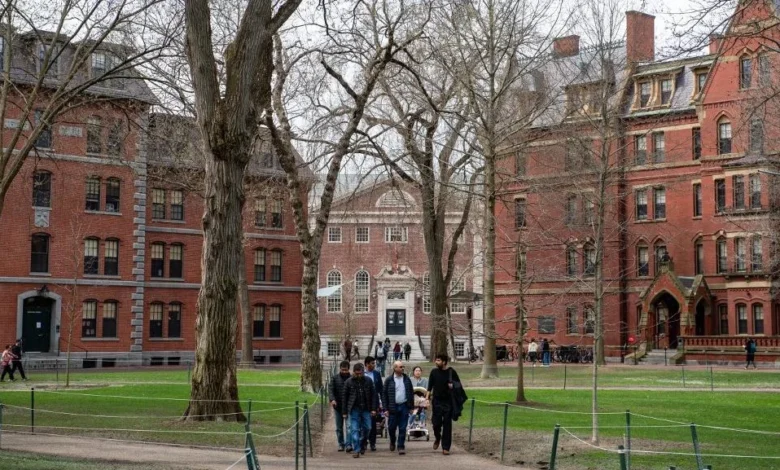
The landscape for international students aspiring to study in the United States has recently faced a period of intense turbulence, punctuated by high-stakes legal battles and a growing sense of anxiety among prospective scholars and their families. At the center of this tension is a recent administrative maneuver by the administration of U.S. President Donald Trump, which attempted to restrict the enrollment of foreign nationals at specific institutions, most notably Harvard University. While a federal court has temporarily halted these measures, the incident has ignited a broader conversation regarding the stability and accessibility of the American higher education system for global talent.
The Chronology of a Legal Confrontation
The seeds of the current uncertainty were sown in May 2025, when the Trump administration issued a directive that aimed to curtail the ability of foreign students to remain in the United States if their host universities did not return to full in-person instruction. This policy, which appeared to target prestigious institutions like Harvard, effectively placed the status of thousands of international students in legal jeopardy, forcing many to scramble for alternative educational arrangements.
The response from academia was swift and decisive. Alan M. Garber, President of Harvard University, took an immediate stand, filing a motion for a temporary restraining order against the federal government. The university argued that such a policy was not only discriminatory but also lacked a rational basis, failing to account for the unique pedagogical needs of research-intensive institutions during periods of institutional transition.
The legal challenge reached a pivotal moment when U.S. District Judge Alison D. Burroughs presided over the case. In a ruling that provided significant relief to the international academic community, Judge Burroughs granted the motion for a temporary restraining order. This judicial intervention effectively blocked the administration’s attempt to strip Harvard of its authority to host international students and scholars. While this ruling provided a critical reprieve, it underscored the vulnerability of international student visas to shifting political agendas.
Assessing the Climate: Insights from the EducationUSA Indonesia Fall Fair
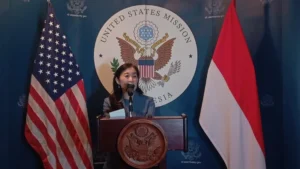
The impact of these legal maneuvers was a focal point at the EducationUSA Indonesia Fall Fair 2026, held at the Le Méridien in Jakarta on September 20, 2026. The event, which hosted representatives from 20 prominent U.S. universities, served as a platform not only for recruitment but also for addressing the growing concerns of Indonesian families regarding the safety and viability of the American educational experience.
Ardi Findyartini, the Director of Strategy and Transformative Learning Systems at the Indonesian Ministry of Higher Education, Science, and Technology (SSPT Kemdiktisaintek), addressed these concerns during the fair. She noted that while the fundamental policy regarding visas and international enrollment remains technically intact, the perception of instability has created a significant hurdle for educational mobility.
"From the perspective of the U.S. government’s official policy, the requirements for visas and institutional compliance remain largely consistent," Findyartini stated. "However, the perception of risk is a public relations challenge. This is precisely why we support forums like this—to provide clarity and ensure that students and their families are operating on the basis of facts rather than speculation."
The Role of Parental Influence in Academic Choices
A critical component of the international education market in Southeast Asia is the role of parental guidance. Findyartini highlighted that for undergraduate students, parents are often the ultimate decision-makers, and their primary hesitation stems from a lack of confidence in the long-term safety and stability of the U.S. environment.
"The quality of American education is rarely in question; it is globally recognized as top-tier," she observed. "The challenge lies in reconciling that academic reputation with the parents’ need for security. For undergraduate students, parents act as a vital filter for these decisions. Our goal is to provide a comprehensive information environment that allows them to make informed choices, rather than choices fueled by uncertainty."
For postgraduate students, who are typically more independent in their decision-making, the concerns are often more focused on career prospects and the potential for post-study work authorization. The ministry continues to emphasize that despite the political noise, the core value proposition of the U.S. university system—rigorous research, global networking, and access to industry leaders—remains fundamentally unchanged.
Data and Trends in International Enrollment
The United States has long been the world’s leading destination for international students. According to historical data from the Institute of International Education (IIE), the U.S. consistently hosts over one million international students annually. However, the post-2025 period has shown a shift in student demographics and geographic preferences.
While Chinese and Indian students continue to dominate the intake numbers, there has been a concerted effort by the U.S. government to diversify the international student body. Challenges, such as the 2025 administrative restrictions, however, risk alienating the very demographics that contribute billions of dollars annually to the U.S. economy and strengthen the country’s innovation pipeline.
Economic impact reports suggest that international students contribute upwards of $40 billion to the U.S. economy each year, supporting hundreds of thousands of jobs in education, hospitality, and retail. Any policy that threatens the presence of these students carries significant economic repercussions, particularly for smaller college towns where the university is the primary engine of the local economy.
Broader Implications for Global Higher Education
The tension between federal policy and academic autonomy is not a new phenomenon, but the intensity of the 2025-2026 period represents a shift toward more direct federal intervention in academic affairs. The legal precedent set by Judge Burroughs in the Harvard case serves as a crucial safeguard, affirming that universities retain significant autonomy in how they manage their student bodies, provided they adhere to established federal guidelines.
However, the psychological impact on the prospective student population cannot be ignored. When students and families perceive that their presence is contingent on the political climate, they become increasingly likely to consider alternative destinations, such as the United Kingdom, Canada, or Australia, which have aggressively marketed themselves as stable, welcoming alternatives to the American system.
The ongoing dialogue between the Indonesian Ministry of Higher Education and U.S. institutions is part of a wider effort to maintain the flow of academic talent. By fostering transparency and ensuring that students have access to verified information, these stakeholders aim to insulate the student experience from the volatility of national politics.
Strategies for Prospective Students
For those currently navigating the application process, experts advise a multi-layered approach to risk management:
- Direct Institutional Communication: Students are encouraged to reach out to the International Student Office (ISO) of their target universities. These offices are the first point of contact for legal and status updates and are usually the most reliable sources of information regarding campus policy.
- Diverse Application Portfolios: Relying on a single country for one’s higher education is no longer considered a prudent strategy. Experts suggest maintaining a mix of applications across different regions to hedge against localized policy shifts.
- Staying Informed: Utilizing resources like EducationUSA, which is backed by the U.S. Department of State, ensures that students receive official, updated guidance rather than relying on unverified social media discourse.
- Engaging with Alumni Networks: Speaking with current or former students provides a grounded perspective on the daily reality of campus life, which often remains far removed from the headlines of federal legal battles.
Conclusion: A Resilient but Evolving System
The recent challenges faced by the U.S. higher education sector have tested the resilience of its international programs. While the intervention of the federal judiciary has prevented immediate disruptions, the broader message to the international community is one of caution and diligence. The U.S. remains a powerhouse of innovation and academic excellence, yet it is currently navigating a period of internal reassessment that directly affects its global footprint.
For the international student, the choice to study in the United States remains a prestigious and potentially life-changing opportunity. However, it is an opportunity that now requires a higher degree of vigilance. As the academic year continues, the focus of both the administration and the universities will likely shift toward maintaining the stability of the international student visa system, ensuring that the U.S. continues to attract the brightest minds from across the globe. By fostering open communication and relying on established legal and institutional frameworks, the higher education sector hopes to move past the uncertainty of the last eighteen months and return to its role as a stable, open, and globally integrated system of knowledge production.