Joint Search and Operation Concludes as Rescue Teams Fail to Locate Eight Missing Individuals Following Speedboat Disappearance in the Sunda Strait

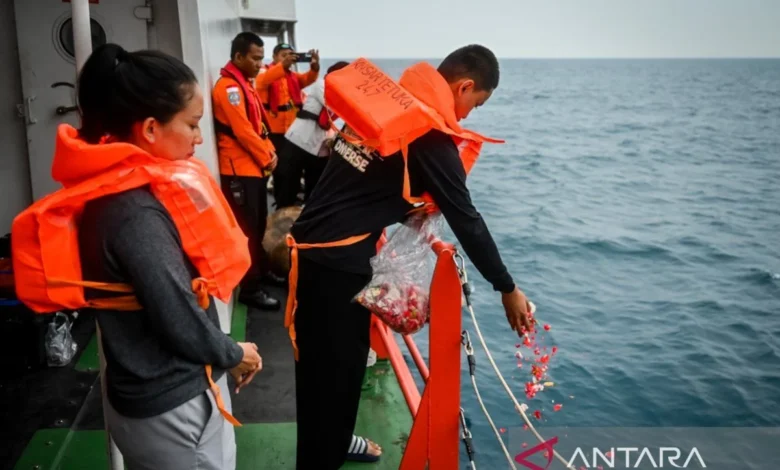
The joint search and rescue operation for five journalists and three crew members who went missing in the waters of the Sunda Strait has officially come to a close after ten days of intensive, round-the-clock efforts yielded no trace of the missing parties. The operation, which focused on locating the speedboat Arupadatu I, was formally called off on Thursday, September 17, 2026, following exhaustive sweeps across thousands of square nautical miles that failed to produce any definitive signs of the vessel or those on board.
The missing delegation had set out to document the volcanic activity of Mount Anak Krakatau, a volatile and closely monitored geological site situated in the middle of the Sunda Strait between the islands of Java and Sumatra. The tragic incident has sent shockwaves through Indonesia’s media landscape, prompting national mourning, institutional reflections on maritime reporting safety, and an extensive mobilization of state resources that ultimately highlighted the formidable and unpredictable nature of maritime search operations in Indonesian waters.
Chronology of the Disappearance and Initial Response
The sequence of events began on Monday, September 7, 2026, when the speedboat Arupadatu I departed from the Pagedongan Pier in Carita, Pandeglang Regency, Banten Province. Scheduled around 14:00 Western Indonesia Time (WIB), the voyage was intended to transport the media crew to the vicinity of Mount Anak Krakatau for a routine journalistic assignment covering the volcano’s shifting activity levels.
The group comprised eight individuals in total. Five were professional journalists representing various prominent media organizations: M. Bagus Khoirunnas from the ANTARA News Agency, Arie Basuki from Merdeka.com, Yudistiro Pranoto from iNews, Firdaus Wajidi from Anadolu Agency, and Donal Husni, operating as an independent freelance journalist. They were accompanied by three maritime crew and support personnel: Warta, serving as the captain; Surakman, an ABK (deckhand); and Heriyanto, acting as the local guide.
Communications remained stable during the initial phase of the journey. At approximately 14:42 WIB, one of the passengers transmitted a final digital coordinate indicating their approximate location in the strait. However, standard check-ins ceased shortly thereafter, and communications were completely severed around 15:04 WIB while the vessel was navigating the open waters between the Carita coastline and the volcanic island.
Recognizing the failure to check in, local authorities and the Banten Search and Rescue (SAR) Office were notified, triggering a rapid response protocol. By Tuesday, September 8, the joint SAR team initiated the first phase of search operations, deploying maritime and aerial assets to scour the last known coordinates while factoring in regional current velocities and tidal patterns across the Sunda Strait.
Escalation of Search Operations Across Ten Days
As the days progressed, the scope of the operation expanded exponentially, transforming from a localized coastal sweep into a massive multi-agency disaster response involving hundreds of personnel, dozens of vessels, and advanced aerial reconnaissance.
During the opening days, rescue teams faced immediate environmental hurdles. The Sunda Strait is notorious for swift currents, unpredictable weather patterns, and volcanic hazards. Early operations battled winds and wave heights ranging between one and two meters, severely limiting visibility and the deployment of lightweight submersible equipment.
By Wednesday, September 9, the search grid was divided into four distinct Search and Rescue Units (SRUs), mobilizing roughly 250 joint personnel. When those sweeps proved inconclusive, the operation escalated further on Thursday, September 10, dividing the operational zone into six distinct sectors covering an expansive area of approximately 2,483 square nautical miles. It was during this phase that Indonesian Navy personnel recovered an unidentified life jacket in the waters of Cikoneng-Labuan, Banten. Although initial hopes spiked, subsequent forensic and logistical evaluations could not definitively link the equipment to the missing Arupadatu I.
By Friday, September 11, the operational focus tightened around the immediate perimeter of Mount Anak Krakatau. Rescue missions utilized four primary sectors and a specialized zone incorporating nearby island formations situated roughly three kilometers from the active volcano, including Pulau Rakata, Pulau Sertung, and Pulau Panjang. Volcanic ash fall, shifting winds, and volatile sea swells continued to impede progress.
The weekend brought renewed aerial capabilities. On Saturday, September 12, the National Search and Rescue Agency (Basarnas) deployed an HR-3604 helicopter to bolster maritime assets. During these aerial and surface sweeps, teams recovered scattered debris—including a blue oil jerrycan, a red helmet, and another life jacket—yet none of these items bore serial numbers or markers confirming association with the lost speedboat.
As the operation entered its second week, strategies shifted toward broader oceanic drift modeling. On Sunday, September 13, sweeps extended along shipping lanes from Bakauheni in Lampung to Pulau Sangiang. By Monday, September 14, marking the official seventh day of the operation, the joint task force had scaled up its deployment to 18 naval vessels and the Basarnas helicopter. With zero positive sightings recorded by the end of the statutory seven-day window, authorities and family representatives agreed to a formal three-day extension of the search mandate.
Extended Phases, Advanced Modeling, and Final Sweeps
The extension period pushed rescue teams to employ highly sophisticated search methodologies. On Tuesday, September 15, specialized drones and deep-water acoustic equipment were maneuvered within 500 meters of the rugged, hazardous coastline of Mount Anak Krakatau.
By Wednesday, September 16, the operational footprint reached its peak complexity. A total of 22 vessels and 570 personnel were deployed across an expanded search grid encompassing 3,439 square nautical miles, subdivided into eight distinct sectors geared toward the southeast quadrant of the volcano where wind and current models suggested floating debris would naturally accumulate. Concurrently, Basarnas established inter-agency coordination with the Bengkulu SAR Office to scan remote coastlines as far away as Pulau Enggano, anticipating long-range drift patterns. While a large green tarpaulin was spotted and retrieved during these sweeps, investigators quickly ruled it out as unrelated to the missing vessel.
On Thursday, September 17, the final day of the emergency extension, the scale of deployment reached its historical maximum for the mission: 24 vessels, 523 personnel, and an enormous search zone spanning 8,509 square nautical miles divided across 10 sectors. Despite extending operations from the Banten coastline all the way to western Sumatra and the waters surrounding Enggano—under cloudy skies, winds peaking at 20 knots, and wave heights reaching 3.5 meters—no physical evidence of the Arupadatu I or its occupants was uncovered.
Official Termination and Stakeholder Responses
The formal cessation of the search operations was announced during a press conference held at the Joint SAR Main Post located at the Marina Carita Pier in Pandeglang. Banten Governor Andra Soni addressed the public alongside rescue officials, detailing the exhaustive measures undertaken by the state.
"Throughout the ten days of continuous operations, our joint teams logged numerous anomalies and recovered approximately thirteen distinct floating objects, ranging from life jackets and helmets to containers and tarpaulins," stated Al Amrad, Head of the Banten Search and Rescue Office. "However, rigorous verification protocols confirmed that none of these items shared a direct nexus with the Arupadatu I. Given the operational limits and the unlikelihood of surface survival after this duration, the active search phase has reached its practical conclusion."
Governor Andra Soni emphasized that while the active mobilization of rescue fleets is concluding, administrative monitoring will persist indefinitely. Basarnas has issued continuous navigational broadcasts and established standing protocols with the Vessel Traffic Service (VTS), the Indonesian Navy (TNI AL), the Water Police (Polairud), and commercial vessels transiting the Sunda Strait to report any subsequent anomalies. Should credible new evidence emerge, authorities retain the administrative authority to reopen the search theater.
The tragedy has prompted deep introspection across Indonesia’s media and governmental sectors. State officials and press freedom advocates have publicly honored the unwavering dedication of the five journalists, emphasizing that their commitment to documenting natural phenomena underscores the inherent risks borne by media workers in the field. Institutional representatives from ANTARA and other affected networks have pledged ongoing psychological, administrative, and social support to the grieving families left behind.
As the formal search concludes, the eight individuals remain officially classified as missing at sea, leaving an enduring scar on the journalistic community and serving as a solemn reminder of the unforgiving maritime environment surrounding Indonesia’s most volatile volcanic peaks.