Kate Middleton Has No Intention of Brokering Peace Between Prince William and Prince Harry Amid Ongoing Royal Rift

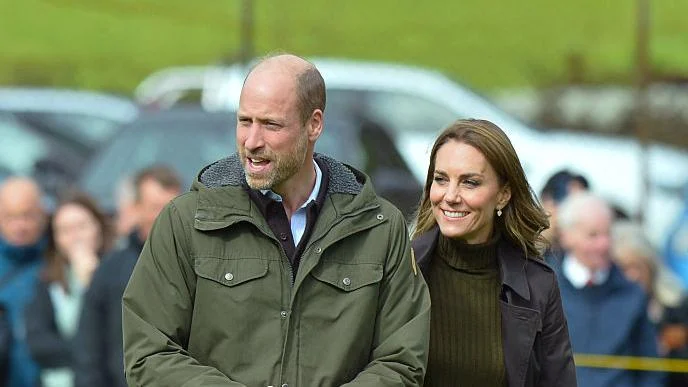
The enduring estrangement between the Prince of Wales and the Duke of Sussex continues to captivate global media attention, yet hopes for a familial reconciliation spearheaded by the Princess of Wales appear to be entirely misplaced. Recent disclosures from royal commentators and documentary features have dismantled the long-standing narrative that Kate Middleton might serve as the ultimate mediator to mend the fractured bond between Prince William and Prince Harry. Instead, insider accounts reveal a starkly different reality: the Princess of Wales has maintained a distinct distance from the volatile dynamics governing the brothers’ relationship, choosing instead to focus her energies entirely on her immediate family, her health recovery, and her core royal duties.
This revelation comes to light following the release of a new investigative documentary, Harry & Meghan: The Return of the Prince, produced by ABC News Studios. Within the feature, prominent royal journalist and author Omid Scobie addressed the persistent rumors surrounding Kate’s supposed role as a peacemaker. For years, royal enthusiasts and commentators alike have speculated that the Princess—once affectionately dubbed the "peacemaker" of the royal trio that famously included William, Harry, and herself—would eventually step in to bridge the vast chasm separating the two princes. However, Scobie firmly debunked this hypothesis, asserting that the public perception drastically misinterprets the dynamics within the royal household.
"There has always been this narrative that Kate might be the mediator, the person who could bring the brothers back together," Scobie stated in the documentary. "However, if there is one thing I have learned over years of covering them, Kate is actually very minimally involved in the relationship between the two brothers."
This boundary-setting by the Princess of Wales underscores a broader strategic pivot within the senior ranks of the British monarchy, where managing ongoing familial friction has been deprioritized in favor of institutional stability and forward-looking governance.
The Chronology of the Royal Rift
To understand the current state of affairs between Prince William and Prince Harry, one must examine the timeline of events that systematically eroded one of the most visible sibling partnerships in modern royal history. The friction reportedly began to manifest visibly around 2018, following the marriage of Prince Harry and Meghan Markle. Differing philosophies regarding public service, media relations, and the institutional role of the monarchy created subtle operational divides.
By 2019, tensions escalated publicly when Prince Harry confirmed rumors of a rift during an interview for the ITV documentary Harry & Meghan: An African Journey, famously noting that he and William were "on different paths" and experiencing "good days and bad days."
The definitive turning point occurred in January 2020, when Harry and Meghan announced their decision to step down as senior working members of the royal family, subsequently relocating to North America. This move, informally dubbed "Megxit," sent shockwaves through the House of Windsor and initiated a period of intense public scrutiny and emotional distance.
The chasm widened exponentially in March 2021 during the explosive CBS television interview conducted by Oprah Winfrey, wherein the Duke and Duchess of Sussex leveled various allegations against unnamed members of the royal household. Subsequent developments—including the publication of Prince Harry’s searing memoir, Spare, in January 2023, and various television appearances—further solidified the communication blackout between the brothers. Despite rare, brief public reunions, such as the funeral of Queen Elizabeth II in September 2022 and the coronation of King Charles III in May 2023, meaningful dialogue between William and Harry has remained virtually non-existent.
Diverging Trajectories: Harry’s Relationship with King Charles
While the outlook for a reconciliation between the brothers remains bleak, recent analyses suggest a potentially different trajectory regarding Prince Harry’s relationship with his father, reigning monarch King Charles III. According to Omid Scobie’s assessments in the recent ABC News documentary, the once-glacial relationship between the King and his younger son has shown subtle signs of softening.
The previously frigid dynamic, characterized by withheld communications and strained formal interactions, appears to have undergone a slight thaw. Observers have noted that while profound trust issues and logistical hurdles remain, emotional channels between father and son may be slowly reopening. This shift is particularly significant given King Charles’s ongoing medical treatments and his position as head of state, factors that inherently bring considerations of legacy, family unity, and long-term reconciliation to the forefront.
However, any rapprochement between the King and the Duke of Sussex operates entirely independent of the households of the Prince and Princess of Wales. While the monarch holds the ultimate constitutional authority and paternal role, Prince William maintains an unyielding stance regarding boundaries, protection of the institution, and the preservation of personal privacy.
The Wales Household Approach: Tradition and Stoicism
According to Erin Hill, senior royal editor at People magazine, the approach adopted by Prince William and Princess Kate toward the ongoing drama surrounding the Sussexes is firmly rooted in traditional royal methodology. Rather than engaging in public rebuttals, fueling media cycles, or attempting complex behind-the-scenes interventions, the Prince and Princess of Wales adhere strictly to a time-tested institutional philosophy.
"Quiet, get on with the work, and carry out your duties," Hill explained, summarizing the core operational ethos of the Wales household.
This stoic containment strategy reflects a deliberate choice to shield the monarchy—and, crucially, their three children, Prince George, Princess Charlotte, and Prince Louis—from external turbulence. For William and Kate, the primary focus remains fixed on the future. The responsibilities associated with preparing for the eventual reign, combined with Kate’s recent health journey and recovery from her cancer diagnosis, have relegated external familial disputes to the absolute periphery.
Hill emphasized that Harry and Meghan are no longer viewed as a central priority within the day-to-day operations or personal bandwidth of the Waleses. The couple’s primary objective is the stewardship of their public platform, charitable patronages, and the cultivation of a stable, grounded upbringing for their children amid intense public scrutiny.
Ongoing Pressures and Private Concerns
The private lives of the Duke and Duchess of Sussex continue to generate headlines independently of their interactions with the wider royal family. Recently, media attention converged once again on Harry and Meghan following reports regarding their children, Prince Archie and Princess Lilibet. According to reports, the young royals were withdrawn from a new educational institution mere days after enrollment, a decision reportedly prompted by heightened security concerns and privacy apprehensions.
Such logistical and security complexities underscore the ongoing challenges faced by the Sussex family as they navigate life outside the protective umbrella of the UK sovereign institution. These persistent external pressures further highlight the starkly different operational realities experienced by the two branches of the family—one anchored in the institutional continuity of the British state, and the other charting an independent course in the private sector across the Atlantic.
Institutional Implications and the Future of the Monarchy
The definitive confirmation that Princess Kate holds no intention of intervening in the William-Harry dynamic carries significant implications for the future architecture of the British royal family. It signals a permanent institutional normalization of the fracture, moving public expectations away from the prospect of a miraculous reconciliation and toward an acceptance of permanent estrangement.
From a public relations and governance standpoint, this compartmentalization allows the core working members of the royal family—led by King Charles, Queen Camilla, and the Prince and Princess of Wales—to project stability, continuity, and dedicated public service without the persistent distraction of internal family soap operas. By refusing to engage in public commentary or mediation efforts, William and Kate have successfully insulated their brand, ensuring that their public outputs remain tied exclusively to their charitable initiatives, national duties, and official engagements.
Ultimately, as the House of Windsor navigates an era of modernization, generational transition, and public scrutiny, the conscious decision by senior royals to let go of unresolved family fractures highlights a pragmatic realization. Some breaches, amplified by global media and deeply entrenched ideological and personal divides, simply cannot be mended by well-intentioned intermediaries. For Kate Middleton, prioritizing her health, her young family, and her constitutional duties remains the singular, unwavering focus—leaving the distant chapter of sibling reconciliation firmly closed.
Related posts: