Ultimate Robot Knock-out Legend Debuts in Shenzhen, Signaling a New Era for Humanoid Robotics and Entertainment

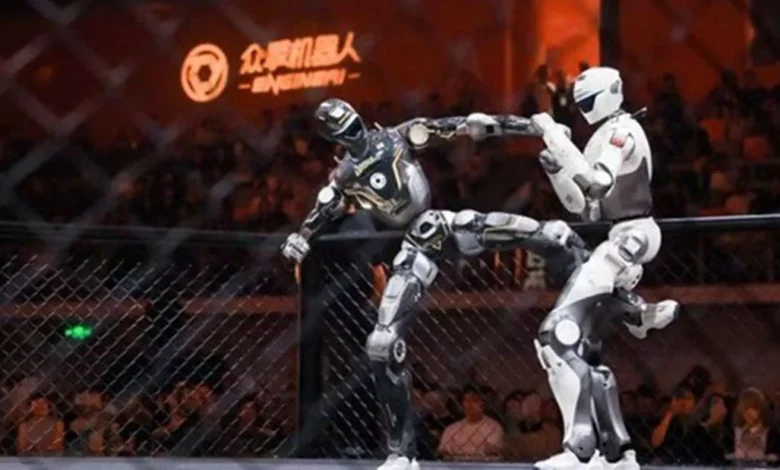
Shenzhen, China – The long-held vision of autonomous robot combat, once relegated to the realm of science fiction, has dramatically materialized in Shenzhen, China, with the launch of the Ultimate Robot Knock-out Legend (URKL). This groundbreaking event, which commenced last Thursday night, July 16, 2026, at the state-of-the-art Shenzhen Nanshan Cultural and Sports Center, marks a significant leap forward in both robotics technology and competitive entertainment. Spearheaded by Shenzhen-based robotics firm EngineAI, URKL pits advanced humanoid robots against each other in a series of visceral, high-stakes battles, transforming a cinematic fantasy into a tangible spectacle.
The Dawn of a New Spectacle: From Sci-Fi to Reality
For over a decade, the concept of sentient machines engaging in gladiatorial combat has captivated audiences worldwide, most notably through the 2011 Hollywood blockbuster Real Steel. Starring Hugh Jackman, the film depicted a future where human-controlled combat robots dominated the sporting arena, a vivid imagining that resonated deeply with the public’s fascination with advanced robotics. Fast forward fifteen years from the film’s release, and EngineAI has not only brought this vision to life but has pushed its boundaries, introducing fully autonomous humanoid robots that demonstrate unparalleled agility, power, and strategic combat capabilities. The transition from a Hollywood fantasy to a live, commercialized sport underscores the rapid advancements in artificial intelligence, engineering, and materials science that have characterized the early 21st century.
The inaugural event immediately showcased the raw power and intricate design of the combatants. The opening bout, a highly anticipated clash between a pristine white humanoid robot dubbed "White Eagle" and its imposing black counterpart, "Matador," quickly escalated into a ferocious exchange of blows. The atmosphere within the arena was electric, with a roaring crowd captivated by every punch, kick, and evasive maneuver. The intensity reached its peak when, in a decisive moment that sent shockwaves through the audience, White Eagle delivered a devastating blow that severed Matador’s head, securing a dramatic victory and illustrating the brutal reality of this new form of combat. This visceral display of robotic might left an indelible impression, signaling that URKL is far more than just a technological demonstration; it is a full-fledged, high-octane sport.
EngineAI’s Vision: Driving Innovation Through Competition
At the heart of the URKL phenomenon is EngineAI, a robotics company based in Shenzhen, a city globally renowned as a hub for technological innovation and advanced manufacturing. EngineAI has positioned itself at the forefront of humanoid robotics development, investing heavily in research and development to produce machines capable of complex, dynamic interactions. The company’s CEO, Zhao Tongyang, articulated a clear and ambitious vision for URKL, emphasizing its dual role in promoting commercial robot fighting as an entertainment venture while simultaneously accelerating critical research and industrialization within the robotics sector.
"We believe that using this competition will drive research and development within the industry," Tongyang stated during the event’s opening. "The event itself provides invaluable input for technology, and in turn, that technology will drive the industry forward." This philosophy highlights a strategic approach where the demands of competitive combat serve as a rigorous testbed for cutting-edge robotics. The need for robots to withstand intense physical stress, execute precise movements under pressure, and adapt to unpredictable combat scenarios pushes engineers and AI developers to innovate at an unprecedented pace. The feedback loop generated from each match – analyzing performance, identifying weaknesses, and developing improvements – is expected to accelerate breakthroughs that could have far-reaching applications beyond the arena, including in fields such as disaster response, complex manufacturing, and even advanced prosthetics.
The T800: A Marvel of Modern Robotics
Central to the URKL competition is the standardized combat platform: the EngineAI T800 humanoid robot. Standing at an imposing 1.73 meters (approximately 5 feet 8 inches), the T800 is a testament to EngineAI’s engineering prowess. These robots are not merely static machines; they are designed for dynamic, high-intensity engagements, capable of executing a diverse array of combat maneuvers. Spectators witnessed the T800s perform intricate movements such as powerful uppercuts, agile spinning kicks, and even the sophisticated ability to recover balance and rise after being knocked down.
EngineAI boasts that the T800 incorporates several proprietary technologies crucial for its combat effectiveness. These include advanced posture control systems, which enable the robot to maintain stability and balance during rapid movements and forceful impacts. Dynamic perception capabilities allow the T800 to process its environment and opponent’s actions in real-time, facilitating quick reactions and strategic decision-making. Furthermore, the robots feature sophisticated impact absorption mechanisms, vital for enduring repeated blows and minimizing structural damage during intense combat. The standardization of the T800 across all participating teams ensures a level playing field, allowing the focus to remain on the programming, strategy, and overall engineering optimization brought by each of the 32 international teams vying for the championship title. This common platform also streamlines the collection of performance data, providing a rich dataset for further R&D.
Global Participation and Rigorous Judging
The URKL competition has attracted an impressive roster of 32 teams from across the globe, each eager to demonstrate their expertise in programming and optimizing the T800 platform. This international participation underscores the universal appeal of robot combat and highlights the global interest in pushing the boundaries of humanoid robotics. Teams are not only competing for glory but also contributing to a collective pool of knowledge that will inform the next generation of robotic design and artificial intelligence.
The judging criteria for URKL are comprehensive, designed to evaluate every facet of a robot’s combat effectiveness and resilience. Robots are assessed across four key categories:
- Effective Attack: This measures the power, precision, and strategic impact of offensive maneuvers, including the ability to land significant blows and disable opponents.
- Body Stability: Crucial for maintaining balance and control, this category evaluates a robot’s ability to resist being knocked down, recover quickly, and maintain an advantageous posture throughout the fight.
- Defense and Evasion: This assesses a robot’s defensive programming, including its ability to block attacks, evade incoming blows, and minimize damage taken.
- Overall Durability: A critical factor in prolonged engagements, this category evaluates a robot’s ability to withstand sustained damage and continue fighting, reflecting the robustness of its design and materials.
These rigorous criteria ensure that victory in URKL is not merely a matter of brute force but a complex interplay of sophisticated programming, robust engineering, and strategic adaptation.
Celebrity Endorsement and Broader Implications
The launch of URKL received a significant boost from the presence of renowned Hong Kong actor and martial artist Donnie Yen, known globally for his iconic roles in films like the Ip Man series. Yen, a figure synonymous with precision and dynamic combat, offered his enthusiastic endorsement of the event, lending it considerable credibility and public appeal. "Today is the first time I have watched real robots fight," Yen remarked, visibly impressed. "Witnessing this historical breakthrough firsthand feels truly different. The precision of the machines and their movements is absolutely extraordinary." His statement not only underscored the spectacle of the event but also validated its significance from the perspective of someone deeply familiar with the intricacies of combat and movement.
The implications of URKL extend far beyond the arena. For the robotics industry, it represents a crucial catalyst. The high-pressure environment of combat forces engineers to address complex challenges related to power management, thermal regulation, materials science, and real-time decision-making for AI. Innovations developed for URKL could lead to more resilient, agile, and intelligent robots for applications in dangerous environments, such as search and rescue operations in disaster zones, exploration in hazardous terrains, or performing intricate tasks in industrial settings. The commercial success of URKL could also unlock significant investment in robotics R&D, attracting talent and capital to an already burgeoning sector.
From an entertainment perspective, URKL has the potential to carve out a niche as a revolutionary new sport. Its blend of technological marvel, strategic complexity, and raw, visceral action offers a unique viewing experience that appeals to both tech enthusiasts and sports fans. The narrative of human ingenuity pitted against complex algorithms and robust engineering provides compelling drama. As the technology matures and the robots become even more sophisticated, the sport could develop intricate leagues, fan bases, and global championships, rivaling traditional sports in popularity.
Shenzhen’s Role in the Robotics Revolution
The choice of Shenzhen as the host city for URKL is particularly symbolic. Often dubbed the "Silicon Valley of Hardware," Shenzhen has cultivated an unparalleled ecosystem for manufacturing, prototyping, and technological innovation. Its extensive supply chains, skilled workforce, and supportive government policies have made it a global leader in electronics and robotics development. The city’s infrastructure and entrepreneurial spirit provide an ideal environment for a company like EngineAI to flourish and for an event like URKL to be successfully launched. The event further solidifies China’s ambition to lead the world in artificial intelligence and robotics, demonstrating its capacity not only for mass production but also for cutting-edge innovation and the commercialization of advanced technologies.
Looking ahead, the success of URKL will likely inspire further advancements. Future iterations of the T800 or successor models may incorporate more sophisticated AI for autonomous strategy, enhanced dexterity for grappling and more complex maneuvers, and even more resilient materials for extended combat. As the sport gains traction, discussions around safety protocols, ethical considerations regarding robot damage, and the precise rules governing such contests will undoubtedly evolve. For now, the Ultimate Robot Knock-out Legend stands as a powerful testament to human imagination and technological achievement, promising a thrilling future where the lines between science fiction and reality continue to blur. The cheers from the Shenzhen Nanshan Cultural and Sports Center resonate not just with the excitement of a new sport, but with the dawning of a truly transformative era for robotics.
Related posts: