The Iranian Rial’s Tumultuous Journey: Sanctions, Inflation, and a Nation’s Redenomination Efforts Amid Geopolitical Strain

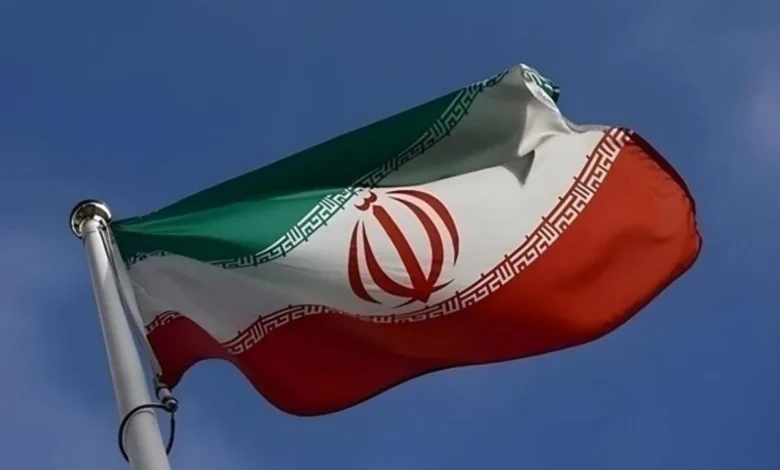
Jakarta (ANTARA) – The Iranian Rial has been under intense global scrutiny, particularly as geopolitical tensions escalate and international economic policies exert profound pressure on the Islamic Republic. A pivotal moment came with the administration of former United States President Donald Trump, which reinstated and intensified sanctions, including tariffs of up to 25 percent on nations engaging in business with Iran. These stringent measures have significantly impacted Iran’s economic landscape, most notably manifesting in the severe depreciation of its national currency. The Rial has, at various points, plummeted to unprecedented lows when converted to major international currencies like the Euro, reflecting the immense strain on Iran’s economy grappling with persistent sanctions and rampant inflation.
However, a striking dichotomy exists within Iran’s financial reality: while the Rial is the official legal tender, it is rarely heard in daily transactions. Visitors exploring traditional bazaars or modern shopping centers in Iran will quickly discover that locals predominantly use the term "Toman" when discussing prices. This practical adaptation is a direct consequence of soaring inflation, which has rendered the Rial’s numerical value cumbersome for everyday commerce. To simplify pricing and avoid dealing with excessively long strings of zeros, the Iranian populace adopted the Toman as a de facto unit of account. This informal system has long perplexed tourists and international economic observers alike, raising fundamental questions about Iran’s actual currency and the intricate relationship between the Rial and the Toman. Understanding this dynamic requires a deep dive into Iran’s economic history, the impact of international sanctions, and the government’s recent efforts to formalize a long-standing colloquial practice.
The Weight of Sanctions and Geopolitical Context
Iran’s economic woes are inextricably linked to its complex geopolitical standing, primarily its contentious relationship with the United States. Decades of strained relations reached a critical juncture with the 2015 Joint Comprehensive Plan of Action (JCPOA), a multilateral agreement that lifted international sanctions on Iran in exchange for curbs on its nuclear program. This period offered a brief respite for the Iranian economy, with hopes of renewed foreign investment and integration into global markets. However, this optimism was short-lived. In May 2018, the Trump administration unilaterally withdrew the U.S. from the JCPOA, branding the deal as flawed, and subsequently reimposed a sweeping array of sanctions targeting critical sectors of Iran’s economy.
These sanctions were designed to severely restrict Iran’s ability to export oil – its primary revenue source – access international financial systems, and procure essential goods. Key targets included Iran’s energy, shipping, and banking sectors, effectively cutting off the country from significant portions of global trade and finance. Secondary sanctions threatened penalties against any entity, regardless of nationality, found to be doing business with sanctioned Iranian entities. This "maximum pressure" campaign choked off Iran’s foreign currency earnings, making it difficult to import goods, attract foreign investment, and stabilize its domestic economy. The immediate and sustained impact was a dramatic fall in the value of the Rial, as foreign currency reserves dwindled, and confidence in the economy eroded. The currency’s depreciation became a stark indicator of the immense economic isolation and pressure Iran faced.
A Currency Under Siege: The Rial’s Precipitous Decline
The Iranian Rial (IRR) has endured a relentless assault from both external sanctions and internal economic mismanagement, leading to a catastrophic loss of value. Prior to the 2015 nuclear deal, the Rial had already faced significant depreciation. However, the re-imposition of U.S. sanctions in 2018 triggered an even more severe spiral. For instance, in early 2018, the official exchange rate hovered around 42,000 Rials to one U.S. dollar. By late 2018, the unofficial market rate had already surged past 100,000 Rials to the dollar, and by 2020-2021, it frequently breached 250,000 and even 300,000 Rials to the dollar, and further deteriorated in subsequent years. Against the Euro, the situation was equally dire, with the Rial consistently hitting new historic lows, making imported goods exorbitantly expensive and eroding the purchasing power of ordinary Iranians.
This hyper-depreciation is intrinsically linked to Iran’s persistent high inflation. With external trade severely curtailed, the government often resorted to printing money to finance its budget deficits, exacerbating inflationary pressures. While official inflation figures vary, independent estimates have often placed it well into double-digits, sometimes exceeding 40-50% annually, particularly for food and essential goods. This combination of external pressure and internal monetary policy created a vicious cycle: as the Rial lost value, prices of imported goods rose, fueling inflation, which in turn further eroded confidence in the currency, leading to even greater depreciation. The daily struggle for Iranians became one of coping with rapidly changing prices and a currency that seemed to diminish in value by the hour.
Rial vs. Toman: The Duality of Iran’s Currency
Despite the Rial being the legally recognized currency, featuring on all banknotes, official documents, and modern banking systems (with the international code IRR), its practical application in daily life has been largely superseded by the Toman. This informal adoption of the Toman is not a recent phenomenon but rather a historical adaptation to inflationary pressures that have plagued Iran for decades.
Historically, one Toman was equivalent to ten Rials. This simpler denomination provided a practical shorthand for prices. However, with the extreme inflation of recent years, the Toman itself became unwieldy. To understand the current usage, consider this: when an Iranian refers to a price in "Toman" today, they are implicitly knocking off another zero from the Rial value. For example, if a vendor quotes a price of 60,000 Tomans, the actual amount in Rial that must be paid is 600,000 Rials. This practice stems from a much earlier, informal redenomination where one Toman became conceptually equal to 10 Rials. The sheer number of zeros required to express prices in Rials made the Toman indispensable for clarity and speed in transactions, particularly in traditional markets and small shops where the official Rial figures would be excessively long and prone to error. This divergence between the official and colloquial currency has been a source of significant confusion for foreign visitors and those unfamiliar with the nuances of Iran’s financial landscape.
Iran’s Redenomination Bid: A Quest for Clarity and Stability
Recognizing the widespread confusion and the practical inefficiencies caused by the Rial’s extremely low value and the dual currency system, the Iranian government, through the Central Bank of Iran (CBI), embarked on an ambitious policy of currency redenomination. The move aimed to formalize the Toman as the national currency and, crucially, to simplify transactions by removing a significant number of zeros from its nominal value.
The groundwork for this change was laid in 2020 when Iran’s parliament approved a bill to change the national currency from the Rial to the Toman. This legislative step initiated a multi-year transition process, with widespread implementation projected to occur gradually between 2025 and 2026. The core of this redenomination scheme is to drop four zeros from the existing Rial value. Under this new system, 10,000 old Rials will officially become 1 new Toman. This means the informal "Toman" used in daily conversation, which was previously 10 Rials, is now effectively replaced by a "new Toman" that is 10,000 Rials. To further enhance the new system’s usability, the new Toman will also be divided into smaller denominations, with one Toman comprising 100 Qirans. This move seeks to re-introduce a sub-unit, which has largely fallen out of practical use due to inflation, mirroring how many currencies have cents or pence.
During the transition phase, both the old Rial banknotes and the newly issued Toman notes are expected to circulate concurrently. Newer banknotes might feature smaller nominal values, often with a faint impression of the removed zeros to help the public adjust and understand the conversion. The primary objectives behind this redenomination are multi-fold: to streamline financial transactions, reduce the psychological impact of large nominal values associated with inflation, enhance the ease of accounting and statistical reporting, and project an image of economic stability and strength.
Challenges and Implications of Redenomination
While redenomination offers potential benefits in terms of simplifying daily commerce and improving the psychological perception of the currency, it is not a panacea for Iran’s deep-seated economic problems. The success of such a measure heavily relies on addressing the underlying causes of inflation and currency depreciation.
One immediate challenge is the enormous logistical and financial cost of implementing the change. Printing new banknotes and coins, recalibrating ATMs, updating software for banking systems, and educating the public on the new denominations requires substantial resources and careful planning. Public acceptance and adaptation are also crucial; a smooth transition depends on clear communication and confidence in the government’s economic management.
Economists often caution that redenomination is primarily an accounting adjustment. Without fundamental reforms to control inflation, manage fiscal deficits, and alleviate external pressures like sanctions, the new Toman could eventually suffer the same fate as the old Rial, requiring further redenomination in the future. If the Central Bank continues to resort to printing money, or if the country remains cut off from international trade and investment, inflationary pressures will persist, slowly but surely eroding the value of the new currency. The redenomination might offer a temporary psychological boost, but sustained economic health demands more robust structural changes.
Broader Economic Landscape and Future Outlook
The Iranian government, through statements from the Central Bank and Ministry of Economy, consistently emphasizes the necessity of these currency reforms as part of a broader strategy to stabilize the economy. They often highlight the practical benefits for citizens and businesses. However, international financial bodies and independent analysts largely agree that while redenomination can simplify transactions, it will not, by itself, resolve the core issues of high inflation, economic stagnation, and the crippling impact of sanctions.
The future trajectory of Iran’s currency and its economy remains heavily dependent on both internal policy decisions and external geopolitical developments. A potential return to the JCPOA or a significant easing of sanctions could provide much-needed relief, allowing Iran to boost oil exports, access foreign markets, and attract investment, thereby strengthening its currency. Conversely, continued isolation and escalating tensions would likely exacerbate existing economic challenges, placing further pressure on the new Toman.
For ordinary Iranians, the currency’s instability and the transition period represent a continuous struggle. Their savings, purchasing power, and daily lives are directly affected by every fluctuation. The redenomination, while aiming to simplify their financial interactions, also carries the risk of confusion and potential exploitation during the transition if not managed meticulously. The introduction of the new Toman and Qiran marks a significant chapter in Iran’s economic history, a bold attempt to bring order to a currency landscape shaped by decades of inflation and international isolation. Its ultimate success, however, will be measured not just by its formal adoption, but by its ability to foster genuine economic stability and improve the lives of the Iranian people. The world watches closely as Iran navigates this complex financial transformation amidst an ever-changing global environment.
Related posts: