Sam Ratulangi University Announces Second Wave of Tumou Tou Independent Admission Track for 2026 Academic Year

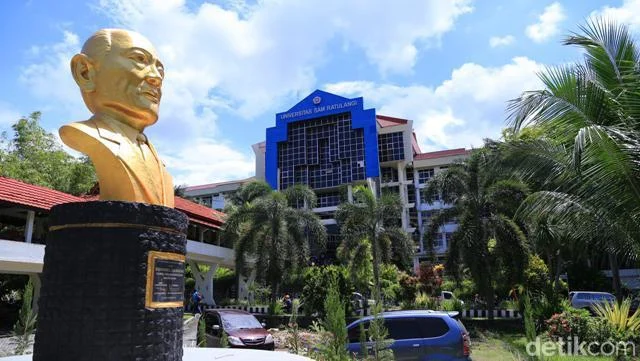
Sam Ratulangi University (Unsrat) in Manado has officially announced the opening of the second wave of its independent admission track, known as the Tumou Tou (T2) selection, for the 2026/2027 academic year. This announcement, formalized through Rector’s Decree Number 6760/UNI2.I/PD/2026, marks a critical opportunity for prospective students who may have missed earlier admission cycles or are seeking a specialized entry point into one of Northern Sulawesi’s most prestigious higher education institutions. The registration window for this specific wave is scheduled to remain open until July 24, 2026, providing a narrow but essential timeframe for candidates to complete their applications and secure a seat in their desired field of study.
The Tumou Tou track is a unique independent selection process designed by Sam Ratulangi University to identify and recruit talented individuals based on their academic history and potential. Unlike the national standardized tests which often rely on a single day of examination, the T2 Wave II selection utilizes a portfolio-based system. This method focuses heavily on the evaluation of high school report cards and academic records, allowing the university to assess the consistency of a student’s performance throughout their secondary education. This approach is particularly beneficial for students who demonstrate sustained academic excellence but may prefer an alternative to the high-pressure environment of national entrance exams.
Eligibility Criteria and Application Requirements
To maintain a high standard of academic intake, Unsrat has established specific eligibility criteria for the T2 Wave II track. The program is open to graduates of Senior High Schools (SMA), Vocational High Schools (SMK), Islamic Senior High Schools (MA), and equivalent vocational institutions (MAK). Furthermore, the university remains inclusive of non-traditional educational paths by accepting graduates from the "Paket C" program.
Eligible applicants must have graduated in the years 2024, 2025, or 2026. This three-year eligibility window ensures that recent graduates have ample opportunity to pursue higher education even if they took a gap year for personal or professional reasons. However, a strict age limit is enforced; all applicants must be no older than 25 years at the time of registration. This age cap is a standard practice among Indonesian state universities to prioritize the integration of younger cohorts into the academic environment.
The financial requirement for registration is set at a flat rate of IDR 400,000. This non-refundable fee covers the administrative costs of portfolio verification and the internal selection process. Prospective students are permitted to select a maximum of two study programs (prodi) during their application. This allows candidates to prioritize their primary interest while maintaining a secondary option to increase their chances of admission into the university.
Detailed Selection Process and Portfolio Evaluation
The shift toward a portfolio-based selection for the T2 Wave II track reflects a broader trend in Indonesian higher education toward more holistic admissions. By reviewing report card grades, the admissions committee at Sam Ratulangi University can gauge a student’s aptitude in subjects directly related to their chosen major. For instance, an applicant choosing the Faculty of Engineering will likely see a heavier weighting on their performance in mathematics and physics, while an applicant for the Faculty of Humanities will be evaluated on their language and social science scores.
Candidates are required to upload digital copies of their official transcripts and other supporting documents through the university’s integrated admission portal. The accuracy of this data is paramount; any discrepancies between the uploaded digital files and the original physical documents during the later verification stage could result in the immediate disqualification of the candidate. The university emphasizes that the "Tumou Tou" philosophy—a Minahasan phrase meaning "to live to empower others"—is the guiding principle of this selection, seeking students who not only possess academic merit but also the potential to contribute positively to society.
Faculty Offerings and Academic Opportunities
Sam Ratulangi University offers a diverse range of programs across several faculties in this second wave. Each faculty has been allocated a specific quota to ensure that class sizes remain conducive to effective learning and that university resources are not overextended.
Faculty of Engineering
The Faculty of Engineering remains one of the most sought-after divisions at Unsrat. With the ongoing infrastructure boom in North Sulawesi and the development of the Likupang Special Economic Zone (SEZ), there is a high demand for skilled engineers. Programs typically included in the T2 selection involve Civil Engineering, Electrical Engineering, Mechanical Engineering, and Architecture. These programs are designed to produce graduates capable of addressing the unique geographical and geological challenges of the Indonesian archipelago.
Faculty of Agriculture
As North Sulawesi is a major producer of coconut, cloves, and other horticultural products, the Faculty of Agriculture plays a vital role in the regional economy. The T2 Wave II track offers spots in Agrotechnology, Agribusiness, and Forestry. These programs focus on sustainable farming practices, food security, and the modernization of agricultural supply chains, which are critical for the nation’s future stability.
Faculty of Economics and Business
Manado’s position as a gateway to the Pacific makes the Faculty of Economics and Business a strategic choice for students interested in trade, tourism, and finance. The faculty offers programs in Management, Accounting, and Developmental Economics. The curriculum is increasingly focused on digital economy trends and international business, preparing students for the competitive ASEAN labor market.
Faculty of Social and Political Sciences
For those interested in governance, public policy, and communication, this faculty offers a robust academic framework. Programs such as State Administration, Sociology, and Communication Sciences are available. The faculty aims to produce the next generation of leaders and public servants who can navigate the complexities of local and national politics.
Faculty of Humanities (Cultural Sciences)
The Faculty of Humanities is dedicated to the preservation and study of language and culture. With programs in English Literature, Indonesian Literature, and Regional Studies, it serves as a guardian of the rich Minahasan heritage while fostering global linguistic competencies. This faculty is essential for the region’s growing tourism sector, which requires professionals with deep cultural understanding and communication skills.
Faculty of Mathematics and Natural Sciences (FMIPA)
The FMIPA division at Unsrat is crucial for scientific research and development. Offering programs in Biology, Physics, Chemistry, and Pharmacy, the faculty leverages its proximity to the Bunaken National Marine Park to conduct world-class research in marine biology and environmental science. The T2 Wave II selection provides a pathway for students to engage in these critical scientific endeavors.
Chronology of the 2026 Admission Cycle
The 2026 admission cycle at Sam Ratulangi University has followed a structured timeline designed to transition smoothly from national selection phases to independent university-led phases.
- National Selection Phase (Early 2026): The year began with the SNBP (National Selection Based on Merit) and SNBT (National Selection Based on Test). These tracks filled a significant portion of the university’s total capacity.
- T2 Wave I (May – June 2026): Following the conclusion of national tracks, Unsrat opened the first wave of the Tumou Tou independent track. This wave was primarily for students who sought admission immediately after national results were released.
- T2 Wave II Announcement (July 2026): Recognizing that some seats remained available and that many qualified students were still seeking placement, the Rector issued the decree for Wave II.
- Registration Deadline (July 24, 2026): This is the final cutoff for all digital applications and fee payments for the second wave.
- Portfolio Verification and Selection (Late July 2026): The university administration conducts a thorough review of all submitted documents.
- Final Results Announcement (Expected August 2026): Successful candidates will be notified of their admission status, allowing them to proceed with re-registration and orientation before the start of the odd semester.
Analysis of Implications and Regional Impact
The opening of the T2 Wave II track has significant implications for both the university and the region of North Sulawesi. By managing its own independent selection, Sam Ratulangi University exercises its institutional autonomy to ensure that the student body reflects a balance of academic excellence and regional representation.
From an economic perspective, the continued expansion of access to higher education in Manado bolsters the city’s status as an educational hub for Eastern Indonesia. As students from neighboring provinces such as North Maluku, Gorontalo, and Central Sulawesi apply to Unsrat, the university acts as a catalyst for regional integration and human capital development.
Furthermore, the focus on portfolio selection in this second wave suggests a growing recognition that standardized testing is not the only metric of success. By valuing the three-year trajectory of a student’s high school career, Unsrat is promoting a culture of consistent effort and long-term academic dedication. This shift is likely to result in a more resilient and committed student body, as those admitted via portfolio review have already demonstrated a sustained ability to meet academic requirements.
Official Guidance for Prospective Applicants
The university administration advises all applicants to monitor the official website (https://www.unsrat.ac.id) regularly for any updates or adjustments to the schedule. In a statement reflecting the university’s stance, the admissions office reminded candidates that the T2 track is a merit-based system and cautioned against any third parties claiming to guarantee admission for a fee.
"The Tumou Tou selection is a transparent process based on the academic achievements of the students," the Rector’s office noted in the announcement. "We encourage all prospective ‘detikers’ and students across the nation to utilize this opportunity to join our academic community and contribute to the growth of Indonesia’s intellectual landscape."
Applicants are also encouraged to prepare their digital files in high resolution and ensure that their contact information is current, as the university will use these details for all official correspondence regarding the selection results. As the July 24 deadline approaches, the university expects a surge in applications, underscoring the enduring demand for quality higher education in the region.