Ensuring the accurate distribution of social assistance, commonly known as bansos, remains one of the most critical logistical challenges for the Indonesian government. Inaccurate welfare data recorded within the National Single Social and Economic Data system, or DTSEN, can severely distort the allocation of targeted relief programs, leading to persistent issues of misallocation. To combat these systemic discrepancies, the Ministry of Social Affairs has formally opened structural pathways allowing citizens to review, contest, and correct their designated welfare rankings if the recorded data fails to reflect their true economic realities.
The integrity of government welfare programs relies heavily on accurate data collection, periodic updates, and public participation. With millions of households depending on government support for basic needs, healthcare, and education, identifying and rectifying data errors is paramount. Consequently, the government has established multiple reporting mechanisms—ranging from digital applications to local administrative offices—to ensure that eligible citizens are not excluded from aid while simultaneously preventing ineligible individuals from receiving unwarranted benefits.
Understanding the Concept of Bansos Desil and Welfare Stratification
At the core of modern social assistance targeting is the concept of the desil, a socioeconomic classification metric that divides households into ten distinct tiers based on comprehensive statistical variables. This stratification system evaluates individual conditions, such as employment status and educational attainment, housing characteristics including structural integrity and electrical capacity, and the overall ownership of valuable household assets.
Within the framework of the DTSEN, these ten deciles establish a clear hierarchy of economic vulnerability. Desil 1 represents the poorest 10 percent of households nationwide, characterized by severe economic hardship and limited access to basic infrastructure. Conversely, Desil 10 encompasses the wealthiest segment of the population.
Crucially, these decile rankings are not static designations. They are designed to be dynamic, shifting fluidly in response to continuous data updates, demographic changes, and broader macroeconomic fluctuations. Factors such as the birth of a child, the death of a primary wage earner, relocation, changes in employment, or sudden shifts in household income directly influence a family’s socioeconomic standing within the database.
Bridging the Gap: The Dual Challenge of Inclusion and Exclusion Errors
Inaccurate welfare data typically manifests in two primary systemic flaws: inclusion errors and exclusion errors. An inclusion error occurs when economically stable households—those falling into higher decile brackets—improperly receive social assistance funds intended for vulnerable populations. Conversely, an exclusion error happens when impoverished families who desperately require financial assistance are left off the official registry due to outdated information or bureaucratic oversight.
To mitigate these errors, the Ministry of Social Affairs empowers the public to act as an active verification layer. Citizens are encouraged not only to correct their own personal data but also to report discrepancies observed within their communities. This collaborative approach allows authorities to flag individuals who have experienced upward economic mobility but remain listed as beneficiaries, as well as to identify vulnerable neighbors who have fallen through the safety net.
The Operational Mechanism of the Sanggah (Objection) Process
The process of correcting a household’s desil status—locally known as the usul sanggah or proposal-and-objection mechanism—is structured to be accessible yet rigorous. Simply submitting an objection does not instantly alter a household’s decile ranking or guarantee immediate enrollment in a social assistance program. Every piece of submitted feedback must undergo a strict verification and validation process before it can be incorporated into official government databases for subsequent disbursement periods.
Minister of Social Affairs Saifullah Yusuf has repeatedly emphasized that a shift in a household’s decile ranking does not automatically trigger an immediate cessation of social assistance benefits. Welfare classifications must pass through formal review protocols and ground-level verifications before official adjustments are finalized for upcoming distribution cycles. For major programs such as the Family Hope Program, known as PKH, and the staple food assistance program, data synchronization and updates generally occur on a quarterly basis, though other targeted interventions may operate under different schedules.
Step-by-Step Channels for Submitting a Sanggah
Recognizing the diverse technological literacy and digital access levels across Indonesia’s vast archipelago, the government has established a multi-channel ecosystem for data correction. Citizens can choose from several distinct pathways to submit their objections or update their information.
Using the Cek Bansos Application
The most technologically direct route for citizens is the official Cek Bansos application. Through this digital portal, individuals can independently check their current status and desil placement based on the DTSEN database using their 16-digit National Identity Number, or NIK, as printed on their KTP. If an inconsistency is detected between the displayed data and the household’s actual standard of living, users can directly submit an opposition request or data correction proposal through the application interface.
Utilizing the Official WhatsApp Reporting Service
For citizens who prefer instant messaging platforms, the Ministry of Social Affairs operates a dedicated reporting service via WhatsApp at 0887-7171-171. This channel serves as an accessible public participation tool designed to field inquiries and grievances regarding social assistance data. When submitting a report via WhatsApp, users are strongly advised to provide clear, verifiable identifying information alongside a precise description of the economic conditions that require correction. Detailed and accurate submissions significantly accelerate the subsequent administrative verification workflow.
Engaging Local Village and Sub-District Authorities
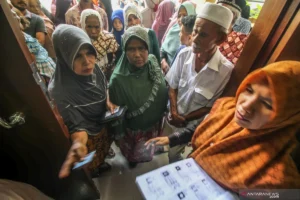
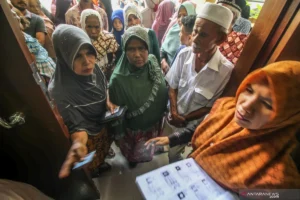
For community members who lack reliable internet access, smartphones, or digital literacy, formal administrative channels remain fully operational at the grassroots level. Residents can submit their data update requests directly through their local village (desa) or sub-district (kelurahan) offices.
Local government offices are equipped with designated operators trained to utilize the Next Generation Social Welfare Information System, commonly abbreviated as SIKS-NG. Data submitted through this traditional bureaucratic route undergoes rigorous local government processing, followed by factual ground-level verifications conducted by field officers to ensure that recorded information matches reality. This analog alternative ensures that vulnerable populations in remote or economically disadvantaged regions are not disenfranchised by digital barriers.
Additional Institutional Support Channels
In tandem with digital applications and local administrative offices, the government maintains a centralized telephone hotline. Citizens can dial the official Call Center at 021-171 to register formal complaints, seek guidance regarding their assistance status, or report data discrepancies.
Furthermore, recent structural integration efforts—such as data synchronization initiatives between the National Population and Family Planning Board, known as BKKBN, and the Central Statistics Agency, or BPS—have significantly enhanced the accuracy of modern welfare mapping. These inter-agency collaborations help explain sudden shifts in desil status observed by citizens, as modernized databases cross-reference demographic shifts with economic indicators more efficiently than ever before.
Implications of Decile Thresholds on Assistance Programs
Before initiating the correction process, experts recommend that citizens thoroughly review their baseline status through official government portals using their NIK. Current guidelines established by the Ministry of Social Affairs indicate that households categorized within Desil 1 through Desil 4—representing the poorest 40 percent of the national population—are generally eligible to be proposed as recipients for the Family Hope Program and staple food assistance. Meanwhile, households positioned in Desil 5 may be evaluated for participation in the Health Care Contribution Assistance scheme, known as PBI-JK.
The broader implications of these systemic data reforms are profound. By refining the DTSEN and actively engaging the public in error correction, the Indonesian government aims to optimize fiscal spending, reduce leakage in public welfare budgets, and ensure that taxpayer funds genuinely reach the most vulnerable citizens. While administrative hurdles and technical glitches occasionally arise during massive data transitions, the availability of transparent, multi-channel reporting mechanisms underscores a national commitment to administrative fairness, social justice, and accurate welfare governance.