Venezuela at a Geopolitical Crossroads Amidst Leadership Crisis and Rich Cultural Heritage

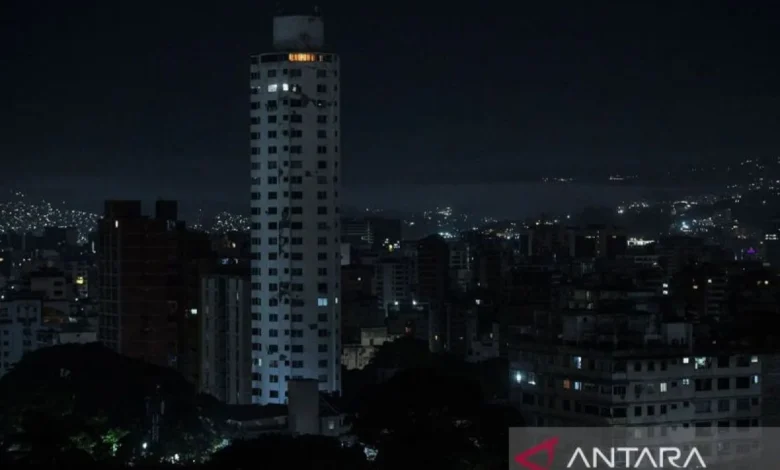
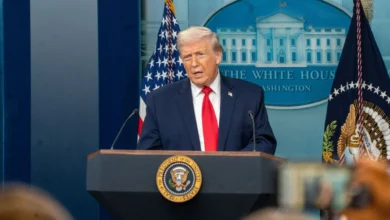
The Republic of Venezuela has surged to the forefront of global discourse following reports regarding the apprehension of President Nicolas Maduro by United States authorities under the direction of the Trump administration. While the political ramifications of this event sent shockwaves through international diplomatic circles, the nation—situated on the northern coast of South America—remains a land of profound complexity, possessing a wealth of natural resources, a turbulent history, and a cultural identity that extends far beyond the current headlines of oil and ideology. Officially known as the Bolivarian Republic of Venezuela, the country encompasses approximately 912,050 square kilometers and serves as a vital gateway between the Caribbean Sea and the South American continent. With a population of roughly 30.5 million people, Venezuela is a nation defined by its resilience, its demographic diversity, and its status as one of the most ecologically significant regions on Earth.
A Nation Defined by Political Volatility and Recent Developments
The recent escalation in tensions between Caracas and Washington marks a culminating point in years of diplomatic friction. For over a decade, the United States has intensified its pressure on the Maduro administration, citing concerns over democratic backsliding, human rights violations, and alleged involvement in transnational organized crime. The legal basis for the recent actions stems from long-standing indictments issued by the U.S. Department of Justice, which had previously placed a multi-million dollar bounty on high-ranking Venezuelan officials.
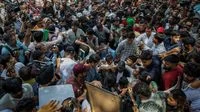
In the wake of these reports, the international community has reacted with a mixture of support and condemnation. Proponents of the U.S. action argue that it represents a necessary step toward restoring constitutional order in a nation that has seen millions of its citizens flee due to economic collapse and political persecution. Conversely, allies of the Maduro administration, including major global powers such as China and Russia, have voiced stern opposition. The Chinese government, in particular, has issued formal protests, suggesting that such maneuvers are often a pretext for securing control over Venezuela’s vast energy reserves, specifically targeting the 50 million barrels of oil that remain a focal point of global trade. Within Venezuela, the Ministry of Interior has reported significant unrest, with claims of casualties resulting from military friction, while thousands of citizens have taken to the streets in various districts of Caracas to demand clarity and the release of their leader.
The Historical Tapestry: From Indigenous Roots to Sovereign Statehood
To understand the current state of Venezuela, one must look back over 10,000 years to the earliest traces of human civilization in the region. Long before European sails appeared on the horizon, the land was inhabited by sophisticated indigenous groups, most notably the Carib, Arawak, and Chibcha tribes. These groups established complex social structures and trade networks that utilized the region’s diverse topography, from the humid Amazonian basin to the arid coastal plains.
The European encounter began in 1498 when Christopher Columbus arrived during his third voyage, mistaking the mouth of the Orinoco River for a gateway to a new continent of immense wealth. However, it was Amerigo Vespucci who gave the nation its enduring name. In 1499, while exploring the shores of Lake Maracaibo, Vespucci observed indigenous dwellings built on stilts over the water. The sight reminded him of the Italian city of Venice, leading him to name the region "Veneziola," or "Little Venice." Over time, this evolved into the Spanish name Venezuela.
The path to modern sovereignty was fraught with conflict. After nearly three centuries of Spanish colonial rule, Venezuela became a primary theater for the South American wars of independence. Under the leadership of Simón Bolívar, known as "The Liberator," Venezuela declared independence in 1811. Following the collapse of the Republic of Gran Colombia in 1830—a short-lived union that included present-day Colombia, Ecuador, and Panama—Venezuela emerged as a fully sovereign nation, though it would spend much of the 19th and 20th centuries navigating cycles of military dictatorships and democratic experiments.
Geographical Grandeur and the Megadiverse Ecosystem
Geographically, Venezuela is a land of extremes, sharing borders with Brazil to the south, Guyana to the east, and Colombia to the west. It is recognized by environmental scientists as one of the 17 "megadiverse" countries in the world, a designation reserved for nations that harbor the majority of Earth’s species and a high number of endemic flora and fauna. In a testament to its commitment to conservation, approximately 57 percent of Venezuela’s territory is designated as protected areas, including national parks and biosphere reserves.
The nation’s landscape is dominated by several iconic features. In the southeast lies the Guiana Highlands, home to the ancient "tepuis" or table-top mountains. Mount Roraima, perhaps the most famous of these, served as the primary inspiration for Sir Arthur Conan Doyle’s classic novel, The Lost World. These geological formations are among the oldest on the planet, dating back billions of years.
Further west, the Venezuelan Andes provide a stark contrast with their snow-capped peaks, while the central llanos (plains) offer vast stretches of savanna that support a unique cowboy culture and a wealth of wildlife. Venezuela is also home to the Orinoco River, one of the longest in South America, which hosts the rare pink river dolphin and serves as a vital artery for the nation’s interior.
Natural Resources: The Paradox of Plenty
Venezuela’s economic identity is inextricably linked to its subsoil. The country possesses the largest proven oil reserves in the world, surpassing even those of Saudi Arabia. Most of this wealth is concentrated in the Orinoco Belt, a territory rich in heavy crude. Additionally, the nation holds massive reserves of natural gas and precious minerals, including gold, diamonds, and bauxite.
For decades, this mineral wealth allowed Venezuela to maintain some of the lowest fuel prices globally and funded ambitious social programs. However, this reliance on a single commodity created a "rentier state" vulnerability. When global oil prices plummeted or production dipped due to mismanagement and international sanctions, the domestic economy suffered hyperinflation and severe shortages of basic goods. The current political crisis is, in many ways, a struggle over the management and future of these lucrative resources, as global powers vie for influence over the energy markets of the Western Hemisphere.
Wonders of Nature: Angel Falls and the Eternal Storm
Among its many natural accolades, Venezuela boasts the world’s highest uninterrupted waterfall. Angel Falls, or Kerepakupai Merú in the indigenous Pemon language, drops a staggering 979 meters (3,212 feet) from the summit of the Auyán-tepui in Canaima National Park. This UNESCO World Heritage site is a marvel of the natural world, drawing adventurers from across the globe despite the logistical challenges of reaching such a remote location.
Another atmospheric wonder is the Catatumbo Lightning phenomenon. At the mouth of the Catatumbo River where it meets Lake Maracaibo, a unique combination of topography and wind currents creates a near-constant state of thunderstorms. For approximately 260 nights a year, lightning flashes across the sky for up to ten hours at a time, producing an estimated 1.2 million electrical discharges annually. This "eternal storm" is so consistent that it has historically served as a natural lighthouse for sailors and is considered the world’s largest single generator of tropospheric ozone.
Cultural Identity, Gastronomy, and Global Influence
The Venezuelan people are a "mestizo" blend of indigenous, European, and African heritages, a fusion that is reflected in the nation’s vibrant cultural output. Despite the prevailing Roman Catholic faith (48%) and a growing Protestant population (31.6%), traditional folk beliefs often intermingle with religious practices.
In the realm of sports, Venezuela stands apart from its South American neighbors. While the rest of the continent is obsessed with football (soccer), Venezuela’s national pastime is baseball. The country has produced a legendary roster of Major League Baseball stars and maintains a highly competitive domestic league.
On the global stage, Venezuela is perhaps most famous for its dominance in international beauty pageants. The nation has secured more Miss Universe and Miss World titles than almost any other country, turning pageantry into a national industry and a source of immense pride.
Culinary traditions also play a vital role in the social fabric. The arepa—a cornmeal cake that can be grilled, baked, or fried and stuffed with various fillings—is the undisputed staple of the Venezuelan diet. Furthermore, the country is a premier producer of high-quality cacao. Venezuelan chocolate is prized by chocolatiers worldwide for its complex flavor profiles, rooted in ancestral harvesting techniques passed down through generations of "cacaoteros."
Urban Landscapes and Architectural Anomalies
The capital city, Caracas, is a bustling metropolis nestled in a narrow valley beneath the Avila Mountain. It is a city of sharp contrasts, where modern skyscrapers stand alongside sprawling informal settlements. Two structures in Caracas have gained international notoriety for their unique histories.
The first is the "Tower of David" (Torre de David), a 45-story skyscraper that was abandoned during the banking crisis of the 1990s. For years, it functioned as the world’s tallest vertical slum, housing thousands of residents in a self-governed community before being cleared by the government. The second is "El Helicoide," a massive, spiral-shaped building originally designed in the 1950s as a futuristic drive-through shopping mall. Today, it serves a much grimmer purpose as a headquarters for the national intelligence services and a high-security prison, symbolizing the country’s transition from mid-century optimism to contemporary authoritarianism.
Broader Implications and the Path Forward
The capture of a sitting or former head of state is an event with few parallels in modern history, and its implications for Venezuela are profound. Analysts suggest that the move could lead to one of two outcomes: a rapid transition toward a transitional government and eventual elections, or a prolonged period of internal instability and civil strife.
The humanitarian aspect remains the most pressing concern. With the healthcare system in a state of collapse and food insecurity affecting a large portion of the population, the resolution of the political impasse is a matter of life and death for millions. International aid organizations have called for "humanitarian corridors" to ensure that the political fallout does not further exacerbate the suffering of the civilian population.
As the world watches the unfolding events in Caracas, Venezuela remains a country of immense potential. Its combination of unparalleled natural beauty, strategic resources, and a culturally rich population ensures that, regardless of the political outcome, the nation will continue to be a pivotal player on the South American continent. The story of Venezuela is far from over; it is merely entering a new, albeit uncertain, chapter in its long and storied pursuit of stability and prosperity.
Related posts: