The heist that yielded nothing but sand: A botched trailer theft involving Nvidia branding in California

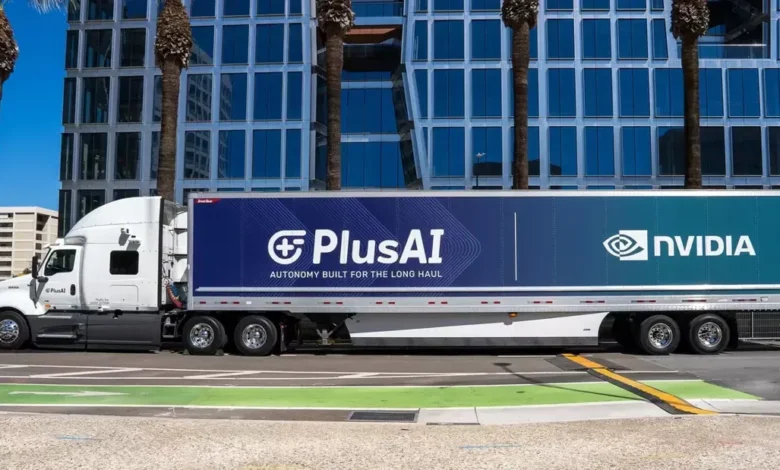
The Silicon Valley logistics and technology landscape was rattled by a peculiar incident of corporate property theft that highlights the growing risks associated with high-value branding in the autonomous vehicle industry. On the night of September 23, a group of unidentified perpetrators executed a sophisticated theft at a facility in Fremont, California, targeting what they believed to be high-value cargo. The theft involved two trailers emblazoned with the logo of Nvidia, a semiconductor giant currently at the center of the global artificial intelligence boom. However, instead of securing thousands of dollars worth of cutting-edge AI processing units, the thieves made off with 18 tons of ordinary sand.
The trailers belonged to PlusAI, a Santa Clara-based company specializing in autonomous trucking technology. At the time of the theft, the trailers were being utilized for research and development purposes, specifically to simulate the weight and logistics of real-world cargo during the testing of autonomous driving software. The incident has since sparked discussions regarding cargo security, the visibility of tech partnerships, and the unintended consequences of high-profile corporate branding.
The Chronology of the Fremont Heist
The operation began under the cover of darkness on Wednesday, September 23. According to preliminary reports and surveillance footage reviewed by Fremont law enforcement, the perpetrators arrived at the PlusAI facility in Fremont with their own heavy-duty tractors. The thieves bypassed security measures, focusing their efforts on two specific trailers.
Investigation by local authorities revealed that the thieves successfully tampered with the air brake connections of the trailers. By damaging the locking mechanisms that connect the trailer’s air brake systems to the tractor, the perpetrators were able to bypass standard security protocols and hook the trailers to their own vehicles. Notably, the PlusAI tractors that normally service these trailers remained parked on-site and untouched, suggesting that the thieves were specifically targeting the cargo-carrying capacity of the trailers rather than the proprietary autonomous hardware housed within the cabins.
The theft was discovered the following morning, Thursday, September 24, when PlusAI personnel arrived at the facility to begin their workday. Upon noticing the absence of the trailers and the signs of tampering, the staff immediately alerted the Fremont Police Department.
A Surprising Discovery in Newark
The resolution of the theft occurred with remarkable speed, thanks to a combination of community awareness and social media-style communication. Shortly after the company began coordinating with law enforcement and insurance agencies, a PlusAI executive received an unexpected message.
The Vice President of Legal at PlusAI received a text message from an acquaintance who happened to be working in the vicinity of Newark, California—a city located only a few miles from the Fremont facility. The acquaintance, unaware of the theft, had spotted the two branded trailers parked outside an office building and reached out to offer a congratulatory message, mistakenly believing the presence of the equipment was part of a successful business venture.
"I am proud of you for the adventures and success at Plus. I just saw two of your trucks near my workplace!" the message read.
This tip provided the breakthrough the company needed. PlusAI immediately dispatched its fleet operations team to the location in Newark. Upon confirming that the trailers were indeed the stolen property, they notified the Newark Police Department. Officers arrived at the scene and secured the assets, confirming that while the trailers had been breached, the contents remained undisturbed.
The Illusion of Value: Why the Thieves Targeted Nvidia
The core of the investigation now focuses on why these specific trailers were chosen. PlusAI, which partners with Nvidia to leverage their high-performance computing hardware for autonomous driving simulations, had adorned the trailers with prominent Nvidia branding.
In the current market, Nvidia’s H100 and A100 GPUs are among the most sought-after commodities in the world. Their scarcity and high retail value have made them a target for organized retail theft and warehouse heists. It is highly probable that the perpetrators identified the Nvidia logo and concluded that the trailers contained shipments of these valuable semiconductors.
Lauren Kwan, the Vice President of Marketing at PlusAI, noted that the branding, intended to highlight the company’s technological collaborations, ultimately made them a target. "That very visible branding might have led them to believe there was something of significant value inside," Kwan stated in an interview with the San Francisco Standard.
The thieves apparently realized their error upon breaking the seals of the trailers. Once inside, they encountered only 18 tons of sand, which serves no resale value in the black market of electronic components. Finding no GPUs, no server racks, and no hardware worth the risk of a felony, the perpetrators abandoned the trailers in Newark and fled.
Security Implications for the Autonomous Vehicle Industry
This incident serves as a stark case study in the vulnerabilities faced by autonomous vehicle (AV) startups. As these companies move from simulation to real-world testing, they must balance the need for public visibility and branding with the reality of cargo theft.
- Brand Visibility vs. Security: For tech companies, branding trailers is a standard marketing strategy to build awareness. However, when the brand is associated with high-value electronics, it creates a "bullseye" effect. Logistics firms are now evaluating whether to adopt more discreet transport methods for sensitive equipment.
- Logistics and Surveillance: The fact that the thieves utilized their own tractors suggests a degree of premeditation. The ease with which they disconnected the air brake systems indicates that the facility’s perimeter security, while effective at keeping unauthorized individuals out of the building, may not have been sufficient to prevent the theft of outdoor-parked assets.
- The Role of Technology: While the trailers were not equipped with real-time GPS tracking that would have alerted the company instantly, the reliance on human observation—in this case, the acquaintance in Newark—highlights that even in a high-tech industry, community surveillance remains a vital tool.
Economic and Legal Aftermath
As of the latest reports, the Fremont and Newark Police Departments have not made any arrests in connection with the theft. The case remains an active investigation. PlusAI has since filed formal reports with both law enforcement and their insurance carriers.
From a legal standpoint, the perpetrators face potential charges ranging from grand theft to trespassing and destruction of property. However, the lack of forensic evidence left at the scene—aside from the discarded sand and the trailers themselves—presents a challenge for investigators.
For PlusAI, the incident was largely an operational nuisance rather than a catastrophic loss. The "cargo" was merely ballast, and the trailers themselves were recovered without significant structural damage. However, the company has indicated that it is reviewing its fleet security protocols. This includes the possibility of installing additional GPS telematics on all trailers and increasing the surveillance of outdoor staging areas.
The Broader Context of Silicon Valley Theft
The theft of the PlusAI trailers occurs against a backdrop of increasing concerns regarding the safety of high-tech infrastructure in the San Francisco Bay Area. Over the past several years, the region has seen an uptick in organized retail crime and targeted heists of electronic goods.
While most of these crimes target consumer electronics stores, the shift toward targeting corporate assets—particularly those related to AI and autonomous driving—marks a significant escalation. As the demand for AI hardware continues to outpace supply, the incentive for criminal organizations to monitor and intercept high-tech logistics chains is likely to grow.
In conclusion, the "Great Sand Heist of Fremont" serves as a bizarre but significant lesson for the tech industry. It underscores that in an era where AI hardware is treated like modern-day gold, the mere appearance of high-value cargo is enough to attract sophisticated criminal interest. For PlusAI and its peers, the incident acts as a reminder that in the high-stakes world of autonomous vehicle development, security must be as advanced as the technology being transported. While the thieves walked away with nothing but sand, the industry is walking away with a renewed mandate to harden its physical infrastructure against the increasing risks of the modern supply chain.
Related posts: