The proud Molineux faithful find their beloved Wolverhampton Wanderers teetering on the brink of relegation from the English Premier League, a dramatic downturn for a club that had, until recently, established itself as a formidable force in the top flight. Compounding the severe on-field struggles and a season-long battle against the drop, reports have emerged of a heated post-match dressing room altercation between two players, Tolu Arokodare and Mateus Mane, casting a shadow of internal discord over a club desperately needing unity. This incident, occurring after a particularly demoralizing 4-0 defeat to fellow relegation candidates West Ham United, has brought into sharp focus the immense pressure and fracturing morale within the squad as their Premier League status hangs by a thread.
A Season Plagued by Struggle and the Brink of Relegation
Wolverhampton Wanderers’ 2022-2023 Premier League campaign has been a harrowing journey, a stark contrast to their steady mid-table finishes and even European qualification aspirations in previous seasons. After achieving promotion back to the Premier League in 2018 under Nuno Espírito Santo, the club enjoyed a period of stability and relative success, often challenging the established ‘big six’ and showcasing an attractive, possession-based style of football. However, the current season has seen a dramatic decline across all metrics. As of the 33rd week of the season, Wolves find themselves rooted to the bottom of the league table, having amassed a mere 17 points. This precarious position places them a daunting 15 points adrift of West Ham United, who occupy the 17th spot, the last position of safety above the relegation zone. With only a limited number of games remaining, the mathematical possibility of survival has dwindled to an almost non-existent probability, hinging entirely on the results of other teams.
The club’s struggles can be attributed to a confluence of factors, including a lack of consistent goal-scoring, defensive vulnerabilities, and a series of key injuries to influential players. The summer transfer window saw some significant departures, and while new talent was brought in, the team struggled to gel, often appearing disjointed and lacking the intensity that characterized their earlier Premier League tenure. This led to a managerial change mid-season, with Julen Lopetegui taking the helm from Bruno Lage, tasked with the monumental challenge of steering the ship away from the impending iceberg. Despite an initial uplift in performance and morale under Lopetegui, the deep-seated issues and the quality of opposition in the Premier League proved too formidable to overcome consistently. The constant pressure of a relegation battle has evidently taken its toll, not just on the pitch, but now reportedly within the confines of the dressing room.
The Fractured Dressing Room: An Incident Unveiled
The incident involving Tolu Arokodare and Mateus Mane reportedly transpired in the immediate aftermath of Wolves’ crushing 4-0 defeat to West Ham United on April 10. The match itself was a pivotal ‘six-pointer’ in the relegation scrap, and the comprehensive nature of the loss was a significant blow to Wolves’ already fragile hopes of survival. Losing to a direct rival by such a margin would undoubtedly amplify frustration and tension within any professional football squad.
According to reports initially surfaced by Wolves journalist Nathan Judah and subsequently picked up by various media outlets, including the Daily Mail, the altercation between Arokodare and Mane escalated quickly in the dressing room. While the precise catalyst for the dispute remains undisclosed, it is understood that a verbal disagreement quickly spiraled into a physical confrontation. Such incidents, though rare, are not entirely unprecedented in the high-stakes world of professional football, especially when teams are under immense pressure and facing dire consequences like relegation. The raw emotions of a heavy defeat, combined with the season-long stress of a relegation battle, can sometimes boil over, leading to regrettable actions.
Following an internal investigation, Tolu Arokodare was reportedly singled out for disciplinary action. He was fined by the club, an indication that his actions were deemed to have gone "too far" in the altercation with Mane. Furthermore, in what was widely interpreted as a direct consequence of the incident, Arokodare was subsequently omitted from the matchday squad for Wolves’ next Premier League fixture against Leeds United. This decision, whether explicitly stated as disciplinary or couched in terms of ‘tactical’ or ‘fitness’ reasons, sent a clear message about the club’s stance on maintaining discipline and unity, particularly during such a critical juncture. The benching of a player involved in a dressing room incident is a common managerial tool to assert authority and underscore the importance of team cohesion.
The Aftermath and Attempted Reconciliation
The news of the dressing room altercation, despite the club’s likely attempts to keep such internal matters private, inevitably leaked to the media. The timing could not have been worse, arriving as the club faced its most significant challenge of the season. The revelation of internal strife risks further damaging morale, undermining the manager’s authority, and alienating a fan base already struggling with the team’s poor performances.
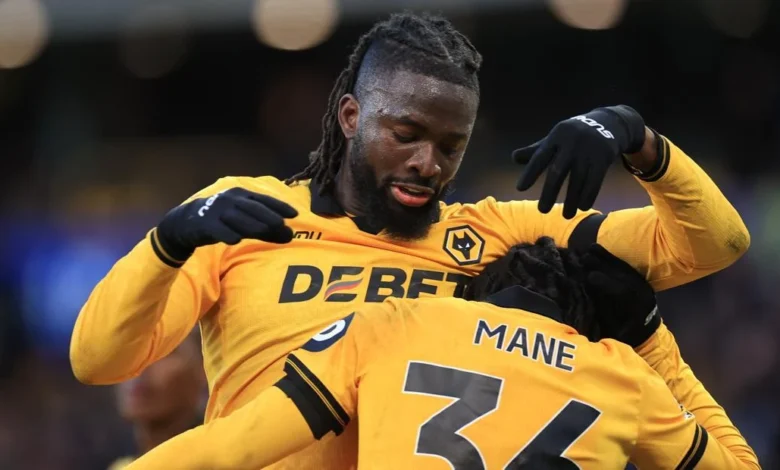
In an apparent effort to quell the public speculation and demonstrate a semblance of unity, Tolu Arokodare and Mateus Mane subsequently shared a photograph of themselves together on social media. The image, accompanied by the caption "Big Bro," was clearly intended to project an image of reconciliation and camaraderie, suggesting that any differences had been put aside. This public display, while perhaps genuine in its intent to mend fences, also served as a damage control exercise, aiming to reassure supporters and the wider football community that the team remained united despite the recent setback. However, the timing of such a public declaration, following the leak of the incident, inevitably raised questions about its authenticity and whether it truly reflected a full resolution of underlying tensions or merely a superficial attempt to present a united front.
The Imminent Drop: Mathematical Realities and Decisive Fixtures
The 15-point gap separating Wolves from 17th-placed West Ham United, coupled with the dwindling number of fixtures, means that Wolverhampton Wanderers’ fate is all but sealed. The mathematical permutations are grim. As of the last reported week, West Ham had 32 points, while Wolves lingered at the bottom with 17. The maximum points Wolves could achieve would depend on their remaining fixtures, but crucially, their survival is no longer in their own hands.
The defining moment for Wolves’ relegation status was poised to occur during West Ham United’s fixture against Crystal Palace, scheduled for Tuesday, April 21. Should West Ham secure even a single point from that match (i.e., achieve a draw or a victory), they would reach 33 points. At this threshold, it would become mathematically impossible for Wolverhampton Wanderers to bridge the points gap, regardless of their own subsequent results. Even if Wolves were to win all their remaining matches, the maximum points they could accumulate would fall short of West Ham’s revised total, thus confirming their demotion to the Championship. The reliance on another team’s result to seal their fate is a particularly bitter pill for any club to swallow, highlighting the depths of their season-long struggle.
Broader Implications and The Road Ahead
The impending relegation carries significant financial and structural implications for Wolverhampton Wanderers. The substantial decrease in broadcast revenue from the Premier League to the Championship is a major blow to club finances. Premier League clubs benefit from lucrative TV deals that dwarf those in the second tier. This financial hit often necessitates a restructuring of the playing squad, potentially leading to the sale of key players to balance the books and adjust to a more modest budget. Star players who joined the club with aspirations of playing top-flight football might seek moves elsewhere, further weakening the squad.
Relegation also impacts player contracts, with many professional agreements containing clauses that reduce wages upon demotion. This can lead to player discontent and a desire to leave, further complicating the manager’s task of rebuilding a competitive team for the Championship. For Julen Lopetegui, the challenge of managing a relegated side would be immense, requiring him to motivate a potentially disheartened squad while navigating the demands of a notoriously competitive league like the Championship. His experience in top European leagues might be tested in a very different environment.
The psychological impact on the players, staff, and fan base cannot be overstated. Relegation represents a failure of the collective effort, and rebuilding confidence will be paramount. For the supporters, who have invested emotionally and financially throughout the season, the prospect of dropping out of the Premier League is a painful reality. The club will face the dual challenge of retaining its core fan base’s loyalty while also demonstrating a clear and compelling vision for a swift return to the top flight. The incident between Tolu Arokodare and Mateus Mane, while seemingly resolved, underscores the fragility of team dynamics under extreme pressure and serves as a stark reminder of the broader challenges the club faces both on and off the pitch as it braces for a future outside the Premier League. The path back to the top division is often arduous, demanding resilience, strategic planning, and, above all, unwavering unity.
Related posts: