Changan Indonesia Expands Electric Vehicle Footprint with Nevo Q05 and Deepal S05 Debuts at GIIAS Bandung 2026

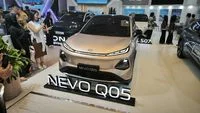
The Indonesian electric vehicle market has officially welcomed two new heavyweight contenders as Changan Indonesia, operating under the umbrella of the Indomobil Group, made its official market entry in West Java during the opening of the Gaikindo Indonesia International Auto Show (GIIAS) Bandung 2026. Marking its debut in the region, the Chinese automotive manufacturer used the regional stage to introduce a dual-pronged SUV strategy aimed at capturing the growing urban demographic seeking sustainable yet technologically advanced mobility solutions. The newly unveiled models, the Nevo Q05 and the Deepal S05, represent Changan’s aggressive localized expansion strategy amid escalating competition within Indonesia’s rapidly maturing battery-electric vehicle sector.
Priced competitively for the local market with on-the-road (OTR) figures starting at Rp351.9 million for the entry-level Nevo Q05 and scaling up to Rp602 million for the top-tier extended-range Deepal S05, the brand aims to appeal to a broad demographic of eco-conscious consumers. By selecting Bandung as the focal point for this latest phase of market penetration, Changan management has underscored the strategic importance of West Java as an automotive stronghold characterized by robust economic growth and a highly receptive consumer base for modern technological innovations.
Strategic Expansion into West Java
The official unveiling took place against the backdrop of an increasingly saturated domestic electric vehicle landscape, where established global manufacturers and emerging Chinese brands vie for consumer mindshare. For Changan Indonesia, establishing a formidable presence outside the capital city of Jakarta is viewed as a mandatory operational milestone. West Java consistently ranks as one of the highest-volume regional automotive markets in the country, driven by a dense urban population, expanding infrastructure, and an acute interest in next-generation personal transportation.
Addressing media representatives and automotive enthusiasts at the exhibition, Changan Indonesia CEO Setiawan Surya emphasized the calculated nature of the regional rollout. Jawa Barat, and specifically the municipality of Bandung, represents one of the most critical commercial frontiers for the brand, possessing undeniable potential for sustained automotive development. According to Surya, the introduction of the Nevo Q05 and the Deepal S05 directly aligns with the company’s overarching mission to deliver localized, electrification options that seamlessly integrate into the dynamic lifestyle demands of modern Indonesian households.
The tactical rollout at GIIAS Bandung 2026—running from September 9 to September 13, 2026—serves not only as a localized sales campaign but also as a brand-building exercise. By showcasing its comprehensive vehicle portfolio, which includes the previously established Deepal S07 and the compact city car Lumin, Changan is systematically addressing various market segments, ranging from entry-level urban commuters to tech-forward families seeking premium mid-size sport utility vehicles.
Detailed Breakdown of the Changan Nevo Q05
Positioned as the most accessible entry point into Changan’s local SUV lineup, the Nevo Q05 has been engineered to capture the attention of cost-conscious consumers who refuse to compromise on modern features and spatial efficiency. Available in two distinct variants—the Pro, priced at Rp351.9 million, and the Max, retailing at Rp401.9 million—the model introduces competitive benchmarks to its specific price bracket.
Underneath its modern exterior, the Nevo Q05 boasts a battery and powertrain configuration designed to alleviate range anxiety. The vehicle is officially rated with an estimated driving range of up to 462 kilometers based on the New European Driving Cycle (NEDC) standard on a single full charge. To complement its touring capabilities, Changan has integrated advanced 3C fast-charging technology capable of delivering up to 162 kW. This infrastructure compatibility allows the vehicle to replenish its battery reserves from 30 percent to 80 percent in approximately 15 minutes, significantly minimizing downtime during long-distance transit.
Interior architecture is another focal point of the Nevo Q05. The vehicle features a wheelbase measuring 2,735 millimeters, which manufacturer specifications position as the longest in its class, translating directly into enhanced legroom and cabin spaciousness. Practicality is further elevated through the integration of 27 distinct storage compartments distributed logically throughout the cabin. Furthermore, safety and driver assistance have not been overlooked; the model comes equipped with a comprehensive suite of 25 active safety systems and advanced driver assistance features designed to navigate complex urban traffic conditions securely.
Deepal S05: Power, Versatility, and Dual Powertrain Options
Positioned higher in the product hierarchy, the Changan Deepal S05 caters to buyers seeking enhanced performance, cutting-edge interior technology, and greater powertrain flexibility. Unlike its stablemate, the Deepal S05 is offered in two fundamentally different mechanical configurations: a pure battery-electric vehicle (BEV) variant and an innovative range-extended electric vehicle (REEV) variant.
The BEV lineup is further subdivided into the BEV Plus, priced at Rp512 million, and the range-topping BEV Max, which commands an OTR price of Rp542 million. Powered by a robust electric motor setup, the BEV configuration delivers a maximum output of 200 kilowatts and 290 Newton-meters of torque, achieving a certified NEDC range of 470 kilometers. Changan asserts that these performance metrics establish the Deepal S05 BEV as the most potent offering within its specific competitive segment.
For motorists requiring absolute freedom from charging infrastructure constraints, the REEV variant—priced at Rp602 million—presents an alternative engineering solution. This system incorporates an internal combustion gasoline engine functioning strictly as an on-board generator to supply electrical energy to the battery system. Consequently, the REEV variant achieves a cumulative combined driving range exceeding 1,100 kilometers, while maintaining the capability to travel up to 170 kilometers exclusively on battery power under NEDC testing standards.
Inside the cabin, the Deepal S05 emphasizes digitalization and user-centric ergonomics. The centerpiece of the dashboard is a sprawling 15.4-inch central touchscreen interface, complemented by an advanced head-up display system that projects critical navigation and telemetry data directly into the driver’s line of sight. Notably, Changan has localized the software ecosystem to include a voice assistant capable of processing commands in the Indonesian language, reflecting a concerted effort to enhance human-machine interaction for local operators.
Broader Portfolio and Commercial Incentives
Alongside the regional debuts of the Nevo Q05 and Deepal S05, Changan utilized its exhibition space at GIIAS Bandung 2026 to maintain visibility for its existing Indonesian lineup. Attendees could examine the larger Deepal S07 crossover, priced at Rp627 million, alongside the diminutive Lumin city car, which remains targeted at urban dwellers with a price tag of Rp227 million.
To stimulate consumer conversion during the five-day exhibition window from September 9 to September 13, 2026, Changan Indonesia deployed a robust suite of promotional offerings. These financial incentives include zero-percent interest financing programs, accessible down payment structures starting at a competitive 15 percent, and an interactive lucky draw campaign featuring prizes ranging from digital e-wallet credits to premium consumer electronics, including the newly released iPhone 17.
Market Implications and Industry Outlook
The introduction of the Nevo Q05 and Deepal S05 by Changan Indonesia underscores a broader, structural transformation within the national automotive sector. As the Indonesian government continues to incentivize electric vehicle adoption through fiscal policies, tax exemptions, and infrastructure development, foreign automotive groups are increasingly localizing their product pipelines to capture market share before the sector reaches maturity.
By establishing competitive price points below the psychological Rp400 million threshold for entry-level electric SUVs, Changan is directly challenging traditional internal combustion engine vehicles while undercutting several established regional EV competitors. The inclusion of the REEV variant in the Deepal S05 lineup additionally addresses a critical consumer hesitation factor in Indonesia: the psychological barrier of charging infrastructure availability outside major metropolitan centers.
Industry analysts observe that as brands like Changan leverage established local joint ventures—such as the Indomobil Group—they gain immediate access to trusted distribution networks, after-sales service centers, and regulatory navigation expertise. This operational framework not only accelerates market penetration but also instills long-term consumer confidence in emerging automotive brands. As the GIIAS Bandung 2026 exhibition concludes, the commercial performance of the Nevo Q05 and Deepal S05 will likely serve as an essential indicator of regional consumer readiness for diverse electrification technologies, setting the stage for subsequent market expansions across the archipelago in the years ahead.