Bank Jatim Honored with Prestigious Regional Champion Award for Stellar 2025 Financial Performance


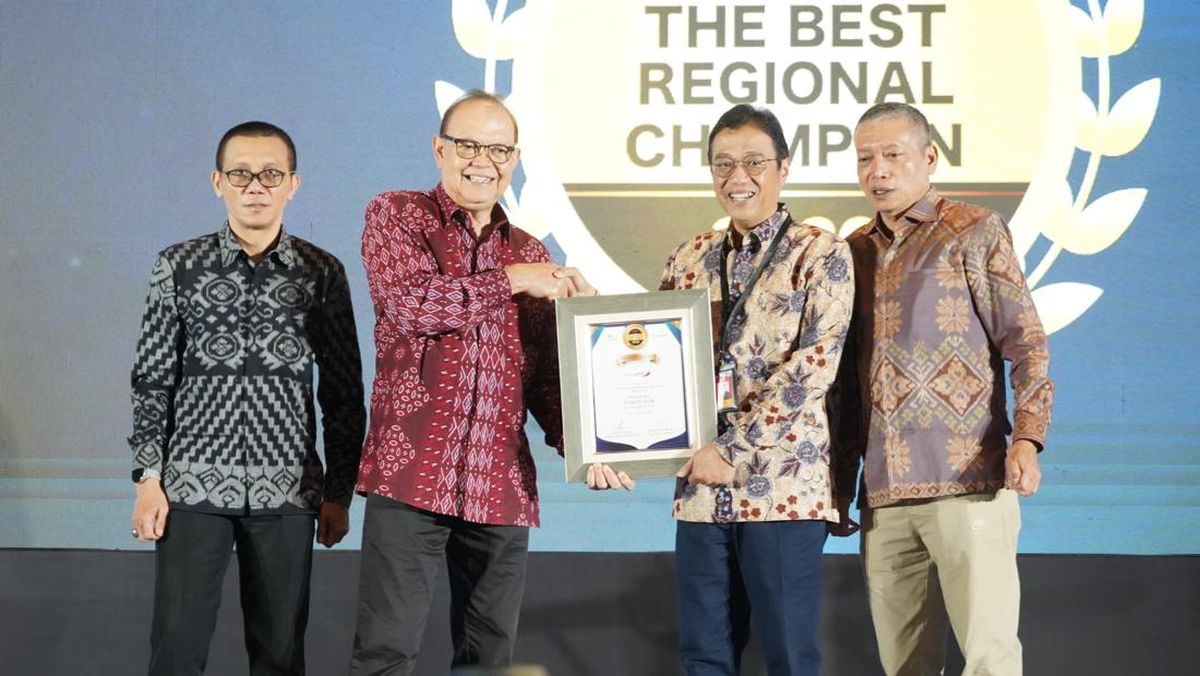
PT Bank Pembangunan Daerah Jawa Timur Tbk (Bank Jatim) has been recognized with a prestigious "Very Good" predicate for its exceptional financial performance in 2025, earning the Regional Champion Award at The Asian Post Regional Champion Forum & Appreciation 2026. The accolade, presented in the BPD KBMI 2 category, highlights Bank Jatim’s remarkable growth, strategic consolidation efforts, and pioneering digital transformation within the Indonesian banking sector.
The Asian Post Regional Champion Forum: Acknowledging Banking Excellence
The esteemed award ceremony took place on Thursday evening, April 16, at the Hotel Alila Surakarta. The event, themed "Kebijakan Transfer Kas Daerah dan Masa Depan Penguatan BUMD" (Regional Cash Transfer Policy and the Future of Strengthening BUMD), brought together key figures from the financial industry to discuss critical issues facing regional development banks (BPDs) and regional state-owned enterprises (BUMDs). These forums are crucial platforms for evaluating and celebrating institutions that demonstrate leadership, innovation, and sustainable growth, contributing significantly to regional economic development.
The Regional Champion Award itself is a testament to rigorous evaluation, often involving in-depth analysis of financial statements, strategic initiatives, and market impact. The organizers, The Asian Post and Infobank Media Group, are renowned entities in the financial media and analytics landscape. Infobank Media Group, in particular, is a leading financial publication in Indonesia, known for its comprehensive banking sector analyses and annual performance rankings. Their endorsement carries significant weight, signifying a bank’s adherence to best practices and outstanding operational results. The award was personally handed over by Eko B. Supriyanto, Chairman of Infobank Media Group, and Sigit Pramono, an Infobank Expert Board Member, to Tonny Prasetyo, Bank Jatim’s Director of Micro, Retail, & Sharia Business.
A Period of Unprecedented Growth and Strategic Vision
Upon receiving the award, Tonny Prasetyo expressed profound gratitude and appreciation for the recognition. He emphasized that the award serves as a powerful validation of Bank Jatim’s financial performance during the September 2024 to September 2025 period. This specific timeframe, often used for interim reporting and annual projections in the financial industry, showcased a consistent upward trajectory for the bank.
Prasetyo attributed this success to the collective efforts of the entire Bank Jatim team, the unwavering trust of its stakeholders—including customers, investors, and the regional government—and the bank’s steadfast commitment to implementing its strategic plans with discipline and consistency. "Moving forward, we are committed to maintaining this momentum by focusing on healthy growth, continuous innovation, and the creation of long-term value," Prasetyo stated. He underscored that these pillars are vital for Bank Jatim to uphold its credibility and public trust, essential components for any financial institution aiming for sustained leadership.
Robust Financial Metrics: Outperforming Expectations
Bank Jatim’s performance in 2025 indeed paints a picture of financial strength and strategic acumen. The bank reported a net profit of Rp 1.54 trillion, marking an impressive year-on-year (YoY) growth of 20.65%. This figure is particularly noteworthy given the dynamic and often challenging economic landscape, demonstrating Bank Jatim’s resilience and effective management strategies. Achieving such a significant profit increase underscores the bank’s ability to optimize its revenue streams, manage costs efficiently, and expand its customer base.
The "Very Good" predicate in the BPD KBMI 2 category is also significant. KBMI stands for "Kelompok Bank berdasarkan Modal Inti" (Bank Groups based on Core Capital), a classification system implemented by the Otoritas Jasa Keuangan (OJK) or Financial Services Authority, to categorize banks based on their core capital. KBMI 2 banks typically have core capital ranging from Rp 6 trillion to Rp 14 trillion. This classification implies that Bank Jatim operates within a segment requiring substantial capital strength and robust risk management, making its "Very Good" rating a strong indicator of its financial health and compliance.
Strategic Consolidation: Building a Regional Banking Powerhouse
Beyond mere profit growth, Bank Jatim has distinguished itself as one of the most aggressive BPDs in pursuing consolidation and digital transformation. A pivotal strategic move that dramatically reshaped its scale and market influence was its official transformation into a parent company for five other BPDs. This groundbreaking consolidation saw Bank Jatim integrating Bank NTB Syariah, Bank Banten, Bank Lampung, Bank Sultra, and Bank NTT under its umbrella. This move is not merely an expansion but a strategic initiative to create a larger, more resilient, and regionally integrated financial entity.
The impact of this consolidation on Bank Jatim’s overall performance was profound and immediate. The bank’s total consolidated assets surged by an astonishing 42.93%, reaching Rp 168.855 trillion from Rp 118.142 trillion in 2024. This significant increase in assets immediately elevates Bank Jatim’s standing within the national banking sector, providing it with enhanced capacity for large-scale financing, improved capital adequacy, and greater operational efficiency through economies of scale.
Furthermore, the consolidated loan disbursement experienced a sharp increase of 46.65%, reaching Rp 110.503 trillion. This expansion in lending reflects a broader reach and diversified loan portfolio across the regions served by the newly integrated banks. It signifies Bank Jatim’s enhanced ability to stimulate economic activity, particularly by supporting micro, small, and medium enterprises (MSMEs) and infrastructure projects in multiple provinces. The consolidated net profit also saw a healthy growth of 24.80%, totaling Rp 1.617 trillion, further solidifying the financial benefits derived from this strategic merger.
This consolidation strategy aligns with the broader push from the OJK for BPDs to strengthen their capital and operational capabilities to better compete with national private and state-owned banks. By forming a BPD holding company, Bank Jatim is setting a precedent for regional banks to achieve greater scale, improve risk management, and offer a more comprehensive suite of financial products and services. The synergy among these BPDs is expected to unlock new market opportunities, optimize resource allocation, and foster a more robust regional banking ecosystem.
Digital Transformation: The Accelerator of Modern Banking
Digitalization has been identified as a primary accelerator of Bank Jatim’s remarkable growth. In an era where digital channels are increasingly defining customer experience and operational efficiency, Bank Jatim has made significant strides in its digital transformation journey. Its flagship mobile banking application, JConnect Mobile, has seen impressive adoption, with the number of users reaching 993,972—a substantial increase of 22.40%.
The growth in user base is complemented by a massive surge in transaction value through JConnect Mobile, which hit Rp 65.77 trillion. This figure underscores the application’s critical role in facilitating daily financial transactions for nearly a million users, ranging from bill payments and transfers to e-wallet top-ups and QRIS-based payments. The high transaction value indicates strong customer engagement and reliance on the digital platform, reflecting its user-friendliness, reliability, and comprehensive features.
Bank Jatim’s digital strategy extends beyond JConnect Mobile, encompassing various other initiatives aimed at enhancing customer convenience and streamlining internal operations. These likely include robust internet banking platforms for corporate clients, advanced ATM networks, integrated payment gateways, and exploring emerging technologies like artificial intelligence for customer service and data analytics for personalized offerings. By embracing digital innovation, Bank Jatim is not only improving customer experience but also achieving greater operational efficiency, reducing costs, and expanding its reach to underserved segments of the population. This digital push is crucial for maintaining competitiveness in Indonesia’s rapidly evolving financial technology landscape.
Leadership’s Vision and the Path Forward
Tonny Prasetyo reiterated Bank Jatim’s unwavering commitment to its strategic path. He emphasized that the combination of strategic consolidation, robust profit growth, and aggressive digitalization has not only led to business expansion but also significantly matured Bank Jatim as a large-scale, integrated regional financial institution. The bank is transforming from a traditional regional player into a modern, dynamic financial powerhouse capable of competing on a national level.
"We extend our sincere thanks to the organizers of The Asian Post 2026 for evaluating and appreciating Bank Jatim’s financial performance," Prasetyo concluded. "This award will undoubtedly serve as a strong motivator for all Jatimers [Bank Jatim employees] to further strengthen our commitment going forward, with the ultimate goal of making Bank Jatim the number one BPD in Indonesia." This ambitious vision reflects the bank’s confidence in its strategic direction and its determination to lead the regional banking sector.
Broader Implications for Regional Development and the Banking Sector
Bank Jatim’s success has significant implications, not just for its shareholders and customers, but also for the broader regional economies it serves. As a BPD, Bank Jatim plays a crucial role in supporting the economic development of East Java and, through its consolidated entities, the other provinces. This includes financing local government projects, supporting MSMEs that are the backbone of regional economies, and promoting financial inclusion. A strong and growing Bank Jatim means more capital available for regional development, greater support for local businesses, and improved access to financial services for the populace.
The consolidation model pioneered by Bank Jatim could also serve as a blueprint for other BPDs seeking to enhance their competitiveness and scale. In a banking landscape increasingly dominated by large national players, regional banks must adapt and innovate. Bank Jatim’s strategy demonstrates that through thoughtful mergers, effective digital adoption, and a clear strategic vision, BPDs can not only survive but thrive and expand their influence.
Furthermore, the recognition from The Asian Post and Infobank Media Group underscores a broader trend in the Indonesian financial sector: the growing importance of regional champions. These institutions, deeply rooted in their local communities, are uniquely positioned to understand and cater to regional needs while leveraging national-level expertise and technology. Bank Jatim’s award is a celebration of this hybrid model, showcasing how local insight combined with global best practices can lead to outstanding results and contribute significantly to national economic resilience and growth. The path forward for Bank Jatim, anchored in healthy growth, innovation, and strategic expansion, firmly positions it as a leading institution poised to achieve its ambition of becoming the premier regional development bank in Indonesia.
Related posts: