Argentina’s World Cup Dream Crushed by Resurgent Spain in 2026 Final; Messi’s Farewell Ends in Tears

The footballing world watched in stunned silence as Lionel Messi and the Argentina national team were left heartbroken, defeated by a resurgent Spain in the final of the FIFA World Cup 2026. The much-anticipated fairytale ending for La Pulga, in what was widely expected to be his final appearance on the grandest stage, failed to materialise, as La Roja delivered a commanding performance to clinch their second World Cup title with a decisive 1-0 victory. The defeat marked a poignant and bitter conclusion to an otherwise glittering international career for Messi, leaving fans and pundits alike grappling with the weight of the moment.
The Final Showdown: A Tactical Masterclass from Spain
The grand finale unfolded at the state-of-the-art New York/New Jersey Stadium on Monday, July 20, 2026, under the watchful eyes of over 82,000 spectators and billions globally. The atmosphere was electric, a cacophony of Argentine passion vying against the disciplined roars of Spanish support. From the opening whistle, it was clear that Spain, under the astute guidance of their head coach, had meticulously prepared for this clash. Their strategy revolved around suffocating Argentina’s creative outlets, particularly Lionel Messi, and asserting dominance through relentless possession and intricate passing.
The statistics painted a stark picture of Spain’s control. Throughout the gruelling 120 minutes of regular and extra time, Argentina struggled to establish any meaningful rhythm, finding themselves constantly chasing the ball and reacting to Spain’s intricate build-up play. La Albiceleste, typically known for their attacking flair and ability to conjure moments of individual brilliance, were reduced to a largely defensive posture, a testament to Spain’s tactical superiority and relentless pressure. The most damning statistic for Lionel Scaloni’s side was their inability to register a single shot on target throughout the entire match, a rare and troubling occurrence for a team of Argentina’s calibre, especially in a World Cup final.
Chronology of a Crushing Defeat
The match commenced with Spain immediately seizing control of the midfield. Their young but experienced trio, featuring emerging talents alongside established stars, dictated the tempo, moving the ball with precision and purpose. Argentina, perhaps overwhelmed by the occasion or Spain’s intensity, appeared disjointed in the initial phases.
- Kick-off (0-15 minutes): Spain’s Early Dominance. Spain established an early stranglehold on possession, maintaining over 70% of the ball. Their short, sharp passes frustrated Argentina, who struggled to win back possession in dangerous areas. As former England goalkeeper Joe Hart highlighted, Messi was notably isolated, barely touching the ball in the opposition’s penalty box during the first quarter-hour, a stark indicator of Spain’s defensive discipline and midfield superiority. Attempts by Argentina to launch counter-attacks were swiftly quelled by Spain’s high press and organised defence.
- Mid-First Half (15-45 minutes): Frustration Mounts for Argentina. As the half wore on, Argentina’s frustration became palpable. Midfielders like Enzo Fernández and Alexis Mac Allister found themselves frequently dispossessed or forced into speculative long passes. Spain, meanwhile, created several half-chances, testing Emiliano Martínez with shots from outside the box, though none truly threatened to break the deadlock. Martínez, a hero from the 2022 campaign, remained vigilant, making a crucial save from a powerful drive by Pedri in the 32nd minute. Argentina’s best opportunity came from a set-piece, a free-kick delivered by Messi, but the header from Cristian Romero sailed harmlessly over the bar.
- Second Half (45-90 minutes): The Decisive Strike. The second half saw a slight shift in Argentina’s approach, with Scaloni introducing Ángel Di María early in the hope of injecting some attacking impetus. However, Spain remained resolute. The breakthrough arrived in the 68th minute, a moment of clinical execution that would ultimately decide the final. The move originated from Spain’s left flank, where the electrifying Nico Williams, who had been a constant threat, received the ball near the touchline. With a burst of pace, he eluded Nahuel Molina and delivered a perfectly weighted, low cross into the heart of the Argentine penalty area. Ferran Torres, the seasoned forward wearing the number seven jersey, ghosted past Nicolás Otamendi and coolly slotted the ball past the outstretched arm of Emiliano Martínez into the bottom corner. The Spanish contingent erupted, while a wave of despair washed over the Argentine faithful.
- Post-Goal Period (68-90 minutes): Argentina’s Desperate Search. Stung by the goal, Argentina finally began to show more urgency. Messi dropped deeper, attempting to orchestrate play, but Spain’s defensive lines held firm. Substitutions like Julian Alvarez and Alejandro Garnacho were brought on to add fresh legs and attacking impetus, yet Spain’s backline, marshalled expertly by their centre-backs, remained impenetrable. Shots were blocked, passes intercepted, and any hint of danger was swiftly extinguished.
- Extra Time (90-120 minutes): Spain Holds Firm. With Argentina unable to find an equaliser in regulation time, the match headed into extra time. Fatigue began to set in, but Spain’s defensive organisation never wavered. Argentina pushed relentlessly, throwing men forward, but their efforts often lacked precision and conviction against Spain’s disciplined setup. Messi, visibly tiring, tried to spark magic, but was consistently double-marked and denied space. A desperate last-minute free-kick from Messi in the 120th minute sailed wide, signaling the end of Argentina’s hopes and the beginning of Spain’s jubilant celebrations.
Supporting Data: A Statistical Breakdown
The final match statistics underscored Spain’s comprehensive victory:
- Possession: Spain 67% – 33% Argentina
- Total Shots: Spain 18 – 7 Argentina
- Shots on Target: Spain 6 – 0 Argentina
- Pass Accuracy: Spain 91% – 82% Argentina
- Corners: Spain 8 – 2 Argentina
- Fouls Committed: Spain 11 – 19 Argentina
- Yellow Cards: Spain 1 – 3 Argentina
- Distance Covered (Average per player): Spain 11.5 km – 10.8 km Argentina
These figures illustrate a stark contrast in performance, with Spain dictating every facet of the game. Argentina’s inability to register a single shot on target over 120 minutes in a World Cup final is unprecedented in modern football history and highlights the effectiveness of Spain’s defensive structure and midfield press.
Road to the Final: A Tale of Two Journeys
Both nations had navigated challenging paths to reach the pinnacle event.
Argentina’s Campaign:
Argentina entered the 2026 World Cup as defending champions and one of the favourites, fueled by the narrative of Messi’s potential swansong. They topped their group comfortably, showcasing moments of their characteristic flair. Their knockout stage journey included a tense quarter-final against a resilient Germany, which they won in extra time, and a dramatic semi-final penalty shootout victory over arch-rivals Brazil. Messi had been instrumental throughout the tournament, scoring six goals and providing four assists, often single-handedly dragging his team through difficult moments. His performances in the earlier rounds had reignited hopes of a successive World Cup triumph, making the final defeat all the more poignant.
Spain’s Resurgence:
Spain, meanwhile, arrived in 2026 as a team reborn. After a period of transition following their golden generation, this squad represented a new wave of talent, blending the technical mastery of their predecessors with a renewed physical intensity and tactical flexibility. They dominated their group, exhibiting fluid attacking football. Their knockout path saw them overcome a formidable France in the Round of 16 and a tactically astute England side in the semi-finals, demonstrating their credentials against top-tier opposition. Their disciplined defence and creative midfield, spearheaded by players like Pedri, Gavi (if still active and fit), and the goal-scoring prowess of Ferran Torres and Nico Williams, marked them out as genuine contenders. Their journey to the final was a testament to meticulous planning and the seamless integration of youth with experience.
Reactions from the Dugout and Beyond
The immediate aftermath of the final was a mosaic of emotions.
Lionel Scaloni’s Post-Match Reflection:
Argentina’s head coach, Lionel Scaloni, appeared stoic but visibly heartbroken in his post-match press conference. "This is a tough one to swallow," Scaloni admitted, his voice hoarse. "We gave everything, but today, Spain were simply better. They controlled the game, denied us space, and executed their plan perfectly. We are immensely proud of what we achieved to get here, but in a final, you need that extra bit, and we couldn’t find it today. For Leo, it’s a difficult moment, for all of us. He has given so much to this team, to this country. It wasn’t the ending we dreamed of, but his legacy is already etched in history."
Spain’s Head Coach (e.g., Luis de la Fuente):
In stark contrast, Spain’s coach beamed with pride. "This is the culmination of years of hard work, dedication, and belief in our philosophy," he stated, clutching the trophy. "Argentina are a fantastic team, and to beat them in a World Cup final is an incredible achievement. Our players showed incredible discipline, tactical awareness, and mental fortitude. This generation has proven its worth. This trophy belongs to all of Spain, to every coach, every academy that has nurtured these talents. We played our game, we pressed high, we kept the ball, and we found our moment. Ferran and Nico were exceptional, but this was a team effort."
Joe Hart’s Expanded Analysis:
Former England international Joe Hart, speaking on BBC Sport, elaborated on Messi’s subdued performance. "There was no fairytale ending for Messi, who barely impacted the game due to Spain’s sheer dominance. He hardly got a sniff until the dying minutes," Hart reiterated. "Spain’s midfield strangled any creativity from Argentina. Messi was constantly surrounded, and when he did get the ball, he had three or four players on him instantly. It’s a testament to Spain’s tactical genius that they could render the greatest player of all time so ineffective in a World Cup final. He still showed glimpses of that fighting spirit, where anything positive for Argentina had to come through him, but this wasn’t his day. He’s had an incredible tournament, but today, the magic just wasn’t there." Other pundits echoed similar sentiments, highlighting Spain’s tactical discipline as the key differentiator.
Player Reactions:
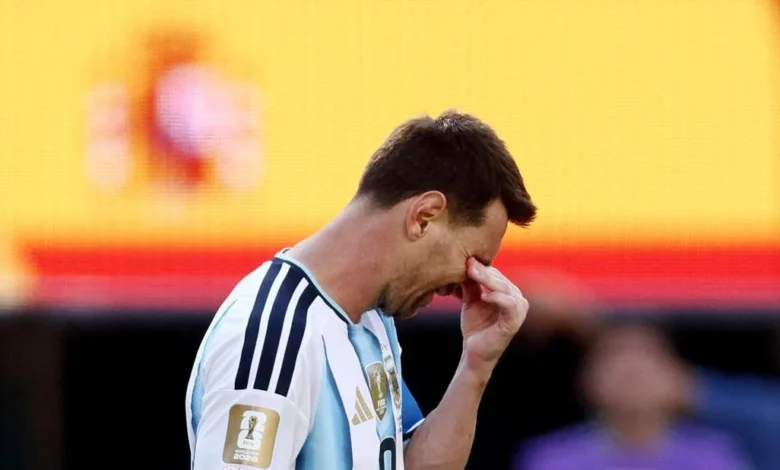
Ferran Torres, the match-winner, was ecstatic. "It’s an unbelievable feeling, a dream come true," he exclaimed, visibly emotional. "Nico gave me a perfect ball, and I just had to finish it. We worked so hard for this, and to bring the World Cup back to Spain is incredible." On the other side, Emiliano Martínez was seen consoling a tearful Messi on the pitch, a poignant image that captured the heartbreak of the Argentine squad. Messi himself left the field quickly, his face etched with profound disappointment, a stark contrast to the elation of Doha in 2022.
Messi’s Unfinished Symphony: A Legacy Defined
The defeat in the 2026 World Cup final undoubtedly adds a complex layer to Lionel Messi’s already extraordinary legacy. Having finally lifted the coveted trophy in 2022, this tournament was framed as a potential farewell tour, a chance to solidify his status as the undisputed greatest of all time with a historic back-to-back triumph. While the loss does not diminish his unparalleled achievements, including numerous Ballon d’Or awards, Champions League titles, and the 2022 World Cup, it leaves a lingering sense of an unfinished symphony, a final chapter written with a touch of bittersweet regret.
For millions of fans, the image of Messi, tearful and defeated on the field, will be a stark reminder of the unforgiving nature of sport. Despite his individual brilliance throughout the tournament, the collective might of Spain proved insurmountable. This loss, however, also underscores the immense pressure and expectation that has followed him throughout his career, and his ability to carry that burden for so long remains a testament to his mental fortitude.
The Future of La Albiceleste
The immediate implications for the Argentina national team are significant. With Messi’s international retirement now widely anticipated, the team faces a transitional period. Key veterans like Ángel Di María, Nicolás Otamendi, and possibly even Emiliano Martínez may also consider their futures. Lionel Scaloni will be tasked with identifying and nurturing the next generation of Argentine talent to fill the immense void left by these legends. The focus will shift to younger players like Enzo Fernández, Julian Alvarez, and Alejandro Garnacho, who will be expected to step up and lead the team into the 2030 World Cup cycle. The challenge will be to maintain Argentina’s competitive edge while rebuilding around a new core.
Spain’s New Golden Era
For Spain, this victory heralds the dawn of a potential new golden era. The triumph in 2026, following their 2010 success, firmly establishes this generation as one of the best in the nation’s history. The blend of experienced players and exciting young prospects suggests a sustained period of competitiveness on the international stage. The tactical philosophy, focusing on technical excellence, intelligent pressing, and fluid attacking play, appears to be deeply ingrained and capable of adapting to various challenges. This World Cup win will undoubtedly inspire a new wave of youth participation and investment in Spanish football academies, further strengthening their pipeline of talent. Celebrations across Spain will be vibrant, acknowledging the hard work and brilliance that brought the coveted trophy back home.
The 2026 World Cup: A Landmark Tournament
Beyond the final result, the 2026 FIFA World Cup itself marked a significant milestone in football history. Co-hosted by three nations – the United States, Canada, and Mexico – it was the first tournament to feature an expanded format with 48 teams, leading to a record number of matches and unprecedented logistical challenges. The tournament showcased football’s growing global reach and popularity, with diverse fan bases and iconic venues contributing to a memorable spectacle. While the format changes brought debates about quality and player welfare, the final match ultimately delivered a compelling narrative, albeit a heartbreaking one for Argentina.
In conclusion, the 2026 World Cup final will be remembered not just for Spain’s masterful victory, but for the poignant end to Lionel Messi’s extraordinary World Cup journey. While the dream of a second consecutive title for Argentina was shattered, Spain’s triumph signals a new chapter in international football, demonstrating the power of tactical discipline, youth development, and collective determination. The echoes of celebration in Madrid and the tears in Buenos Aires will resonate for years to come, shaping the narratives of two proud footballing nations.
Related posts: