Welcoming the Year of the Fire Horse: Dates, Traditions, and Cultural Significance of Chinese New Year 2026 in Indonesia and Beyond

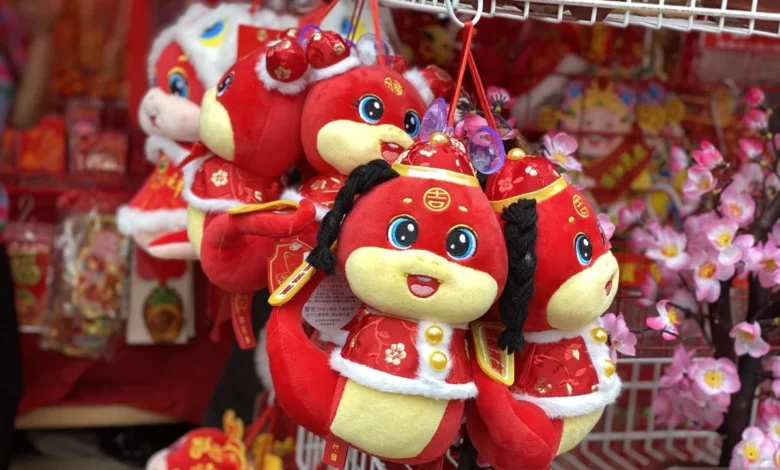
The arrival of the Lunar New Year, locally known in Indonesia as Imlek, remains one of the most culturally significant and widely anticipated events in the global calendar, symbolizing renewal, family unity, and the hopeful pursuit of prosperity. In 2026, the celebration marks the transition into the year 2577 according to the Kongzili or traditional Chinese lunar calendar. This particular year is set to be a momentous one, as it ushers in the Year of the Fire Horse, a period in the 60-year sexagenary cycle that is traditionally associated with high energy, rapid change, and dynamic opportunities. Unlike the Gregorian calendar, which is based on the Earth’s revolution around the sun, the timing of Imlek is dictated by the lunar cycle, ensuring that the date shifts annually, usually falling between late January and mid-February.
The Official Schedule and Government Recognition in Indonesia
For the year 2026, the first day of the Lunar New Year falls on Tuesday, February 17. This date has been formally recognized by the Indonesian government as a national holiday, ensuring that the diverse population of the archipelago can participate in or respect the festivities. The legal basis for this holiday is established through the Joint Ministerial Decree (Surat Keputusan Bersama or SKB) of three ministers: the Minister of Religious Affairs, the Minister of Manpower, and the Minister of Administrative and Bureaucratic Reform. Specifically, the schedule is outlined in SKB Number 1497 of 2025, Number 2 of 2025, and Number 5 of 2025.
In addition to the main holiday on February 17, the government has also designated Monday, February 16, 2026, as a "cuti bersama" or collective leave day. This strategic scheduling creates a four-day long weekend, a move often intended to boost domestic tourism and allow families to travel to their ancestral homes for the traditional reunion dinner, known as Tuan Yuan Fan. This practice mirrors the broader Indonesian tradition of mudik, where urban workers return to their hometowns during major religious festivals.
Historical and Socio-Political Context in Indonesia
The official recognition of Imlek as a national holiday in Indonesia is a testament to the nation’s journey toward multiculturalism and religious tolerance. For decades, particularly during the New Order era, public celebrations of Chinese culture and the lunar calendar were heavily restricted under Presidential Instruction No. 14/1967. However, the landscape shifted dramatically following the Reformasi period.
The pivotal moment came during the presidency of Abdurrahman Wahid, affectionately known as Gus Dur, who revoked the restrictive policies in 2000. By 2002, President Megawati Sukarnoputri declared Imlek a national holiday starting from 2003. Since then, the festival has evolved from a private, household affair into a grand, public celebration that highlights Indonesia’s "Bhinneka Tunggal Ika" (Unity in Diversity) philosophy. Today, major cities like Jakarta, Surabaya, Medan, and Singkawang transform into vibrant hubs of red and gold, featuring lion dances (Barongsai) and dragon dances (Liong) that attract spectators from all ethnic backgrounds.
The 15-Day Rites: From Preparation to the Lantern Festival
The celebration of Imlek is not a single-day event but a comprehensive 15-day festival known as the Spring Festival or Chunjie. Each day of this period carries specific cultural weight and traditional rituals:
- Preparation and Cleaning: In the weeks leading up to February 17, families engage in thorough house cleaning. This is symbolic of "sweeping away" the bad luck and stagnant energy of the previous year to make room for the fresh blessings of the new year.
- The Reunion Dinner: On the eve of the New Year, families gather for a lavish feast. In Indonesia, this often includes a mix of traditional Chinese dishes and local influences. Key staples include Niangao (sticky rice cake), which symbolizes "climbing higher" in status or success, and Jiaozi (dumplings), which resemble ancient currency and represent wealth.
- The First Day of the New Year: This is a day for visiting elders and relatives. The tradition of giving Angpau (red envelopes containing money) is central here, symbolizing the passing of fortune from the older generation to the younger one.
- The 15th Day: Cap Go Meh: The festivities conclude on the 15th day with the Lantern Festival, or Cap Go Meh. In Indonesia, this finale is particularly famous in Singkawang, West Kalimantan, where it features the Tatung parade—a unique cultural synthesis where participants enter a trance-like state. The Lantern Festival symbolizes the first full moon of the lunar year, representing unity, perfection, and the light of hope.
Astrological Analysis: The Year of the Fire Horse 2577 Kongzili
The year 2026 is uniquely governed by the Fire Horse. In the Chinese zodiac, the Horse is the seventh animal in the 12-year cycle, representing spirit, independence, and unyielding energy. When paired with the Fire element, which appears only once every 60 years (the last being 1966), these traits are significantly amplified.
According to traditional astrological interpretations, the Horse is a creature that thrives on movement and freedom. People born under this sign are often characterized as warm-hearted, enthusiastic, and highly social. However, the Fire element adds a layer of volatility and intensity. Experts in Chinese metaphysics suggest that 2026 will be a year of "high-octane" changes. It is a time when bold initiatives may find success, but it also requires a steady hand to manage the "heat" of the Fire element, which can lead to impulsiveness or short tempers.
For those born in previous Horse years—such as 1954, 1966, 1978, 1990, 2002, and 2014—2026 is their Benmingnian, or their zodiac year of birth. Contrary to popular belief that one’s own year is lucky, traditional Chinese culture often views the Benmingnian as a year of challenges or "clashing" with the Tai Sui (the Grand Duke of Jupiter). To mitigate potential negative energy, it is customary for those in their zodiac year to wear red clothing or accessories, such as red belts or socks, throughout the year to act as a protective talisman.
Socio-Economic Implications and the ‘Imlek Economy’
The 2026 Imlek celebrations are expected to provide a significant boost to the regional and global economy. In Indonesia, the "Imlek Economy" manifests through several sectors:
- Retail and E-commerce: There is a predictable surge in the consumption of premium food products, traditional attire (Cheongsam and Tang suits), and gift hampers. E-commerce platforms typically launch massive "Lunar Sales," capitalizing on the tradition of buying new clothes and household items for the New Year.
- Tourism and Hospitality: With a four-day weekend in Indonesia, hotels in "Chinatown" districts like Glodok in Jakarta or Kesawan in Medan often see 100% occupancy. Furthermore, the "Chunyun" or the Spring Festival travel rush in China—often cited as the largest annual human migration on Earth—has ripple effects on global aviation and luxury retail as millions of Chinese tourists travel abroad.
- Logistics: The period leading up to February 17 will likely see a peak in logistics demand as businesses restock to meet festive consumption, necessitating efficient supply chain management.
Regional Celebrations: A Tapestry of Culture
While the core traditions of Imlek are universal, regional variations in Indonesia add a unique flavor to the 2026 celebrations. In Singkawang, the "City of a Thousand Temples," the 2026 Cap Go Meh is expected to attract thousands of international tourists. The city’s unique blend of Chinese, Dayak, and Malay cultures creates a spectacle that is found nowhere else in the world.
In Central Java, cities like Semarang will host festivals at the Sam Poo Kong temple, honoring the legacy of Admiral Zheng He. These celebrations serve as a reminder of the long-standing maritime and cultural links between China and the Indonesian archipelago, dating back centuries. The 2026 celebrations will likely emphasize "Religious Moderation," a key program of the Indonesian Ministry of Religious Affairs, using the festival as a platform to strengthen social cohesion among different faith groups.
Global Context: The Universal Appeal of the Spring Festival
Beyond Indonesia, the 2026 Lunar New Year will be celebrated by billions globally. From the massive parades in San Francisco and London to the quiet family dinners in Beijing and Singapore, the festival has become a global cultural phenomenon. In 2025, China recorded over 9 billion passenger trips during the Spring Festival travel rush; a similar or even higher scale of movement is anticipated for 2026 as global travel infrastructure continues to expand.
The Fire Horse year, with its themes of speed and innovation, is also expected to influence global business sentiments. Analysts suggest that the "Horse energy" often coincides with periods of technological breakthroughs and fast-paced market shifts. As the world moves further into the digital age, the 2026 Lunar New Year will likely see an even greater integration of technology, from digital "Red Envelopes" (E-Angpau) sent via mobile apps to AI-driven cultural exhibitions.
Conclusion: A Year of Dynamic Energy and Resilience
As February 17, 2026, approaches, the preparations for the Year of the Fire Horse reflect a world that is eager for progress yet deeply rooted in tradition. For the Chinese-Indonesian community and the nation at large, Imlek is more than just a change in the calendar; it is a reaffirmation of identity, a celebration of resilience, and a collective prayer for a balanced and prosperous future.
The Year of the Fire Horse 2577 Kongzili promises to be a period of intense vitality. While the astrological forecasts suggest a year filled with both opportunities and tests of patience, the underlying message of the Lunar New Year remains constant: that through family unity, respect for heritage, and a spirit of persistence—much like the noble Horse—one can navigate the challenges of the coming year and emerge with newfound strength and success. Whether through the quiet lighting of a candle at a temple or the thunderous applause at a Barongsai performance, the 2026 Imlek will undoubtedly be a vibrant chapter in the ongoing story of global cultural heritage.