The Indonesian motorcycle market, known for its fervent two-wheel enthusiasts, has once again demonstrated its insatiable appetite for premium offerings, this time with Yamaha’s flagship maxi-scooter, the T-Max. The latest generation of the T-Max, a model revered for its blend of luxury, performance, and cutting-edge technology, experienced an almost unbelievable sell-out, with all available units for the Indonesian market being snapped up within a mere 25 minutes of its online booking window opening. This unprecedented demand has left many potential buyers disappointed and eagerly awaiting news on when they might have another opportunity to acquire this coveted machine.
The phenomenon surrounding the T-Max’s swift disappearance from dealerships underscores a significant shift in the Indonesian automotive landscape. While motorcycles have long been the primary mode of transportation for millions, there is a burgeoning segment of consumers with substantial disposable income who are seeking more than just utilitarian functionality. They are looking for vehicles that represent status, advanced engineering, and an elevated riding experience. The Yamaha T-Max, with its substantial price tag that easily enters the hundreds of millions of Indonesian Rupiah, has precisely tapped into this aspirational market.
Unprecedented Demand: A Game Changer for Yamaha Indonesia
Rifkie Maulana, Manager of Public Relations, YRA & Community at PT Yamaha Indonesia Motor Manufacturing (YIMM), expressed his astonishment at the overwhelming response. "For now, no, we have not reopened pre-orders," Maulana stated during an interview in Samosir, North Sumatra. "The second batch is still in the process of being prepared." He elaborated that the scarcity of units was not due to a lack of demand, but rather a meticulously planned business strategy that accounts for the T-Max’s status as a Completely Built-Up (CBU) import.
"The supply is tied to the business planning that was established from the outset," Maulana explained. "There were predetermined quantities for each shipment. This is a Completely Built-Up unit. So, when all units were sold out in 25 minutes, that’s it; we have to wait a considerable time for the next shipment."
Yamaha Indonesia had initially projected a more conservative sales trajectory for the T-Max, anticipating that the units would be absorbed by the market over a period of several months, perhaps three to six months. This projection was based on the premium pricing and the niche segment the T-Max caters to. However, the reality on the ground far exceeded these expectations. "This was truly beyond our expectations," Maulana admitted. "The market’s enthusiasm for the T-Max is immense. We ourselves thought, at this price point, would it sell within three or six months? But it sold out in 25 minutes."
A Timeline of Anticipation and Rapid Acquisition
The journey of the latest Yamaha T-Max to Indonesian consumers was marked by a period of eager anticipation, culminating in a remarkably swift acquisition phase.
-
Pre-Launch Buzz and Historical Context: The T-Max has a storied legacy in Indonesia. Yamaha last officially marketed the T-Max in 2018. Its absence from the market since then had elevated its status to that of a highly desirable "collectible item," particularly among affluent riders who value exclusivity and performance. The return of the T-Max, therefore, was not just a product launch but a significant event for a dedicated segment of the motorcycle community. The "King of Yamaha MAXI scooters" was poised to reclaim its throne.
-
Official Online Ordering Period: PT Yamaha Indonesia Motor Manufacturing (YIMM) announced an official online pre-order period for the new T-Max from January 25th to January 29th. This period was intended to gauge initial interest and manage the distribution of a limited initial allocation.
-
The 25-Minute Sell-Out: The online booking system went live, and within an astonishing 25 minutes, the entire initial stock of 50 units was completely reserved. This rapid depletion of inventory immediately signaled the extraordinary demand and caught Yamaha by surprise.
-
Ceremony of Delivery: Following the successful pre-orders, Yamaha Indonesia organized official handover ceremonies for the first batch of T-Max scooters. These events took place in major cities across Indonesia, including Jakarta, Semarang (Central Java), and Makassar (South Sulawesi), during the middle of March. These ceremonies served to officially welcome the new owners and further amplified the buzz around the model.
-
Ongoing Wait for Subsequent Batches: As of the reporting date, Yamaha Indonesia confirmed that subsequent pre-orders were not yet open, with the focus on preparing and delivering the second batch of units, which are also imported. The exact timeline for the opening of further pre-orders remains uncertain and is contingent on the CBU import and logistics schedule.
The T-Max: A Symbol of Luxury and Innovation
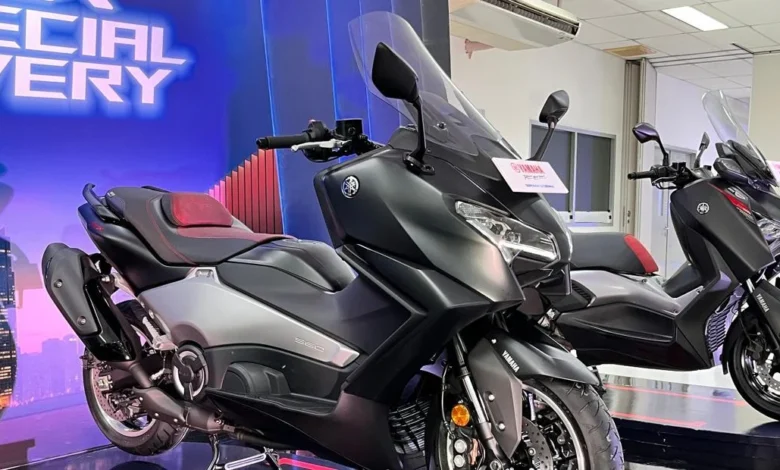
The Yamaha T-Max is not merely a scooter; it is a statement. Positioned at the pinnacle of Yamaha’s MAXI scooter lineup, it embodies the brand’s commitment to delivering sophisticated mobility solutions. The latest iteration of the T-Max arrives in Indonesia in two distinct and highly desirable variants, further solidifying its premium positioning:
-
T-Max Tech MAX: This variant represents the zenith of technology and comfort. It is designed for riders who demand the ultimate in performance, advanced features, and refined aesthetics. The Tech MAX typically features enhanced suspension, premium seat materials, and exclusive color options. For the Indonesian market, this variant is available in a sophisticated Crystal Graphite colorway.
-
T-Max MAX 25th Anniversary Livery: To commemorate a significant milestone in the global MAX line, Yamaha also introduced a special edition T-Max adorned with a livery celebrating 25 years of MAX Yamaha in the global market. This variant adds an extra layer of exclusivity and collectible value, appealing to enthusiasts who appreciate the heritage and celebratory editions of iconic models. This special edition is offered in a striking Black MAX color scheme.
The pricing of these models reflects their premium positioning and CBU status. The T-Max Tech MAX is priced at Rp 455,000,000 (approximately USD 30,000), while the more exclusive T-Max MAX 25th Anniversary Livery commands a price of Rp 475,000,000 (approximately USD 31,300). These figures place the T-Max in direct competition with mid-range to high-end passenger cars in Indonesia, such as the Toyota Innova Reborn, a popular and well-regarded multi-purpose vehicle. This comparison highlights the T-Max’s positioning not just as a premium motorcycle, but as a luxury lifestyle product.
Factors Driving the T-Max Phenomenon
Several converging factors contribute to the extraordinary demand for the Yamaha T-Max in Indonesia:
-
Growing Affluent Class: Indonesia’s economy has seen a steady growth in its affluent segment, with an increasing number of individuals seeking luxury goods and experiences. This demographic is less price-sensitive and more focused on brand prestige, cutting-edge technology, and superior performance.
-
Maturing Motorcycle Culture: The Indonesian motorcycle culture is evolving. Beyond its traditional role as essential transportation, motorcycling is increasingly viewed as a hobby, a passion, and a form of personal expression. This shift has created a demand for high-performance, premium motorcycles that offer a more engaging and luxurious riding experience.
-
The MAXI Scooter Appeal: Yamaha’s MAXI scooter range has been instrumental in popularizing the concept of premium, large-displacement scooters in Indonesia. The T-Max, as the undisputed king of this segment, inherits the brand’s strong reputation and the inherent appeal of its maxi-scooter platform, which offers comfort, practicality, and performance in a single package.
-
Exclusivity and Scarcity: The CBU nature of the T-Max inherently limits its supply. This scarcity, coupled with the rapid sell-out, further enhances its exclusivity and desirability. Owning a T-Max becomes a symbol of being part of an elite group that could secure one of the limited units.
-
Technological Advancement and Performance: The T-Max is renowned for its advanced engineering, often described as a "superbike with an automatic transmission." Its powerful engine, sophisticated chassis, and premium components offer a riding experience that rivals many sport motorcycles, but with the ease of operation characteristic of a scooter. Features such as advanced suspension systems, high-performance braking, and sophisticated rider aids contribute to its appeal.
Implications for the Indonesian Motorcycle Market
The Yamaha T-Max’s sell-out success carries significant implications for the broader Indonesian motorcycle market:
-
Validation of the Premium Segment: This event serves as a strong validation for the potential of the premium and luxury motorcycle segment in Indonesia. It demonstrates that there is a substantial and eager market for high-priced, high-performance two-wheelers, provided they offer genuine value in terms of technology, performance, and brand prestige.
-
Increased Competition and New Entrants: The success of the T-Max may encourage other premium motorcycle manufacturers to consider or increase their focus on the Indonesian market. We could see more high-end models from European and Japanese brands being introduced or given greater allocation.
-
Shift in Consumer Expectations: This phenomenon could lead to a broader shift in consumer expectations. As more riders experience or witness the appeal of premium motorcycles, the demand for more technologically advanced and performance-oriented machines across different segments might grow.
-
Strategic Importance of CBU Imports: For manufacturers like Yamaha, the T-Max case highlights the strategic importance of managing CBU imports. While it ensures product uniqueness and quality, it also necessitates careful demand forecasting and supply chain management to meet the burgeoning appetite of the Indonesian market.
-
Opportunity for Aftermarket and Lifestyle Products: The T-Max’s appeal extends beyond just the motorcycle itself. It opens up opportunities for a robust aftermarket for performance parts, customization options, premium riding gear, and lifestyle accessories, catering to the discerning tastes of T-Max owners.
Yamaha Indonesia is now faced with the challenge of managing this high demand while navigating the complexities of international logistics and import regulations. The company’s ability to efficiently bring in subsequent batches of the T-Max will be crucial in satisfying the pent-up demand and solidifying the model’s status as an icon in the Indonesian motorcycle landscape. For those who missed out on the initial offering, the wait continues, underscoring the allure and aspirational nature of the Yamaha T-Max, a true "King of MAXI" in every sense of the word. The 25-minute sell-out is not just a sales statistic; it’s a testament to a market ready for more, a testament to the enduring power of a well-engineered, premium product, and a clear indicator of the evolving automotive aspirations of Indonesian consumers.