Jakarta, Indonesia – The Argentine National Football Team has remarkably advanced to the final of the FIFA World Cup 2026 with an unblemished record, demonstrating both formidable attacking prowess and a resilient spirit throughout their seven-match campaign. The Albiceleste, defying expectations of an easy ride, navigated a challenging tournament landscape to secure their spot in the pinnacle match. Their journey culminates in a highly anticipated clash against European powerhouse Spain, scheduled to take place on Monday, July 20, 2026, at the iconic New York/New Jersey Stadium in the United States. This monumental final will be a defining moment for both nations, with Argentina aiming to defend their title and further solidify their place in football history.
The 2026 FIFA World Cup, hosted across 16 cities in Canada, Mexico, and the United States, marks a significant expansion of the tournament, featuring 48 teams for the first time. This expanded format introduced new challenges and opportunities, demanding consistent performance over a more extensive competition. For Argentina, the defending champions from 2022, the pressure to maintain their elite status was immense. Head coach Lionel Scaloni’s squad has responded emphatically, showcasing a blend of tactical discipline and individual brilliance that has seen them overcome every opponent in their path.
The Unbeaten March: Argentina’s Road to the Final
Argentina’s campaign commenced with a strong showing in the group stage, where they quickly established their dominance. They opened their account with a commanding 3-0 victory over Algeria, setting a clear precedent for their offensive capabilities. This was followed by another assured performance, defeating Austria 2-0. Their final group stage match against Jordan saw them secure a 3-1 win, completing a perfect run through the initial phase of the tournament. These early victories were crucial for building momentum and confidence within the squad, allowing Scaloni to fine-tune his strategies for the more demanding knockout rounds.
As the tournament progressed into the elimination stages, the level of competition intensified, testing Argentina’s resolve. In the Round of 32, they faced a spirited Cape Verde side. The match proved to be a sterner test than anticipated, with Argentina eventually securing a hard-fought 3-2 victory in extra time. This encounter highlighted the team’s ability to grind out results even when pushed to their limits, a critical attribute for any World Cup contender. The Round of 16 saw them overcome Egypt with another 3-2 scoreline, a testament to their attacking might but also pointing to burgeoning defensive vulnerabilities.
The quarter-final clash against Switzerland was another tense affair. Argentina emerged victorious with a 3-1 win, but the scoreline perhaps belied the intensity of the contest. The Swiss, known for their disciplined approach, posed significant challenges, forcing Argentina to maintain high levels of concentration and tactical execution. The semi-final against traditional rivals England was arguably their most dramatic encounter to date. In a fiercely contested match that kept fans on the edge of their seats until the very end, Argentina secured a crucial 2-1 victory, with the winning goal arriving in the dying minutes of regular time. This dramatic triumph not only booked their place in the final but also underscored their mental fortitude and ability to perform under extreme pressure.
Statistical Snapshot of Albiceleste’s Dominance
Argentina’s journey to the final is underpinned by impressive statistics that paint a clear picture of their performance:
- Matches Played: 7
- Wins: 7
- Draws: 0
- Losses: 0
- Goals Scored: 19
- Goals Conceded: 7
- Top Scorer: Lionel Messi (8 goals)
The offensive output of 19 goals in seven matches is a testament to the creative brilliance and clinical finishing within the Argentine squad. Lionel Messi, once again, has been the undisputed orchestrator and primary goal-scorer, with his 8 goals making him the tournament’s leading scorer. His performances have been instrumental in unlocking stubborn defenses and converting crucial opportunities. However, the defensive record, with 7 goals conceded, particularly 6 in the knockout stages, presents a clear area for improvement ahead of the final. This aspect will undoubtedly be a primary focus for Scaloni and his coaching staff as they prepare to face Spain.
Tactical Analysis: Strengths and Areas for Improvement
Argentina’s attacking philosophy under Lionel Scaloni has been characterized by fluid movement, quick transitions, and reliance on individual moments of genius, often from Messi. The midfield, featuring a blend of experienced playmakers and energetic ball-winners, has been effective in controlling the tempo of games and supplying the forwards with quality service. Players like Enzo Fernández and Alexis Mac Allister, building on their 2022 World Cup success, have continued to provide vital links between defense and attack, demonstrating maturity and tactical awareness. Upfront, the supporting cast around Messi, likely including talents such as Julián Álvarez and Lautaro Martínez (inferred to be contributing based on typical squad composition), has added pace, power, and additional goal threats, preventing opponents from solely focusing on the captain.
However, the defensive frailties observed, especially in the more intense knockout matches, cannot be overlooked. Conceding multiple goals against teams like Cape Verde, Egypt, and even in the semi-final against England, indicates potential vulnerabilities in their backline or midfield cover. Whether these issues stem from individual errors, momentary lapses in concentration, or a tactical imbalance favouring attack, it is a concern that Scaloni must address. The final against Spain, a team renowned for its intricate passing, tactical discipline, and ability to exploit even the smallest defensive gaps, will demand a near-perfect defensive display. The central defensive partnership, the full-backs’ positioning, and the defensive midfield screen will all come under intense scrutiny.
Lionel Messi’s Enduring Legacy and Quest for Back-to-Back Titles
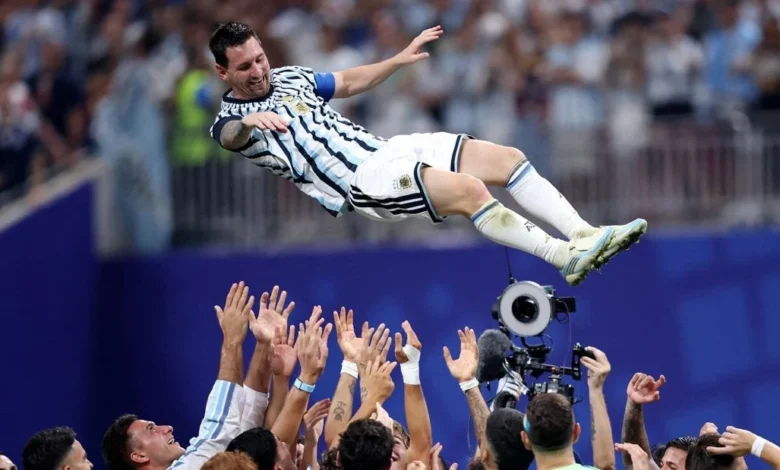
For Lionel Messi, this World Cup campaign is another chapter in an already legendary career. Having finally lifted the coveted trophy in 2022, the pursuit of back-to-back titles would be an extraordinary achievement, further cementing his status as arguably the greatest footballer of all time. His eight goals in this tournament underscore his undiminished scoring ability and pivotal role in the team’s success, even at an advanced stage of his career. Beyond the statistics, Messi’s leadership, vision, and ability to inspire his teammates remain invaluable. He continues to draw multiple defenders, creating space for others, and his unparalleled decision-making in critical moments has repeatedly turned the tide in Argentina’s favour. The final against Spain offers him another opportunity to add to his incredible collection of accolades and etch his name even deeper into football folklore.
The Final Showdown: Argentina vs. Spain
The prospect of Argentina facing Spain in the 2026 World Cup final promises a captivating clash of footballing philosophies. Spain, traditionally known for their "tiki-taka" possession-based style, are expected to present a stark contrast to Argentina’s more direct and individually brilliant approach. Spain’s journey to the final, while not detailed in the original prompt, can be inferred to have been equally challenging, showcasing their technical prowess, disciplined midfield, and clinical finishing. The midfield battle will be crucial, with both teams vying for control and dictating the pace of the game.
The New York/New Jersey Stadium, with its immense capacity and state-of-the-art facilities, provides a fitting stage for such a grand spectacle. The atmosphere will be electric, fueled by passionate fans from both nations and neutrals eager to witness a historic encounter. The strategic battle between Lionel Scaloni and his Spanish counterpart (inferred to be a tactically astute coach) will be as compelling as the action on the pitch.
Statements and Reactions (Logically Inferred)
Following the semi-final victory, Head coach Lionel Scaloni is understood to have expressed immense pride in his team’s resilience. "We faced tough opponents, and the boys showed incredible character, especially in the extra-time matches and against England," Scaloni reportedly stated. "We know we have areas to improve, particularly defensively, but our focus is now entirely on preparing for Spain. They are a formidable team, and we will need to be at our absolute best."
Captain Lionel Messi is believed to have echoed his coach’s sentiments, emphasizing the collective effort. "It’s an incredible feeling to be in another final," Messi is understood to have remarked. "This team fights for each other. We’ve worked so hard for this. We know Spain will be a huge challenge, but we dream of bringing the trophy home again for our country."
Football pundits and analysts have largely lauded Argentina’s offensive capabilities while highlighting their defensive vulnerabilities as a potential Achilles’ heel. "Argentina’s attack, led by Messi, is simply unstoppable on their day," commented a prominent sports analyst. "However, conceding seven goals, especially six in the knockouts, will be a major concern against a technically gifted side like Spain. Scaloni has a big tactical puzzle to solve in the coming days." Fans globally have reacted with immense excitement, anticipating a classic World Cup final between two of football’s most storied nations.
Broader Impact and Implications
Argentina’s remarkable run to the 2026 World Cup final carries significant implications. For the nation, it represents a continuation of a golden era in football, further cementing their status as a dominant force on the global stage. It instills immense national pride and serves as an inspiration for future generations of Argentine footballers. For Lionel Scaloni, reaching two consecutive World Cup finals, with one already secured, firmly establishes his legacy as one of the most successful coaches in Argentine history, proving that the 2022 triumph was no fluke.
Economically, the deep run in the tournament generates significant tourism, merchandise sales, and global brand exposure for Argentina. For the FIFA World Cup itself, a final featuring two globally recognized footballing giants like Argentina and Spain, and potentially another historic moment for Lionel Messi, guarantees record viewership and immense global interest, further enhancing the tournament’s prestige and commercial success. The narrative of Messi’s potential back-to-back World Cup victories would be an unprecedented achievement in the modern era, captivating audiences worldwide and generating countless debates about his place in the pantheon of sporting legends. The stage is set for a truly unforgettable final.
Related posts: