Spain Clinches Second FIFA World Cup Title with Extra-Time Victory Over Argentina in Thrilling 2026 Final at New Jersey Stadium

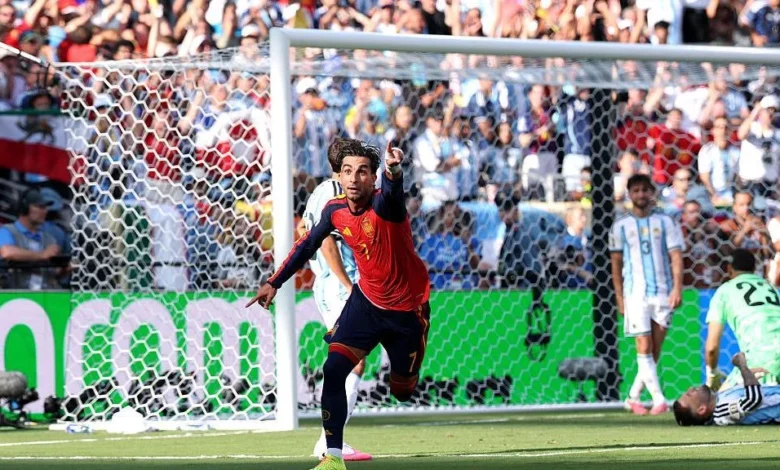
East Rutherford, New Jersey – Spain has etched its name into football history once again, securing its second FIFA World Cup title after a dramatic 1-0 extra-time triumph over reigning champions Argentina. The highly anticipated final, held at the state-of-the-art New Jersey Stadium on Monday, July 20, 2026, saw La Furia Roja emerge victorious thanks to a pivotal goal from substitute Ferran Torres in the 106th minute, breaking a deadlock that had persisted through 90 minutes of tense regulation play. The victory marks Spain’s first World Cup win in 16 years, following their maiden success in 2010, while Argentina’s ambitious quest to defend their title ultimately ended in heartbreak.
A Battle of Titans: The Road to the Final
The 2026 FIFA World Cup, jointly hosted by the United States, Canada, and Mexico, had been a spectacle of footballing prowess, culminating in a final between two of the sport’s perennial giants. Spain, having undergone a significant squad overhaul and tactical evolution since their 2010 peak and subsequent lean years, showcased a blend of seasoned veterans and a dazzling array of young talent. Their journey to the final was marked by a relentless attacking style, coupled with their traditional short-passing dominance, overcoming formidable opponents in the knockout stages, including a quarter-final clash against Brazil and a semi-final against Germany that went to penalties. Their resilience and tactical flexibility under Luis de la Fuente, who had successfully integrated a new generation of players like Lamine Yamal, Pau Cubarsi, and Pedri into the senior squad, had been a consistent narrative throughout the tournament.
Argentina, on the other hand, arrived in New Jersey with the immense pressure of defending the title they famously won in Qatar in 2022. Under the astute guidance of Lionel Scaloni, the Albiceleste had navigated a challenging path, relying on their experienced core, including Emiliano Martinez, Nicolas Otamendi, and the legendary Lionel Messi, who at 39, was widely believed to be playing in his final World Cup. Their campaign had been characterized by gritty performances, a formidable defense, and moments of individual brilliance, especially from their attacking players like Julian Alvarez and the midfield dynamism of Enzo Fernandez and Alexis Mac Allister. Their semi-final victory over France, a rematch of the epic 2022 final, had been a particularly emotionally charged affair, showcasing their unyielding spirit.
Match Chronology: A Tense Stalemate Breaks in Extra Time
The final kicked off under a palpable atmosphere of anticipation, with a packed stadium roaring its support for both nations. The opening 45 minutes of regulation play were a cagey affair, as both teams prioritized tactical discipline and sought to avoid early mistakes. Spain, deploying a 4-3-3 formation with Rodri anchoring the midfield, attempted to control possession, with Dani Olmo and Lamine Yamal probing Argentina’s flanks. Argentina, lining up in a 4-4-2, focused on denying Spain space in the middle and looked to unleash counter-attacks, often through the quick feet of Julian Alvarez and the creative vision of Messi.
Key chances in the first half were scarce. Spain’s best opportunity came in the 28th minute when Lamine Yamal, dazzling on the right wing, cut inside and unleashed a left-footed shot that was well-saved by Emiliano Martinez. Argentina responded with a speculative long-range effort from Rodrigo De Paul that sailed over Unai Simon’s crossbar. The half ended goalless, a reflection of the intense midfield battle and the cautious approaches adopted by both coaches.
The second half saw an increase in tempo and intensity. Spain continued to press for an opener, with Fabian Ruiz and Dani Olmo becoming more influential in linking play. Argentina, meanwhile, began to find more rhythm, with Enzo Fernandez growing into the game, dictating play and breaking up Spanish attacks. The tactical battle intensified, leading to several fouls and stoppages. In the 62nd minute, Spain made a double substitution, bringing on Pedri for Fabian Ruiz and Ferran Torres for Mikel Oyarzabal, a move that would later prove decisive. Argentina also made changes, with Leandro Paredes replacing Nico Gonzalez at the start of the second half, and later Giuliano Simeone and Facundo Medina coming on for Rodrigo De Paul and Cristian Romero, respectively, in the 70th minute, in an attempt to inject fresh legs and attacking impetus.
The tension escalated significantly in the latter stages of regulation time. In the 85th minute, Argentina suffered a major blow when Enzo Fernandez received his second yellow card of the match for a mistimed challenge on Pedri. His initial booking had come earlier in the second half for dissent. The red card meant Argentina would have to play the remainder of the match with ten men, a devastating setback in a World Cup final. Despite being a man down, Argentina dug deep, with their defense, marshaled by Nicolas Tagliafico and the returning Nicolas Otamendi (who had replaced Lisandro Martinez in the 43rd minute due to injury), holding firm. The 90 minutes concluded with the score still locked at 0-0, forcing the game into extra time.
Extra Time Drama: Torres’ Heroics and Argentina’s Frustration
The first period of extra time saw Spain, with their numerical advantage, push relentlessly. Argentina, visibly fatigued but spurred on by their desire to defend their title, retreated into a compact defensive shape, hoping to force a penalty shootout. Spanish substitutes Nico Williams (who came on for Alex Baena in the 75th minute) and Mikel Merino (replacing Dani Olmo at the same time) added fresh energy, creating more problems for the Argentine defense. Spain’s coach, Luis de la Fuente, made further tactical adjustments, bringing on Eric Garcia for Aymeric Laporte and Martin Zubimendi for Rodri in the 98th minute, ensuring his team maintained high intensity.
The breakthrough finally arrived in the 106th minute. A brilliant piece of interplay on the left flank saw Marc Cucurella exchange passes with Pedri before delivering a perfectly weighted cross into the box. Ferran Torres, who had been a livewire since his introduction, ghosted between two Argentine defenders and connected with a powerful header, sending the ball past a diving Emiliano Martinez and into the back of the net. The Spanish bench erupted, and the stadium, largely filled with neutral fans, celebrated the goal that had finally broken the deadlock.
Argentina, now trailing and with only ten men, threw caution to the wind in the second period of extra time. Lionel Messi, despite his age, attempted to conjure moments of magic, orchestrating desperate attacks. However, Spain’s defense, anchored by the composed Pau Cubarsi and the experienced Eric Garcia, held firm, with Unai Simon making crucial saves to deny Argentina any clear-cut opportunities. The final whistle brought immense relief and joy to the Spanish camp and their supporters.
However, the drama wasn’t over. Immediately after the final whistle, tensions boiled over, resulting in another red card for Argentina. Leandro Paredes, who had been substituted earlier, received a straight red card for confronting the referee, a clear display of the raw emotion and frustration that engulfed the Argentine squad in their moment of defeat.
Player Lineups and Key Performances
Spain: Unai Simon; Marc Cucurella, Aymeric Laporte (Eric Garcia 98′), Pau Cubarsi, Pedro Porro; Fabian Ruiz (Pedri 62′), Rodri (Martin Zubimendi 98′); Alex Baena (Nico Williams 75′), Dani Olmo (Mikel Merino 75′), Lamine Yamal; Mikel Oyarzabal (Ferran Torres 62′).
Key Performers: Pau Cubarsi’s composure in defense, Pedri’s influence after coming on, and Ferran Torres’s match-winning header were instrumental. Lamine Yamal, despite not scoring, showed flashes of brilliance throughout the match.
Argentina: Emiliano Martinez; Nicolas Tagliafico, Lisandro Martinez (Nicolas Otamendi 43′), Cristian Romero (Facundo Medina 70′), Gonzalo Montiel (Nahuel Molina 58′); Nico Gonzalez (Leandro Paredes 46′), Enzo Fernandez, Alexis Mac Allister, Rodrigo De Paul (Giuliano Simeone 70′); Julian Alvarez, Lionel Messi.
Key Performers: Emiliano Martinez made several crucial saves, keeping Argentina in the game for extended periods. Enzo Fernandez was influential before his dismissal, and Lionel Messi, though unable to conjure a goal, consistently tried to create chances for his team.
Reactions and Implications: A New Era for Spain, Heartbreak for Argentina
The victory sparked jubilant scenes among the Spanish players and coaching staff. Coach Luis de la Fuente, in a post-match interview, expressed immense pride in his team: "This is an incredible achievement, a testament to the hard work, dedication, and belief of every single player and staff member. We have built something special, a team that plays with heart and intelligence. This trophy belongs to a new generation of Spanish football." Ferran Torres, the hero of the night, was visibly emotional, stating, "This is a dream come true. To score the winning goal in a World Cup final… it’s indescribable. We fought until the very end, and this is the reward." Unai Simon, whose goalkeeping was solid throughout, added, "We defended brilliantly as a unit. Argentina are tough opponents, but we showed our character."
For Argentina, the defeat was a bitter pill to swallow. Lionel Scaloni, while heartbroken, praised his team’s effort: "It’s football, and sometimes it can be cruel. We gave everything, especially after going down to ten men. I am incredibly proud of these players and what they’ve achieved over the past few years. We couldn’t defend the title, but we fought like champions." Lionel Messi, his face etched with disappointment, offered a brief comment: "It wasn’t our day. We tried, we pushed, but it wasn’t enough. We have to accept it and move forward." The images of Messi, perhaps in his final World Cup moment, walking off the pitch without the trophy, will undoubtedly resonate with fans globally, marking a poignant end to an extraordinary international career.
Broader Impact and Legacy
Spain’s second World Cup triumph solidifies its position as a dominant force in international football and signals the successful transition to a new golden generation. The tactical prowess of their coaching staff and the emergence of young talents like Lamine Yamal, Pedri, and Pau Cubarsi suggest a sustained period of competitiveness for La Furia Roja. This victory not only brings immense national pride but also sets a new benchmark for youth development and technical football.
For Argentina, the failure to secure back-to-back titles will undoubtedly lead to introspection. While their 2022 victory remains a cherished memory, the 2026 final marks a potential end of an era for some of their veteran players. The challenge now lies in rebuilding and identifying the next crop of leaders to carry the torch for the Albiceleste. The difficulty of defending a World Cup title, a feat only achieved by a select few nations, was once again highlighted by Argentina’s valiant but ultimately unsuccessful effort.
The 2026 FIFA World Cup final will be remembered as a classic encounter, a testament to the enduring drama and passion of international football. It was a match that showcased tactical battles, individual brilliance, and the raw emotions inherent in the sport’s biggest stage, ultimately crowning Spain as deserving champions of the world.
Related posts: