Political Future of Gibran Rakabuming Raka Remains Open Despite Abrupt Resignation Amid Education Document Scrutiny

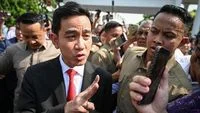
Jakarta, CNN Indonesia — The political career of Gibran Rakabuming Raka is far from over, despite his decision to step down from the office of Vice President of the Republic of Indonesia on Thursday, November 12. His departure unfolded amid intense legal pressure and parliamentary scrutiny concerning the validity of his educational credentials. Analysts and electoral experts suggest that while the resignation marks a dramatic chapter in contemporary Indonesian politics, structural avenues remain open for his potential return to public office, subject to strict legal interpretations and shifting political alignments.
Chronology of the Controversy and Resignation
The sequence of events leading to Gibran’s departure began escalating months prior, driven by persistent public debate and formal challenges regarding the authenticity of his high school and university documentation. As opposition factions within the House of Representatives (DPR) began mobilizing inquiries and legal challenges, the political cost of maintaining the vice presidency mounted.
By early November, the convergence of parliamentary pressure, potential impeachment threats, and mounting legal inquiries created an untenable environment for the administration. On Thursday, November 12, Gibran formally announced his resignation, a move intended to preempt constitutional turmoil and legal disqualification proceedings. This sudden exit stunned observers, drawing immediate comparisons to historical departures in Indonesian governance, most notably the resignation of the nation’s first vice president, Mohammad Hatta, albeit under entirely different historical and political circumstances.
Despite vacating the vice-presidential office, political analysts emphasize that Gibran retains a substantial political network and foundational support base.
Legal Landscape and Regulatory Loopholes
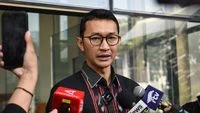
From a regulatory perspective, legal scholars and election watchdogs indicate that Gibran’s path back to electoral politics is not outright barred by existing legislation. Iqbal Kholidin, a researcher at the Association for Elections and Democracy (Perludem), noted that Law Number 7 of 2017 concerning General Elections contains no explicit provisions regulating the subsequent candidacy status of a president or vice president who resigns, is removed, or steps down midway through their term.
Article 169 of the Election Law strictly outlines the baseline requirements for presidential and vice-presidential candidates. These mandates stipulate that a candidate must possess a minimum educational attainment of senior high school (SMA) or equivalent, must never have committed disgraceful acts, must not have been sentenced to imprisonment of five years or more, and must not have served as president or vice president for two terms in the same office.
"In essence, under current regulations, anyone wishing to run for office must still be tested against these standard requirements," Kholidin explained during an evaluation of the legal framework.
However, this statutory silence exposes significant legal vacuums within Indonesia’s electoral architecture. Experts argue that the ongoing controversy surrounding Gibran’s credentials underscores the urgent need for comprehensive electoral reform. Specifically, future revisions to the Election Law must address two critical vulnerabilities.
First, the legislation lacks clarity regarding the candidacy status of individuals previously removed from the presidency or vice presidency through impeachment, particularly when the grounds for removal involve a failure to meet eligibility criteria or the commission of disgraceful acts—both of which are listed as core prerequisites under the Election Law. Second, the current verification mechanisms utilized by the General Elections Commission (KPU) are frequently limited to superficial document checks. Kholidin emphasized the necessity for robust investigative protocols that allow the KPU to trace educational documents, including international equivalency certifications, directly to the issuing institutions to verify authenticity prior to candidate confirmation.
"Current experiences demonstrate that unresolved candidate eligibility issues during the registration phase frequently evolve into complex constitutional crises after the candidate has been elected and assumed office," Kholidin added.
Political Infrastructure and Strategic Outlook
Beyond the courtroom and parliamentary chambers, Gibran’s political machinery remains largely intact. Ali Rif’an, Director of Arus Survei Indonesia (ASI), asserted that Gibran retains access to vital political infrastructure, pointing to the Indonesian Solidarity Party (PSI) as a viable vehicle for future political maneuvers. Furthermore, this infrastructure continues to draw strength from the enduring popularity and public trust enjoyed by his father, Joko Widodo (Jokowi), the seventh President of the Republic of Indonesia.
"Assuming he encounters documented educational hurdles, a pragmatic solution from a regulatory standpoint would simply involve obtaining a high school equivalency diploma through alternative educational programs, such as Package C," Rif’an stated when evaluating the technicalities of candidate re-qualification.
Rif’an underscored that Gibran and Jokowi’s primary political capital has consistently derived from grassroots public confidence rather than institutional pedigree alone. Consequently, the immediate political fallout of Gibran’s resignation may remain contained, provided that broader investigations do not expand into destabilizing political maneuvers.
Nevertheless, analysts have issued warnings regarding potential political overreach. Rif’an cautioned that allegations of treason or systemic state subversion—should political opponents choose to weaponize such narratives against Jokowi and his family—could serve as a critical vulnerability. Conversely, if ongoing legal scrutiny remains confined to standard institutional processes managed by law enforcement agencies under National Police Chief General Listyo Sigit Prabowo, the political reputations of both Gibran and Jokowi are expected to remain manageable.
Broader Implications for Indonesian Democracy
The unfolding situation surrounding Gibran Rakabuming Raka highlights structural weaknesses in Indonesia’s vetting processes for high-ranking public officials. As political parties and lawmakers prepare for future legislative sessions addressing amendments to the Election Law, the precedent set by this crisis will likely serve as a primary reference point for tightening candidate screening procedures.
The intersection of executive resignation, legislative oversight, and judicial review tests the resilience of Indonesia’s democratic institutions. While legal experts advocate for tighter verification standards to prevent post-election constitutional disputes, political strategists continue to monitor how public sentiment adapts to the shifting alliances within the national parliament. Whether Gibran chooses to pursue future electoral bids or pivots toward behind-the-scenes party leadership, the legal debates sparked by his departure will permanently shape the regulatory standards governing executive power in Indonesia.
Related posts: