Muay Thai: Unpacking the ‘Art of Eight Limbs’ as it Ascends to Global Prominence and the SEA Games Stage

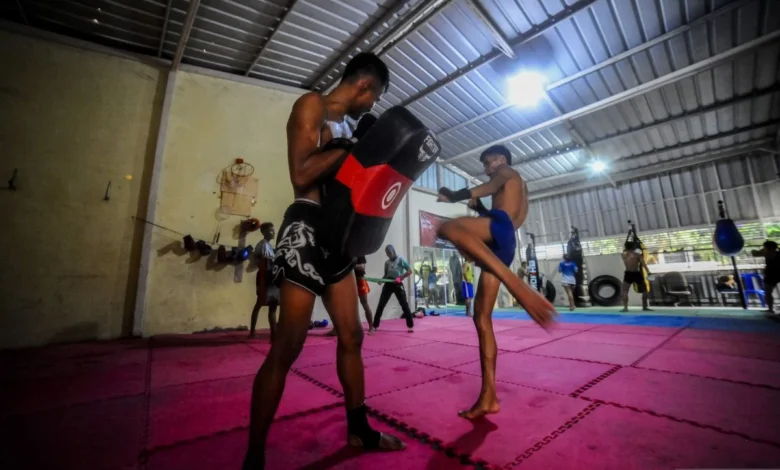
Jakarta (ANTARA) – Muay Thai, the formidable martial art originating from Thailand, is experiencing an unprecedented surge in global popularity, culminating in its inclusion as a recognized sport in the upcoming SEA Games 2025. Often mistakenly equated with Western boxing due to their shared ring environment and use of gloves, Muay Thai stands distinct with its unique character, sophisticated techniques, and profound cultural philosophy. This comprehensive exploration delves into the essence of Muay Thai, its rich history, its global trajectory, and the nuanced differences that set it apart from boxing.
The Essence of Muay Thai: The Art of Eight Limbs
The term "Muay" translates to "boxing," rendering "Muay Thai" as "Thai Boxing." However, this simple translation barely scratches the surface of a combat sport renowned globally as "The Art of Eight Limbs" or Pahuyuth. This moniker refers to the eight points of contact utilized in combat: the two hands (fists), two elbows, two knees, and two shins/feet. This expansive arsenal contrasts sharply with conventional boxing, which relies solely on punches.
In Muay Thai, fighters engage in a dynamic, stand-up striking art that integrates powerful kicks, devastating knee strikes, sharp elbow attacks, and strategic clinch work. The clinch, a close-range grappling technique, allows fighters to control their opponent’s posture, deliver knees and short elbows, and execute sweeps or throws. This multi-faceted approach creates a fast-paced, intensely engaging, and highly dynamic spectacle that captivates audiences worldwide. Unlike mixed martial arts (MMA), Muay Thai strictly adheres to stand-up combat, prohibiting ground fighting or powerful takedowns onto the mat.
Traditional Muay Thai also carries deep symbolic weight, with each limb strike believed to mimic ancient weaponry: hands as swords, knees as staffs, and feet as axes. This connection to ancestral combat techniques underscores the martial art’s profound cultural roots and its legacy as a system of self-defense honed over centuries. The disciplined training regimen not only builds physical prowess but also instills mental fortitude, respect, and humility, making it a popular choice for individuals seeking both physical fitness and character development.
A Glimpse into History: From Ancient Warfare to Modern Sport
The origins of Muay Thai are deeply embedded in the ancient history of Siam (Thailand), tracing back to the 13th century. It evolved from Muay Boran (ancient boxing), a battlefield martial art developed by Siamese soldiers for close-quarters combat when disarmed or facing multiple opponents. In an era predating modern weaponry, mastery of hand-to-hand combat was crucial for survival and national defense. Early techniques were brutally effective, including strikes targeting joints and the back of the head, many of which have since been removed from modern competitive rules for safety reasons.
Muay Thai’s prominence grew through various periods of Thai history. During the Sukhothai Kingdom, it was a vital part of military training and even a royal pastime. Historical records suggest that King Phokhun Sri In Tharatit, the first king of Sukhothai, encouraged his sons to learn the martial art for physical conditioning and character building. The legendary King Naresuan the Great (reigned 1590-1605) is also often associated with Muay Thai, with stories recounting his prowess and the art’s role in liberating Siam from Burmese rule.
Perhaps the most enduring legend associated with Muay Thai is that of Nai Khanom Tom. During the Ayutthaya-Konbaung War in the 18th century, Nai Khanom Tom, a captured Siamese fighter, was challenged to fight Burmese champions to celebrate a festival. He famously defeated ten consecutive Burmese boxers, earning his freedom and becoming a national hero. His story, celebrated annually on "Muay Thai Day" (March 17th), epitomizes the spirit, resilience, and effectiveness of Muay Thai.
The transition from a battlefield art to a regulated sport began in the early 20th century. Before this, fights often occurred with minimal rules, sometimes involving rope bindings (Kard Chuek) instead of modern gloves, and were frequently brutal. The 1930s marked a pivotal period of modernization, influenced by international boxing standards. The introduction of standardized boxing gloves, timed rounds, and a formal scoring system brought greater safety and structure to the sport, paving the way for its international recognition. Lumpinee Boxing Stadium, established in 1956, and Rajadamnern Stadium, opened in 1945, became iconic venues, serving as crucibles for the sport’s greatest fighters and attracting global attention.
Global Ascension and Institutionalization
The global expansion of Muay Thai gained significant momentum in the latter half of the 20th century. Its raw power, dynamic techniques, and cultural mystique appealed to martial arts enthusiasts worldwide. The establishment of the International Federation of Muaythai Associations (IFMA) in 1993 was a landmark event, providing a formal international governing body dedicated to promoting, regulating, and developing Muay Thai as an amateur and professional sport. IFMA’s efforts have been instrumental in standardizing rules, fostering athlete development, and advocating for the sport’s inclusion in major multi-sport events.
Under IFMA’s leadership, Muay Thai achieved provisional recognition from the International Olympic Committee (IOC) in 2016, a significant step towards potential future Olympic inclusion. While full Olympic status remains a long-term goal, this recognition underscores the sport’s growing legitimacy and adherence to international sporting standards. Today, IFMA boasts over 130 national federations across five continents, demonstrating Muay Thai’s vast global footprint. Major international competitions, such as the IFMA World Championships, the World Games, and various continental championships, regularly draw thousands of athletes and spectators.
The sport’s appeal extends beyond competitive arenas. Muay Thai training camps in Thailand have become a major draw for tourists and fitness enthusiasts from around the globe, seeking authentic training experiences, cultural immersion, and intense physical conditioning. This influx contributes significantly to Thailand’s tourism economy, further cementing Muay Thai’s status as a cultural export and a source of national pride. The sport’s adaptability also makes it accessible to a wide range of ages and fitness levels, from children learning discipline to adults seeking effective self-defense and rigorous exercise.
Muay Thai on the SEA Games Stage: Opportunities and Past Controversies
The inclusion of Muay Thai in the SEA Games 2025, to be hosted by Thailand, represents a momentous achievement for the sport. It provides a prestigious platform for regional athletes to showcase their skills and compete for national glory, further elevating Muay Thai’s profile within Southeast Asia and beyond. The SEA Games, a biennial multi-sport event involving participants from the current 11 countries of Southeast Asia, is a crucial stepping stone for sports aspiring to higher international recognition.
However, the journey to mainstream multi-sport event inclusion has not been without its challenges. A notable controversy arose during the 2023 SEA Games in Cambodia. Cambodia, as the host nation, opted to replace "Muay Thai" with "Kun Khmer" in the martial arts program, asserting that Kun Khmer was the original form from which Muay Thai derived. This decision sparked a strong reaction from Thailand, with the Thai National Olympic Committee and the International Federation of Muaythai Associations (IFMA) threatening a boycott. Thailand argued that "Muay Thai" is the internationally recognized name and brand, protected by IFMA and linked to its cultural heritage.
The dispute highlighted the sensitive intersection of sports, culture, and national identity within the region. Ultimately, despite the tensions, the Muay Thai competition proceeded under the name "Kun Khmer" in Cambodia, with some nations choosing not to participate or sending smaller delegations. The incident underscored the importance of clear international recognition and standardized naming conventions for traditional martial arts in multi-sport events. The inclusion of "Muay Thai" by name in the 2025 SEA Games in Thailand thus signifies a reaffirmation of its internationally recognized identity and IFMA’s efforts to ensure consistency across competitive platforms.
Muay Thai vs. Boxing: A Detailed Comparison
While both Muay Thai and Boxing are combat sports fought in a ring with gloved hands, their fundamental differences are profound, extending from their allowed techniques to their fighting stances and strategic rhythms. Understanding these distinctions is crucial for appreciating the unique demands and artistry of each discipline.
1. The Arsenal of Strikes (The "Weapons")
- Muay Thai: Utilizes the "eight limbs" – fists, elbows, knees, and shins/feet. This expansive arsenal allows for a diverse range of attacks, including powerful roundhouse kicks, thrusting "teep" kicks (push kicks), cutting elbow strikes, and devastating knee attacks from both distance and the clinch. The clinch, a standing grappling technique, is integral, allowing fighters to control their opponent’s posture and deliver knees and short elbows until the referee separates them. Light sweeps and throws from the clinch are also permissible.
- Boxing: Strictly limited to punches delivered with gloved hands. The focus is entirely on perfecting punching mechanics – jabs, crosses, hooks, uppercuts – and combinations thereof. When boxers tie up or "clinch," the referee typically separates them quickly to maintain the flow of punching action.
2. Punching Mechanics and Emphasis
- Boxing: Boxers dedicate immense training to optimizing hand strikes. This involves meticulous development of rotational power from the hips, precise footwork for angles and evasion, and explosive power generation through the core. The science of punching is deeply explored, leading to highly accurate and devastating hand combinations.
- Muay Thai: While incorporating many boxing techniques, the emphasis on punching is somewhat less detailed than in pure boxing. Muay Thai fighters must be prepared for rapid transitions between punches, kicks, elbows, and knees. This requires a more generalized, adaptable striking style rather than the specialized, intricate punching sequences seen in boxing. Punches often serve to set up other attacks or to close distance for a clinch.
3. Stance and Footwork
- Boxing: Boxers typically adopt a slightly bladed or sideways stance, with weight subtly distributed on the balls of their feet. This stance facilitates agile footwork, including pivots, lateral movements (sidesteps), and quick head movements (slips and rolls) to evade punches and create angles for attack. The constant movement is a hallmark of boxing strategy.
- Muay Thai: Fighters generally maintain a more squared-up or front-facing stance. This wider, more stable base is essential for absorbing and delivering powerful kicks, defending against sweeps, and launching knee and elbow strikes. While footwork is present, it is often less agile and more deliberate than in boxing, focusing on stability and balance rather than rapid evasive maneuvers.
4. Rhythm and Flow of Engagement
- Boxing: Characterized by a fast, continuous rhythm. Fighters typically engage in sequences of punches, head movement, and footwork, constantly probing for openings, feinting, and countering. The flow of action is often unbroken by clinches or extended grappling.
- Muay Thai: Features a more varied and often more punctuated rhythm. A fighter might throw a punch combination, transition immediately into a powerful leg kick, block an incoming kick with a shin, and then move into a clinch for knee strikes. The tempo can shift rapidly from explosive exchanges to periods of strategic clinching or patient defense.
5. Head Movement and Defense
- Boxing: Boxers have significant freedom for head movement, including slipping punches, rolling with blows, and weaving to avoid attacks. This is a primary defensive strategy, as attacks are limited to punches aimed at the head and body.
- Muay Thai: Head movement is more constrained. Dropping the head too low or moving too far to the side can expose a fighter to powerful knee strikes or high kicks. Defense often relies more on blocking with shins, elbows, or forearms, and maintaining a strong guard, rather than constant evasive head movement.
6. Training Equipment and Traditional Attire
- Boxing: Fighters wear specialized boxing boots for grip and ankle support.
- Muay Thai: Fighters typically compete barefoot, emphasizing ground connection and agility in kicking. Traditional attributes such as the Mongkol (headband) and Pra Jiad (armbands), worn during the pre-fight ritual Wai Kru Ram Muay, hold deep spiritual and cultural significance, representing respect for teachers, tradition, and protection. These are removed before the actual fight.
Broader Impact and Future Implications
The global rise of Muay Thai carries significant broader implications. Culturally, it serves as a powerful ambassador for Thailand, promoting its rich heritage and martial arts traditions worldwide. Economically, the sport generates substantial revenue through professional events, training camps, merchandise, and tourism. Organizations like ONE Championship, which partners with Thailand’s revered Lumpinee Stadium, are playing a crucial role in globalizing Muay Thai by showcasing top-tier talent to millions of viewers internationally, further enhancing its commercial viability and athlete opportunities.
For individuals, Muay Thai offers a holistic training experience that builds physical strength, cardiovascular endurance, mental discipline, and self-confidence. Its diverse techniques make it a versatile martial art suitable for both self-defense and competitive sport. Whether one seeks to master precise punching techniques as in boxing or embrace the full spectrum of striking arts offered by Muay Thai, both disciplines provide pathways for personal growth and athletic achievement. The choice ultimately depends on individual goals, preferences for fighting style, and the type of physical and mental challenge desired.
As Muay Thai continues its ascent, its journey from ancient battlefield art to a recognized global sport, exemplified by its inclusion in the SEA Games, underscores its enduring appeal and its profound cultural significance. The sport’s future appears bright, with continued efforts by IFMA and other organizations to expand its reach, ensure athlete safety, and ultimately, solidify its place among the world’s most respected martial arts.
Related posts: