Luhut Binsar Pandjaitan Discusses Jakarta-Bandung High-Speed Train Whoosh Debt Restructuring and Future Expansion with Chinese Officials

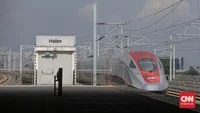
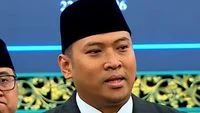
The financial framework and debt repayment mechanisms for Indonesia’s flagship high-speed rail network, widely known as Whoosh, have once again taken center stage in bilateral discussions between Jakarta and Beijing. National Economic Council (DEN) Chairman Luhut Binsar Pandjaitan recently raised the complex issue of the Jakarta-Bandung High-Speed Railway (KCJB) debt structure during a high-level diplomatic and economic mission to China. The discussions, held with Zheng Shanjie, Chairman of China’s National Development and Reform Commission (NDRC), marked a crucial step in resolving long-standing fiscal concerns regarding the multi-billion-dollar infrastructure project.
Luhut’s diplomatic itinerary in China spanned four days, from September 15 to September 18. During this intensive visit, the senior Indonesian official participated in high-profile engagements, including the China Economic and Social Forum 2026 held in Hangzhou, Zhejiang province. He also held strategic bilateral talks with Chinese Foreign Minister Wang Yi, Secretary-General of the National Committee of the Chinese People’s Political Consultative Conference (CPPCC) Wang Dongfeng, and NDRC Chairman Zheng Shanjie. In addition to government-to-government meetings, Luhut delivered a public lecture at the prestigious Tsinghua University, further cementing economic and academic ties between the two nations.
Behind the scenes of these diplomatic exchanges, however, the primary focus remained on addressing the financial obligations tied to the operation and construction of the Whoosh high-speed railway. According to Luhut, leaving the debt restructuring unresolved is not an option for the Indonesian government, as prolonged inaction would ultimately inflict heavy financial losses on the state. Consequently, technical teams from both countries must maintain rigorous follow-up discussions to optimize the debt repayment structure.
Navigating the Financial Architecture of KCJB
The administrative handling of the Whoosh debt involves cross-agency coordination within the Indonesian government. Luhut noted that his past experience overseeing the project while serving as the Coordinating Minister for Maritime Affairs and Investment provides him with unique insight into the technicalities of the undertaking. This institutional memory is currently being leveraged to brief key economic stakeholders in the administration of President Prabowo Subianto.
Crucially, the coordination loop includes Coordinating Minister for Economic Affairs Airlangga Hartarto, the Ministry of Finance, and Deputy Finance Minister Suahasil Nazara. Luhut expressed strong optimism that the relevant domestic ministries and agencies are now fully integrated and aligned regarding the debt resolution strategy. With President Prabowo having already granted formal political clearance—the proverbial green light—the initiative has moved past the policy debate phase and entered the execution stage.
The DEN Chairman emphasized that the support of the National Economic Council is designed to accelerate administrative and diplomatic communication with Chinese authorities. Backed by enduring interpersonal relationships between Indonesian and Chinese officials, Luhut asserted that the implementation phase is expected to proceed smoothly without encountering significant institutional roadblocks. Furthermore, he claimed that Beijing has shown a cooperative attitude and raised no fundamental objections to the proposed debt payment mechanisms.
Restructuring Terms and Long-Term Fiscal Impact
The financial burden of the Jakarta-Bandung High-Speed Railway has been a subject of intense public scrutiny and fiscal evaluation since the project’s inception and subsequent commercial launch. Previous economic evaluations by financial authorities outlined a comprehensive restructuring strategy for the loans associated with PT Kereta Cepat Indonesia China (KCIC), the joint venture consortium operating the railway.
Under the proposed restructuring framework, the debt would be handled through an annual installment scheme valued at approximately Rp1 trillion per year, backed by an extended repayment tenor of up to 80 years. Financial analysts and former government officials have evaluated this approach as relatively manageable compared to earlier, more compressed repayment schedules. The extended horizon significantly softens the annual burden on the state budget, keeping it within a threshold that the Ministry of Finance can absorb and oversee without destabilizing broader macroeconomic stability.
To further consolidate financial control and operational oversight, the Indonesian government has initiated plans to assume a majority stake in PT Kereta Cepat Indonesia China (KCIC). Under this restructuring blueprint, the state intends to acquire a 60 percent ownership share in the consortium. Historically, this majority stake was held by PT Pilar Sinergi BUMN Indonesia (PSBI), a consortium comprising several Indonesian state-owned enterprises. Meanwhile, the remaining 40 percent equity share will continue to be held by the Chinese consortium, Beijing Yawan HSR Co. Ltd.
At present, the Ministry of Finance is actively conducting due diligence alongside comprehensive asset evaluations to determine the exact valuation of the PSBI shares slated for state transfer. The leadership transition within the financial sector—specifically the shift involving former Finance Minister Purbaya Yudhi Sadewa and his successor—has not derailed these structural reforms. Rosan Roeslani, Chief Executive Officer (CEO) of Danantara Indonesia, formally confirmed that the institutional takeover and management transition of KCIC remain entirely on track despite ministerial shifts.
Transforming Public Mobility and the Vision for Expansion
Beyond the intricacies of balance sheets and loan tenors, Indonesian officials continue to champion the transformative social and economic impact of the Whoosh network on daily life. Luhut highlighted how the high-speed rail line has fundamentally altered commuter patterns, lifestyle choices, and regional economic activity. By cutting travel time between Jakarta and Bandung to roughly 45 minutes, the service has enabled new levels of mobility, allowing professionals to reside in the capital while conducting business or enjoying leisure activities in West Java’s capital city.
The undeniable popularity and proven utility of the initial phase have naturally sparked intense discussions regarding network expansion. During his meeting with NDRC Chairman Zheng Shanjie, Luhut formally broached the possibility of extending the high-speed rail corridor further eastward, connecting Bandung all the way to Surabaya, East Java. Such a mega-project would effectively stitch together the spine of Java’s economic centers, creating a massive high-speed transit corridor capable of driving long-term national productivity.
However, realizing a project of that magnitude requires institutional continuity and dedicated leadership. Luhut stressed that as the government contemplates the future expansion of the high-speed rail network, President Prabowo Subianto will need to designate a specific coordinating minister to spearhead the initiative. Whether the portfolio falls under the purview of Coordinating Minister for Infrastructure and Regional Development Agus Harimurti Yudhoyono (AHY) or another designated official, seamless administrative follow-through will be mandatory to ensure that the monumental gains of Indonesia’s modern rail revolution are sustained, expanded, and financially stabilized for decades to come.
Related posts: