Japan Heatwave Declared a Natural Disaster as Temperatures Exceed 41 Degrees Celsius and Hospitalizations Surge Nationwide

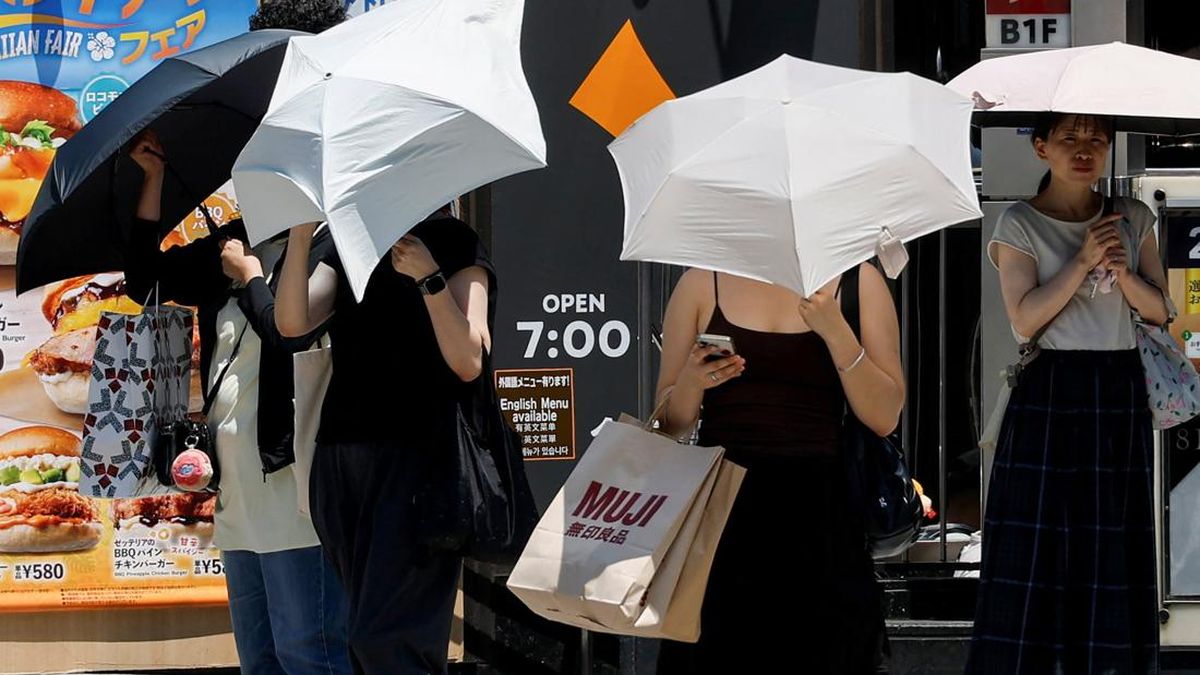
The Japanese government and emergency services are grappling with a public health crisis of historic proportions as an unrelenting heatwave continues to sweep across the archipelago, prompting the Fire and Disaster Management Agency (FDMA) to officially classify the extreme weather event as a natural disaster. In a single day this week, the Tokyo Fire Department reported that 453 individuals were rushed to hospitals due to heat-related illnesses, highlighting the severe strain on the capital’s medical infrastructure. With temperatures in several prefectures shattering records and breaching the 40-degree Celsius mark, authorities are warning that the death toll and hospitalization rates are likely to climb as the high-pressure system remains anchored over the region.
The scale of the emergency became acutely apparent on Wednesday, July 22, when the mercury surged to life-threatening levels. In Tokyo, a metropolis of nearly 14 million people, the heat proved fatal for at least one resident, while four others remain in critical condition and 18 are fighting for their lives in serious condition. The FDMA’s decision to label the heatwave a "disaster" reflects the extraordinary nature of the current climate conditions, which have transcended typical summer discomfort to become a significant threat to national security and public safety.
Unprecedented Thermal Extremes and Hospitalization Spikes
The current heatwave is not merely a localized phenomenon but a nationwide crisis that has necessitated the issuance of heatstroke alerts for nearly every prefecture in Japan. On Thursday, July 23, the situation intensified as at least six different regions recorded temperatures of 40 degrees Celsius or higher during the peak afternoon hours. The city of Hamamatsu, located in central Shizuoka Prefecture, recorded a staggering 41.1 degrees Celsius, tying with the highest temperature ever recorded in Japan’s history. This was followed closely by Toyota City in Aichi Prefecture at 40.8 degrees Celsius and Kuwana in Mie Prefecture at 40.7 degrees Celsius.
The medical impact of these temperatures is profound. When the human body is exposed to ambient temperatures exceeding 40 degrees Celsius, its internal cooling mechanisms—primarily sweating and increased blood flow to the skin—can become overwhelmed. This leads to heat exhaustion and, in its most severe form, heatstroke, which can cause organ failure, brain damage, and death. The 453 hospitalizations in Tokyo represent only a fraction of the national total, as the FDMA continues to aggregate data from rural prefectures where emergency response times can be longer and the population is often more vulnerable.
A Chronology of the Escalating Crisis
The onset of this extreme weather event can be traced back to mid-July, following the conclusion of a relatively short rainy season. As the seasonal rains subsided, a powerful dual high-pressure system began to exert its influence over the Japanese islands. By July 20, temperatures in central Japan began consistently hitting the 35-degree mark, a threshold known in Japan as "moshobi" or "extremely hot days."
By July 22, the situation transitioned from a seasonal heat spike to a critical emergency. The Tokyo Fire Department saw a surge in emergency calls, with ambulances dispatched at a rate rarely seen outside of major earthquakes or pandemic peaks. On July 23, the peak of the current spike, the 41.1-degree reading in Hamamatsu solidified the event’s place in the meteorological record books. The FDMA has noted that the duration of this heatwave is particularly concerning; unlike brief heat spikes, this event has seen little to no nocturnal cooling, preventing the human body and urban infrastructure from recovering during the night.
The Linguistic Shift: Introducing "Kokushobi" to the National Lexicon
The severity of the 2024 heatwave has prompted the Japan Meteorological Association (JMA) and various governmental bodies to adopt new terminology to better communicate the level of danger to the public. For years, "moshobi" (days above 35°C) was the highest classification used in general forecasts. However, as 40-degree days become an increasingly frequent reality, the term "kokushobi" has been introduced.
Translated literally as "cruel heat day" or "oppressive heat day," kokushobi is reserved for temperatures exceeding 40 degrees Celsius. The introduction of this term is part of a broader strategy to shock the public into taking more aggressive preventative measures. In a culture where "gaman"—the virtue of endurance and perseverance—is highly valued, authorities are concerned that citizens, particularly the elderly, may try to endure the heat without air conditioning or proper hydration, leading to preventable tragedies.
The Vulnerability of an Aging Demographic
One of the most significant challenges Japan faces during these heatwaves is its demographic profile. Japan has one of the world’s oldest populations, with nearly 30% of its citizens aged 65 or older. This group is disproportionately affected by extreme heat due to a diminished physiological ability to regulate body temperature and a decreased perception of thirst.
Many elderly residents live in older homes with poor insulation or are hesitant to use air conditioning due to concerns over electricity costs or a traditional preference for natural ventilation. However, in "kokushobi" conditions, natural ventilation is insufficient and can actually accelerate dehydration. Public health officials have been conducting door-to-door checks in some municipalities to ensure that senior citizens are utilizing cooling systems. The death recorded in Tokyo earlier this week involved an elderly individual, a grim reminder of the specific risks faced by this demographic.
Meteorological Drivers: The Double High-Pressure Phenomenon
Meteorologists attribute this extreme heat to a "double high-pressure" system that has effectively trapped hot air over the Japanese archipelago. This occurs when the Pacific High-Pressure system, which typically brings summer weather to Japan, is overlaid by the Tibetan High-Pressure system in the upper atmosphere.
This atmospheric "pancake effect" prevents hot air from rising and dissipating, while simultaneously causing the air to compress and warm further as it sinks. This creates a "heat dome" effect similar to those seen in North America and Europe in recent years. Furthermore, the lack of cloud cover allows for maximum solar radiation to reach the ground, while the "Urban Heat Island" (UHI) effect in cities like Tokyo and Osaka further amplifies the temperature by trapping heat in concrete and asphalt.
Official Warnings and the Classification of Heat as a "Disaster"
The FDMA’s statement on the matter was unequivocal: "Suhu telah meningkat sejak pertengahan Juli, dan gelombang panas ekstrem diperkirakan akan berlanjut di seluruh negeri. Tidak berlebihan untuk menyebut gelombang panas ekstrem ini sebagai bencana." (Temperatures have been rising since mid-July, and extreme heatwaves are expected to continue across the country. It is no exaggeration to call this extreme heatwave a disaster.)
In response to the classification, the government has activated emergency protocols. This includes the opening of "cooling centers" in public libraries and community halls, the suspension of outdoor sporting events, and the deployment of additional emergency medical personnel. The Ministry of the Environment has also been issuing daily "Heatstroke Alert" bulletins, which utilize the Wet Bulb Globe Temperature (WBGT) index—a measure that accounts for humidity, wind speed, and solar radiation, rather than just ambient temperature alone.
Infrastructure and Economic Ramifications
The heatwave’s impact extends beyond public health, affecting the nation’s infrastructure and economy. The surge in air conditioning use has driven electricity demand to near-capacity levels. In response, Tokyo Electric Power Company (TEPCO) and other regional utilities have monitored the grid closely, though no major blackouts have been reported thus far. However, the reliance on fossil fuel-burning power plants to meet this demand creates a feedback loop that contributes to the very climate change driving these heatwaves.
Agriculture is also suffering. Farmers in central Japan have reported heat damage to rice crops and vegetables, which could lead to increased food prices in the coming months. Construction and outdoor labor industries have seen a significant drop in productivity, as work must be halted during the hottest parts of the day to protect workers. The cumulative economic cost of these heat-induced disruptions is estimated to be in the billions of yen.
Climate Change and the Long-term Outlook
While heatwaves are a natural part of Japan’s climate, the frequency, intensity, and duration of these events have increased markedly over the last two decades. Scientific consensus points to global warming as a primary driver. As the global average temperature rises, the baseline for summer heat in Japan has shifted upward, making 40-degree days—once a statistical anomaly—a recurring threat.
The Japan Meteorological Agency has warned that if global carbon emissions are not significantly reduced, the "kokushobi" days currently being experienced could become the standard for Japanese summers by the middle of the century. This has led to calls for long-term urban planning changes, such as increasing green spaces to combat the heat island effect, improving building insulation standards, and transitioning to more resilient energy grids.
Preventative Measures and Public Health Protocols
In light of the ongoing disaster, the Fire and Disaster Management Agency and the Ministry of Health, Labour and Welfare have reissued a list of critical safety protocols for all residents:
- Prioritize Air Conditioning: Authorities are urging people not to hesitate to use air conditioning, emphasizing that it is a life-saving tool rather than a luxury.
- Aggressive Hydration: Individuals are advised to drink water and electrolyte-replacement beverages even if they do not feel thirsty.
- Avoid Peak Sun: Outdoor activities should be restricted, particularly between the hours of 10:00 AM and 4:00 PM.
- Community Vigilance: Neighbors are encouraged to check on the elderly and those living alone.
- Recognizing Symptoms: Early signs of heat exhaustion, such as dizziness, headache, and nausea, must be treated immediately by moving to a cool environment and seeking medical attention if symptoms persist.
As Japan remains under the grip of this "cruel heat," the resilience of its healthcare system and the effectiveness of its disaster response will be put to the ultimate test. With the high-pressure system showing no signs of relenting in the immediate future, the priority remains the preservation of life in the face of an increasingly hostile climate.
Related posts: