Indonesia Prepares Massive 2-Million Hectare Land Expansion for Ethanol Production to Achieve Energy Sovereignty by 2029

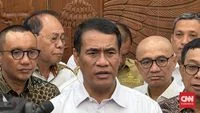
Jakarta, Indonesia — In a decisive move toward absolute energy independence and a dramatic reduction in fossil fuel reliance, the Government of Indonesia has announced plans to clear and develop between 1 million and 2 million hectares of new agricultural land. Spearheaded by Minister of Agriculture Andi Amran Sulaiman, the ambitious undertaking is explicitly designed to cultivate high-yield biofuel feedstocks—specifically sugarcane, cassava, and corn—to fuel the nation’s transition toward sustainable energy sources.
The policy framework, which was recently finalized following a high-level limited cabinet meeting with President Prabowo Subianto, aims to integrate ethanol blending into the nation’s commercial gasoline supply chain progressively. The ultimate roadmap targets the nationwide implementation of E20 (a blend of 20 percent bioethanol and 80 percent gasoline) by the year 2029. Furthermore, agricultural authorities believe that sustaining this momentum could pave the way for an even higher mixture, potentially reaching E40 by 2030 or 2031.
This sweeping initiative marks a pivotal milestone in Indonesia’s broader geopolitical and economic strategy. By aggressively scaling up domestic biofuel production alongside the ongoing biodiesel programs—such as the targeted B50 initiative—Jakarta aims to insulate its macroeconomy from global oil price volatility, slash costly fossil fuel imports, and position the archipelago as a global leader in renewable energy integration within Southeast Asia.
Strategic Allocation of Land Resources and Environmental Safeguards
A central concern surrounding large-scale agricultural expansions in Indonesia has historically been deforestation and ecological degradation. Addressing these sensitivities head-on, Minister Amran emphasized that the newly required 1 million to 2 million hectares will not be sourced through indiscriminate forest clearing. Instead, the administration intends to utilize a highly selective, multi-tiered approach that prioritizes already available, idle, or repurposed lands.
According to the Ministry of Agriculture, the initial selection phase will tap into an existing pool of approximately 20 million hectares designated for agroforestry, food crop integration, and previously released forest zones. Specifically, the government has identified roughly 1.3 million hectares of already released land that will undergo rigorous feasibility assessments to determine its agricultural suitability, particularly for sugarcane cultivation, which commands the largest share of the land requirement at approximately 1 million hectares.
"We are looking first at land earmarked for agroforestry or food crop integration—there are about 20 million hectares available there. We will select from those tracts first. We will not simply rush in to clear primary forests; that is strictly a last resort," Amran stated during a press briefing in South Jakarta.
The ministry has affirmed that any conversion of forest areas will be treated as an absolute final option, executed only after stringent environmental impact assessments and in strict adherence to national sustainability standards. To bolster productivity on these designated tracts, the central government will deploy modern agricultural machinery, provide high-grade seeds, and conduct comprehensive trial plantings for corn and cassava across several selected regions.
Consolidating Regional Support and Financing Schemes
The success of a national infrastructure project of this magnitude relies heavily on synchronized cooperation between central authorities, regional governments, and private sector investors. In an encouraging sign of early momentum, 44 regional regents (bupatis) have already formally pledged their support for the feedstock development program within their respective jurisdictions.
To bridge the gap between raw agricultural production and commercial fuel distribution, the government is finalizing a comprehensive industrial blueprint that includes the construction of dozens of new processing plants and refineries across the archipelago. The financial architecture behind these multi-billion-dollar investments is being carefully calibrated to leverage both state-owned enterprises (SOEs) and private capital.
Under the proposed financial structuring, the state intends to share capital expenditure risks with corporate partners. While state-owned enterprises will take the lead to anchor the projects, private sector participation will be actively courted to cover the remaining capital requirements.
"The funding layout might see roughly 30 percent contribution from state-owned enterprises and 70 percent from private investors. Private entities will undoubtedly be eager to participate because the state is guaranteeing and preparing the land upfront," Amran explained. He added that the exact equity distribution remains flexible and could see state-owned enterprise stakes rise to 40 or 50 percent depending on corporate fiscal capacities before the remaining balance is opened to commercial partners.
Drawing from previous industrial experiences, the Ministry of Agriculture noted that securing clear land titles and proactive state oversight are vital to preventing bureaucratic bottlenecks. Citing the government’s recent track record of successfully constructing 10 new sugar mills, officials estimate that once land acquisition and consolidation are locked down, individual ethanol processing plants can be engineered, built, and operationalized within a two- to three-year window.
Macroeconomic Implications: Trillion-Rupiah Savings and Job Creation
The transition to biofuels is projected to yield staggering macroeconomic dividends for Southeast Asia’s largest economy. By scaling up ethanol and biodiesel production concurrently, Indonesia expects to drastically curb its reliance on imported crude oil and refined petroleum products.
Government economic projections indicate that achieving full execution of the biofuel roadmap will generate massive foreign exchange savings, estimated at approximately US$30 billion—equivalent to roughly Rp500 trillion—annually. This capital retention will significantly strengthen Indonesia’s balance of payments, stabilize the rupiah, and redirect state funds toward domestic infrastructure and human capital development.
Beyond fiscal savings, the initiative carries profound socio-economic ramifications for the agricultural heartland. The ministry estimates that the nationwide establishment of feedstock plantations and processing facilities will create at least 8 million permanent jobs. By engaging local farmers directly in the supply chain of high-value energy crops like sugarcane, cassava, and corn, the program is engineered to distribute wealth directly to rural communities, lifting regional household incomes and reducing poverty rates.
Chronology and Implementation Roadmap
The timeline for Indonesia’s ambitious bioethanol leap is structured across several distinct phases over the coming decade:
- Initial Phase (Present – Late 2025): Finalization of inter-ministerial coordination—involving the Ministry of Agriculture, the Ministry of Forestry, and various state-owned enterprises—alongside the initial screening and legal clearance of available land tracts. Pilot testing and trial plantings for corn and cassava are scheduled to roll out across targeted regions.
- Medium-Term Infrastructure Development (2026 – 2028): Mass mobilization of agricultural machinery, signing of public-private financial partnerships, and the construction of industrial ethanol processing plants and refineries.
- Fuel Blending Rollout (2029): Official nationwide introduction and commercialization of the E20 fuel standard at gas stations across the country, marking the culmination of the initial blend targets (E5, E10, and E20).
- Advanced Target Horizon (2030 – 2031): Scaling up national processing capacity and feedstock yields to potentially transition toward higher-tier fuel mixtures, such as E40, further solidifying the nation’s energy independence.
A Balanced Path Toward Energy Sovereignty
As Indonesia navigates the complexities of global climate commitments and domestic energy demands, the ethanol expansion program represents a calculated gamble on agro-industrial self-sufficiency. By striking a deliberate balance between aggressive economic stimulus, rural job creation, and rigorous environmental stewardship, the government hopes to transform the country from a major energy importer into a self-sustaining green energy powerhouse.
"We are fully committed to protecting our environment, but at the same time, we must achieve true energy self-sufficiency and energy sovereignty," Amran concluded, underscoring the administration’s dual resolve as land preparation officially gets underway.
Related posts: