Los Angeles Lakers Enter a New Era: Navigating Life After LeBron James in the 2026/2027 NBA Season

The Los Angeles Lakers are entering the 2026/2027 NBA season under unprecedented circumstances, marking the first campaign since 2018/2019 without the presence of LeBron James. Following his high-profile departure to the Philadelphia 76ers, the franchise faces the daunting task of pivoting from a superstar-centric model to a balanced, team-oriented identity. As the league prepares for tip-off on October 20, 2026, the Purple and Gold stand at a critical crossroads, attempting to maintain their status as a Western Conference contender while integrating a new supporting cast around their primary engine, Luka Doncic.
A Seismic Shift in Los Angeles
The exit of LeBron James, now 41, concludes an eight-year tenure that brought both championship glory and cultural dominance to Southern California. While the organization recognizes the void left by his departure—specifically in veteran leadership and high-level playmaking—the front office has spent the offseason aggressively reshaping the roster to fit a new tactical vision under head coach JJ Redick.
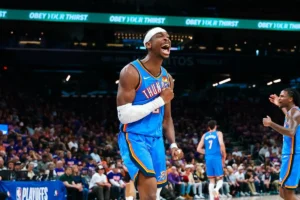
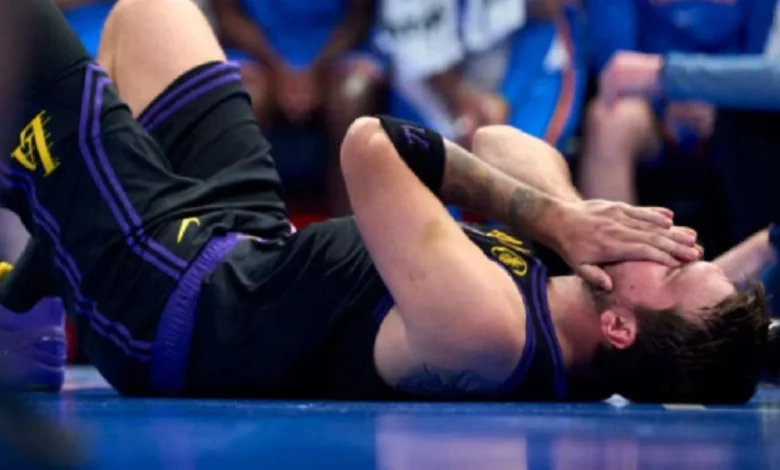
The Lakers finished the 2025/2026 regular season with a respectable 53-29 record, securing the fourth seed in the Western Conference. However, their playoff exit—a 4-2 series victory over the Houston Rockets followed by a humbling 0-4 sweep at the hands of the Oklahoma City Thunder—exposed structural weaknesses. The team’s reliance on top-heavy star power proved insufficient when facing elite, defensively disciplined opponents, particularly after Doncic suffered a late-postseason injury.
The Doncic-Reaves Paradigm
With James gone, the franchise has officially transitioned to the "Luka Era." Doncic, who secured the league’s scoring title in 2025/2026 and earned a unanimous selection to the All-NBA First Team, is now the undisputed face of the Lakers. His ability to manipulate defensive sets and control the tempo of a game makes him the ideal centerpiece for Redick’s offensive scheme.
Complementing him is Austin Reaves, who has blossomed into a reliable secondary star. Reaves enjoyed a career-best campaign last season, averaging 23.3 points per game. The synergy between the two guards is statistically significant; in the 41 games they played together last season, the Lakers maintained a win rate exceeding 73 percent. For the 2026/2027 season, Reaves is expected to take on a heavier burden in ball-handling and playmaking, allowing the team to maintain offensive efficiency even when Doncic is off the floor.
Roster Transformation and Tactical Depth
The Lakers’ front office, led by general manager Rob Pelinka, executed a series of calculated moves during the offseason to address the team’s lack of defensive versatility and frontcourt depth. The departure of players like Deandre Ayton, Rui Hachimura, and Jaxson Hayes has paved the way for a more athletic, modern roster construction.
Key arrivals include:
- Walker Kessler: Brought in to serve as the defensive anchor, Kessler provides elite rim protection and rebounding, allowing the team to mitigate the defensive lapses that plagued them last season.
- Matisse Thybulle: Acquired to serve as a perimeter lockdown specialist, filling the defensive void left by Marcus Smart.
- Supporting Scorers: The additions of Collin Sexton, Quentin Grimes, and Jaden Hardy provide the team with much-needed perimeter shooting and bench scoring, ensuring the offense remains dynamic across all four quarters.
These changes reflect a strategic move toward a younger, faster team capable of playing both ends of the floor. However, the success of these acquisitions depends entirely on the speed at which they can absorb coach JJ Redick’s system.
The Coaching Challenge: JJ Redick’s Second Year
Head coach JJ Redick enters his sophomore season with the highest pressure of his coaching career. The shift from a roster built around the specific needs of LeBron James to one that requires a collective approach is a major tactical evolution. Redick must now implement a rotation that prioritizes ball movement and defensive intensity while managing the heavy minutes of his stars.
The primary concern for the coaching staff is defensive efficiency. In 2025/2026, the Lakers ranked 19th in defensive rating, surrendering 114.6 points per 100 possessions. To bridge the gap between themselves and title favorites like the Oklahoma City Thunder and San Antonio Spurs, the Lakers must become a top-10 defensive unit. Redick has publicly emphasized that the team’s identity will be forged through defensive consistency rather than purely offensive firepower.
Season Opener and the Holiday Narrative
The Lakers begin their season on Wednesday, October 21, 2026, hosting the Golden State Warriors at the Crypto.com Arena. This marquee matchup will provide an immediate litmus test for the team’s new defensive identity and the chemistry of the backcourt duo.
Perhaps the most anticipated date on the calendar is December 25, 2026, when the Philadelphia 76ers travel to Los Angeles. This Christmas Day showdown marks LeBron James’s first return to the arena since his departure. While the game carries significant emotional weight for the fanbase, it also serves as a symbolic marker for the Lakers’ future: a chance to prove that they are more than a footnote in the James legacy.
The Competitive Landscape of the West
The path to the NBA Finals remains treacherous. The Western Conference has become an arms race of talent and depth. The Oklahoma City Thunder, fresh off a 64-win season, remain the team to beat, boasting an enviable blend of youth and chemistry. Meanwhile, the San Antonio Spurs, led by the generational Victor Wembanyama, have emerged as a legitimate title threat after reaching the 2026 NBA Finals.
The Denver Nuggets, perennial contenders, continue to rely on the dominance of Nikola Jokic, while the Minnesota Timberwolves have significantly bolstered their chances by pairing Anthony Edwards with the playmaking of LaMelo Ball. For the Lakers, failing to secure a top-six seed would mean a grueling path through the Play-In Tournament—a scenario the organization is desperate to avoid.
Analytical Outlook: Beyond the Stars
Data analysis of the Lakers’ 2025/2026 performance suggests that while the individual scoring output of Doncic and Reaves is elite, the team’s success is predicated on depth. The team’s tendency to lose focus during defensive transitions was a recurring issue last season. By replacing high-usage veterans with specialized defensive assets like Kessler and Thybulle, the Lakers are attempting to increase their defensive "floor."
The team’s offensive philosophy is expected to shift toward a more high-volume three-point approach. With Grimes and Sexton joining the perimeter rotation, the spacing for Doncic should theoretically improve, creating more lanes for him to either finish at the rim or kick the ball out to open shooters.
Conclusion: A New Chapter in Los Angeles
The departure of LeBron James is not merely a personnel change; it is a structural redesign of the Los Angeles Lakers franchise. While the immediate reaction from pundits remains skeptical, the internal belief within the organization is that this new-look squad is better suited for the modern, high-paced demands of the NBA.
The 2026/2027 season will be defined by how quickly this team adapts to its new identity. If Doncic can maintain his MVP-level production, Reaves can continue his upward trajectory, and the new defensive reinforcements can stabilize the interior, the Lakers will remain a formidable force in the West. Whether they can ascend to the level of championship contenders remains to be seen, but one thing is certain: the era of reliance on a single superstar has ended, and the era of the collective, systematic Lakers has begun. For fans in Los Angeles, this season represents the ultimate test of whether the franchise can evolve, adapt, and ultimately thrive in the post-LeBron era.